Gosh Lori, you plants are never ending! (As is our interest in them. :o) By the way, that supposed diminutive hybrid veronica I found (http://nargs.org/smf/index.php?topic=274.msg9053#msg9053) has turned out to be the weed - V.serpyllifolia, as you suggested. I found it in the neighbor's garden, too.
Mark, I seemed to have missed your post mentioning my variegated Astrantia, until now. Astrantia 'Sunningdale Gold' (name correction) is only variegated in the spring. The variegation is almost completely faded to green already. In addition, it took three to four years from planting to really show well. Flowers are just a green-white, and fairly sparse compare to most astrantia. Not a real winner in my estimation, but good enough to keep around.
Regarding the Kentucky Coffee tree, male trees are rather spindly growing compared to females, in general. My trees are good examples. There are good selections of male clones that are very desirable. The University of Minnesota has a nice male cultivar: Stately Manor.
The best pic I could get of my male tree on the south side of my house. Behind the Smoke tree (Cotinus obovatus) and the Green ash (that will eventually succumb to the Emerald Ash borer when it gets here), it is a simple seed grown tree from a local nursery.
This is a female on the west side of my house. Planted in 1994 as a three foot seedling dug from a friend's backyard. The male tree was planted in 1993 as a potted seven foot tree. They are now both about equal height, but the female, as expected, has a much larger complement of foliage. In my opinion (others' will differ), the bean pods are quite ornimental, and stay attached through the winter.
Note that Kentucky coffee trees leaf out very late in the spring and have huge doubly compound leaves. Even now, in these photos the first leaves are only two-thirds their final size. Like oaks, most of the growth is put out in one push in the spring/early summer. These trees also are the first to color and drop leaves in the fall. They are part of my "landscaping for energy efficiency" endeavor, allowing for maximum natural sun heating of the house through the spring and also in very early (and cool) fall and through the winter, while still providing shade in the hot months. Because the leaves are so huge, twigs that remain through the winter are relatively sparse, and give the most minimal winter shade of any deciduous tree.
Of particular note at the base of the tree and to the right in the last pic, is a mature Atlantic Leatherwood (Dirca palustris). It is notorious for resenting transplanting, yet it was just transplanted this spring from my garden. I had been root pruning it for two seasons prior. This is a very special plant for me, as it came from a fellow rock garden society member, who received it from May Wright, one of the original Minnesota native plant enthusiasts, who died many years ago.
Interesting, Rick. I've never seen this tree (which is almost needless to say, I suppose). I was just reading about it... leaves one to 3 feet long - wow! How big do the leaves on yours get?
I think Kristl has offered seed of both of those species... I'm really interested in small trees/shrubs for here--there are more tall trees than I would like (shade I do not need), but lots of spaces for things no more than 10-15 feet high.. have some seedlings of various things... and some empty pots...lol
Interesting, Rick. I've never seen this tree (which is almost needless to say, I suppose). I was just reading about it... leaves one to 3 feet long - wow! How big do the leaves on yours get?
Most years they are are about 2.5 ft. Less if they emerge during a dry spell. I bet it would grow as a die back "herbaceous" plant in your Alberta climate. Pawlonia does that here, and for those that grow it (just as a fun plant - no flowers), it gets 8-12 ft in one season. I would think the Kentucky Coffee tree might grow 3-5 ft. They are very easy from seed. Just sand paper a corner off of the hard coating to imbibe water. No pretreatment needed.
Exciting time here today-- first open flower on Taraxacum faeroense! Much slower than its big weedy cousings, which have grown, flowered, seeded, repeat! all the while this little thing has been slowly developing its buds for weeks! For a long time one small bud was visible in the centre, then much later, another could be seen, finally a bit of stem appeared on the first one and there seemed to be about 4 buds.. Today, first opening--only halfway on a wet, cloudy morning.. (I wasn't home later when the sun came out) and no sun forecast for the next couple of days (cloudy and 40 chance of rain forecast for tomorrow, and 60-100% for all of the next 7 days except tuesday), but I'm hoping maybe to get a couple of flowers at once in days to come!
Hypericum aviculariifolium ssp. uniflorum, from seed last year, is looking very interesting this year... the flower buds are red to pink. I'm not sure the term "uniflorum" will apply, though. The seeds were from Pavelka, collected from 2500m, Dedegol Dag, Turkey; "small plant 5cm, pubescent glaucous leaves, golden yellow flowers, very good."
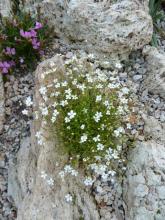
Silene bolanthoides, from seed last year. The seeds were also from Pavelka, collected from 1700m, Kaz Dag, Turkey; "dwarf dense cushions, short linear leaves, flowers solitary or 2-4, stemless or very short scape; white to pale pink petals deeply bilobed, flowers 1.5cm across; New, rare, one of the best silene kinds. Stoney places. 2008 seed."
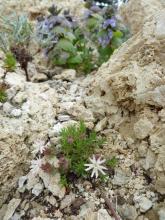
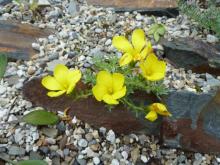
Linum cariense:
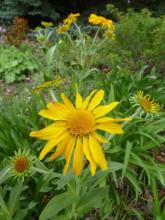
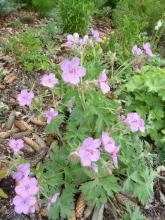
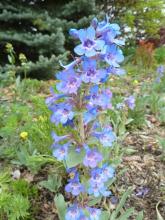
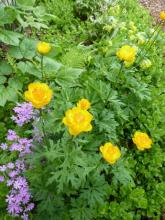
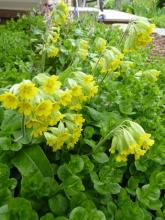
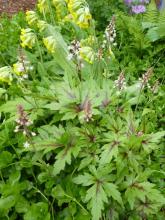
In the perennial gardens: Helenium hoopesii; one of our two native geraniums, Geranium viscosissimum; Penstemon nitidus; Trollius chinensis cv.; Primula veris; Tiarella 'Sugar and Spice'.
A trough of Dianthus sp., Penstemon 'Pink Holly', and Alyssum spinosum, served up with sprinkles (petals from 'Royalty' crabapple):
Phlox bifida:
Osteospermum barberiae var. compactum 'Purple Mountain', planted in 2001, looking very good this year with many buds.. some of these South African plants certainly are hardy!
Fat buds on Edraianthus serbicus, from seed last year (Pavelka: 1400m, Konavska hills, Bulgaria; dwarf cushions, linear hairy green leaves, 2-4 blue flowers, scapes short; Sunny stoney hills; 2008 seed):
Great promise for flowering shown also by Campanula topaliana:
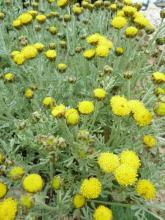
Update on Ajania tibetica (formerly Tanacetum tibeticum)...
Stephen, do you keep your Taraxacum faeroense wettish, or just regular garden moisture?
Lori, the little Linum is very showy! What is behind the Silene? is that a Phlomis, or..? Interesting look those have, like a little group of persons.....
Very interesting about the Osteospermum (I do recall you mentioning/showing it before, though I forget flower colour).. I've wondered what might go in a hardy African bed besides Delos....
Lori, love the Penstemon 'Pink Holly'. That's a very special plant introduced by Mark McDonough many years ago. Wonderful that you're growing it so beautifully. I wish Mark would weigh in on this. Is it a form of P. rupicola? Or a cross of P.rupicola with something else? With uncertain snow cover and lots of winter wind, P. rupicola was a failure here. It survived the winter but seemed to use all its energy to replace wind-butned foliage and never flowered. Finally gave up.
In the garden today. 1. Heterotheca jonesii in crevice garden 2. Heterotheca jonesii - older planting in scree 3. Daphne arbuscula sp - starting to rebloom in crevice garden Probably the next pictures will be from the Dolomites (my other garden!). We leave Thursday.
Lori...What is behind the Silene? is that a Phlomis, or..? Interesting look those have, like a little group of persons.....
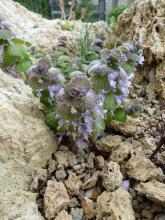
Cohan, it's Marmoritis (Phyllophyton) complanatum (below)... I would like these to be very compact, and I'll move then into the soon-to-be much leaner tufa bed addition to see if that helps. Nice dandelion - the dark sepals (and dark everything!) give it a nice contrast, and it seems a richer gold colour than its weedy cousin.
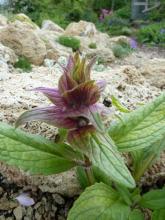
Ajuga lupulina, same story as Marmoritis...
Anne - well, I'm thrilled to have one of Mark's introductions! :) Yes, Bob Nold in Penstemons says that P. 'Pink Holly' is from [[P. davidsonii x P. fruticosus] x P. rupicola] x P. rupicola 'Albus'. Yes, I find that the woodier penstemons can suffer here too from winter kill, 'Pink Holly' among them. Wow, your groves of Heterotheca jonesii are spectacular!! My little one is just showing buds now.
Cohan, it's Marmoritis (Phyllophyton) complanatum (below)... I would like these to be very compact, and I'll move then into the soon-to-be much leaner tufa bed addition to see if that helps. Nice dandelion - the dark sepals (and dark everything!) give it a nice contrast, and it seems a richer gold colour than its weedy cousin. Ajuga lupulina, same story as Marmoritis... Anne Wow, your groves of Heterotheca jonesii are spectacular!! My little one is just showing buds now.
These mints are nice already, will be interesting to see how they look in the leaner mix, should be very cool... I should have moved faster today, there has been an hour or so without rain and I should have been out with the camera--I'm going to try now, but have a feeling it will be raining again before I get out.... Anne--ditto on the Heterotheca :) Have fun in your other garden!
Nice foliage on the Aethionemas-second one almost looks succulent... I like the Silenes too, especially maritima with the hint of pink; growing these two here would have the same sort of perversity as growing dandelions--the weedy white species is not as common as dandelions, but the seedlings pop up instantly in any cultivated soil! I love the flowers, though--particularly the calyces..
A plentitude of gardenworthy plants! Although I have heard of several of them I am familiar with only two: Primula veris and Silene maritima. Both are common natives at my summerhouse.
My goodness Lori..I had to look several of these up as I have never heard of them. Are these Halda or Holubec seed? I have not seen many of them offered in the NARGS seedex. BTW, I arrive in calgary this Saturday....any chance for a visit to your and/or Stephanie's garden on Sunday?
In the garden now...one of my alpine pots featuring Rhododendron campylogynum, Anemone fasciculata, Patrinia siberica, Papaver burseri and Oxalis Ione Hocker
Superb trough/pot planting, Todd! That rhodo is amazing... I'd never even guess it was a rhodo! Your oxalis just kill me... my dinky little plants have dwindled or totally disappeared over the last 2-3 years.
A very small heuchera, Heuchera hallii (the camera doesn't handle white too well):
Silene kantzeensis, down to one measly flower this year... I think it's my wake-up call to divide this thing up and move it into different places before it gives up entirely!
Campanula saxifraga:
And some perennials... Out in Palliser's Triangle (although perhaps the name no longer applies... the area grows perennials pretty well, though it was lousy for grass!), Lupinus nootkatensis:
Gee Todd, I hope my Allium zebdanense seedlings look that good someday. Happy Birthday from me, too.
Lori, yet another array of wonderful plants! Is Lupinus nootkatensis native in your area? Someone sent me some wild collected seed from the Alaskan panhandle once. I never grew them, but I passed them on to someone else here.
Our native lupine in Minnesota is Lupinus perennis. A friend at work collected wild seed last fall and put them in the deep freeze, and then planted them in late winter under lights. Many are starting to bloom now! He started them in regular potting mix, and transplanted them outside at his cabin in northern Minnesota where the soil is fairly clayey, so he put them in a mix of class 5 crushed limestone and peat (!?) All I can say is: it works!
My Magnolia sieboldii is nine feet tall now, and is very worthy. I wish it had fall color, though.
Out in Palliser's Triangle (although perhaps the name no longer applies... the area grows perennials pretty well, though it was lousy for grass!)
Had to look this up, Lori ... for those also in the dark ...
The driest part of the Canadian prairies is often called the Palliser Triangle, after a 19th century explorer who first described a roughly triangular area that he felt to be poorly suited for farming.
In his final report to the British government Captain John Palliser suggested that a triangular portion of what is now the southern prairie provinces was a northern extension of the arid, central desert of the United States: “This central desert extends, however, but a short way into the British territory, forming a triangle, having for its base the 49th parallel from longitude 100° to 114° W, with its apex reaching to the 52nd parallel of latitude.” Palliser described this triangular area as “desert, or semi-desert in character, which can never be expected to become occupied by settlers.” To this day Palliser’s name is attached to the most arid region of the southern Canadian prairies.
Both very interesting, Trond (the Poly, too); Filipendula is very dramatic, and edible corms are interesting--many of our edible northern plants have only greens...
Is Lupinus nootkatensis native in your area? Our native lupine in Minnesota is Lupinus perennis.
Rick, L. nootkatensis is native to Alberta but it occurs in the northern subalpine area, from the Athabasca River headwaters north, according to Flora of Alberta... (which reminds me that I still haven't figured out the ID of the interesting lupin I saw in the park). L. perennis looks very nice... I'd love to get some seeds if you ever have the opportunity to collect a little bit. The magnolia looks gorgeous!
Cliff, thank you for the explanation of "Palliser's Triangle". :D It was a fitting name for our roughly-triangular boulevard section, as it consisted of a boring area of compacted lawn grass that was impossible to water adequately (and why waste water on lawn anyway?) In Palliser's terms, it was unsuitable for "agriculture"(=lawn)... True, but it is now an interesting and floriferous bed of perennials and shrubs that requires no watering!
Here's an update on Silene bolanthoides, which is looking rather adorable, with both pink and white flowers; the whole plant is about 2 inches across:
Ditto for Asperula boissieri:
Saxifraga paniculata v. minutifolia 'Red-backed Spider':
And I got home late tonight, and was out taking photos when it was really too dark to do so, but it made for sort of an interesting photo of the first flowers on Silene falcata:
Trond: Yes, please to the Filipendula - I had it for several years, but disappeared two winters ago, possibly too dry where I had it. I would also be interested in the Polygonatum (a genus with many wild foraged edibles :) ). Have you posted it on the Polygonatum thread at SRGC? Would be interesting to know what it is.
Lupinus nootkatensis has naturalised in Norway and there's quite a large population on a damp meadow near the fjord next to Trondheim airport at a place you'll be familiar with but probably haven't visited - Hell :) Incidentally, I live on the road to Hell. There's an annual blues festival there and several artists have recorded their Blues Live in Hell album there...
Yes, I have Pignut which has become a bit invasive in my garden - the tubers are difficult to dig out in garden soil as they sit quite deep, but aren't really a problem. They also grow quite big (picture 1 and 2) - I think that they are rarely this big in nature (probably about 5 years old); the single leaf arising from the tuber looks ridiculously small. I collected seed in the Pyrenees years ago and later also introduced from Scotland. I understand that there are different species in Southern Europe, so it could be a different species, but I've never seen a key to the genus...
I also have Bunium bulbocastanum (Great Pignut or Knollkarve in Norwegian; literally Tuberous Caraway) (picture 3 shows both pignuts)
Unfortunately, I'm one of those that get an unpleasant aftertaste if I eat raw pignuts of both species (not everyone does). .
Yes, I have Pignut which has become a bit invasive in my garden - the tubers are difficult to dig out in garden soil as they sit quite deep, but aren't really a problem. They also grow quite big (picture 1 and 2) - I think that they are rarely this big in nature (probably about 5 years old); the single leaf arising from the tuber looks ridiculously small. I collected seed in the Pyrenees years ago and later also introduced from Scotland. I understand that there are different species in Southern Europe, so it could be a different species, but I've never seen a key to the genus...
I also have Bunium bulbocastanum (Great Pignut or Knollkarve in Norwegian; literally Tuberous Caraway) (picture 3 shows both pignuts)
Unfortunately, I'm one of those that get an unpleasant aftertaste if I eat raw pignuts of both species (not everyone does). .
Very interesting, I'd like to try these.. you can eat them cooked as well as raw? Are they closely related to Caraway? That is an invasive here, having been planted by many European settlers.. though I haven't seen it much outside farmsteads/yards (we have it here on the acreage and it can really spread.. )
Yes, you can also eat them cooked, but I was put off by the raw taste... Apart from being umbellifers, I don't think they are closely related - Trond will correct me if I'm wrong. I'll try to harvest seed later...
Lori, that Silene bolanthoides is really adorable now. I didn't think much about it when you showed it with just one flower. (I'm a little embarrassed.) Maggi has that wonderful quote:
Quote:
Beauty is in the eye of the beholder and it may be necessary from time to time to give a stupid or misinformed beholder a black eye. - Miss Piggy
You can slap me in the face now (no black eye, please)... ;D
Maggi, finding a plant that's unfamiliar to you is an accomplishment indeed! :o :)
A few from today: Silene falcata; Silene nigrescens; first flower on Hypericum aviculariifolium ssp. uniflorum - it looks like it will be a very showy plant!
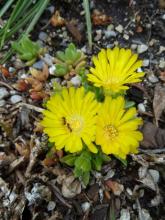
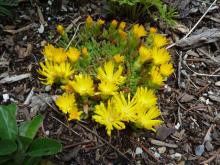
Yellow Delosperma... the oldest plant was decimated after last winter (who says snow cover is good??), the other slightly different plant is seemingly unaffected, however:
Maggi, when faced with those ribs and bacon, good to remember another Miss Piggy quote: "Never eat anything bigger than your head"
Yup, another good reason to follow the teaching of the Great Piggy.
Quote:
Maggi, finding a plant that's unfamiliar to you is an accomplishment indeed!
Heck no, Lori, you flatter me - it happens every day here or in the SRGC Forum. I keep seeing new plants and scurrying off to read all I can about them.. it's a real education... or it would be if I could remember more than half of what I read nowadays. :-X
The Silene bolanthoides is wonderful, Lori. How long have you been growing it and what do you know about it?
Anne, I ordered it from Mojmir Pavelka and grew it in 2010, so it's come through one winter in the tufa garden and this is the first bloom; it's 2" across at present and a little under a 1/2" tall. Here is the description from Mojmir's seed list: "1700m, Kaz Dag, Turkey; dwarf dense cushions, short linear leaves, flowers solitary or 2-4, stemless or very short scape; white to pale pink petals deeply bilobed, flowers 1.5cm across; New, rare, one of the best silene kinds. Stoney places. 2008 seed."
The Silene bolanthoides is wonderful, Lori. How long have you been growing it and what do you know about it?
Anne, I ordered it from Mojmir Pavelka and grew it in 2010, so it's come through one winter in the tufa garden and this is the first bloom; it's 2" across at present and a little under a 1/2" tall. Here is the description from Mojmir's seed list: "1700m, Kaz Dag, Turkey; dwarf dense cushions, short linear leaves, flowers solitary or 2-4, stemless or very short scape; white to pale pink petals deeply bilobed, flowers 1.5cm across; New, rare, one of the best silene kinds. Stoney places. 2008 seed."
A case in point about my memory.... I first "met" this plant when it was featured in the International Rock Gardener of May 2010 ..... http://www.srgc.org.uk/logs/logdir/2010May271274998232IRG_5_May.pdf ...... and determined then to seek seed.... promptly forgot until I saw this plant doing so well for Lori... have now made a written note to self re seed!
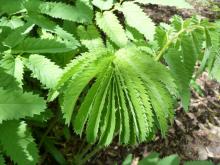
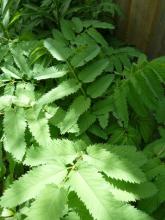
I have been appreciating the beautiful foliage on this plant, especially the intricate new tips, and while I had thought of it as a woodlander, I've just discovered it's a plant of alpine meadows (though certainly one of the bigger ones) - Sanguisorba dodecandra: http://www.iucnredlist.org/apps/redlist/details/170361/0/full
I have been a bit surprised to realize that some alpines are at their best when the sun has passed over... Dianthus leucophaeus is a little unusual for a dianthus, having fragrant flowers (not overly showy, however) that remain closed during the day but open in the evening:
Leptodactylon pungens ssp. pulchrifolium also has flowers fully open, and sweetly fragrant, in the evening:
I know I've been pushing this one a lot lately but here it is again... (until some more stuff starts to bloom or someone else starts posting! :P ;D)... Silene falcata's flowers look somewhat spent during the day, but revive and look fresh in the evening:
And a few others in bloom now: Incarvillea himalayense zhongdianensis; Primula kisoana; something that I have noted as Silene pusilla but isn't, I don't think (as it lacks the incised petals that it should have??):
I always wonder where you fit all these plants on a city lot, Lori! Maybe not surprising that some of those plants you mention as looking their best in the evening are white/light and fragrant-- traits common among moth pollinated plants..
Where do I fit all these plants? Actually, I'd like to get a lot more different and interesting perennials and reduce the repetition of ones I have! But, as I've mentioned before, it's just the absence of lawn that provides more than the usual amount of planting space (though it doesn't always feel that way), and having said that, our lot is a little bigger than average (it's just shy of 1/3 acre).
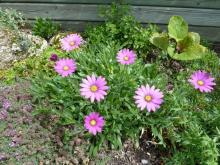
Here's Osteospermum barberiae var. compactum 'Purple Mountain'... perhaps not so floriferous as the many bedding plant versions that people grow here, but certainly impressive for its hardiness (and I'm afraid to move it to a sunnier spot!):
Where do I fit all these plants? Actually, I'd like to get a lot more different and interesting perennials and reduce the repetition of ones I have! But, as I've mentioned before, it's just the absence of lawn that provides more than the usual amount of planting space (though it doesn't always feel that way), and having said that, our lot is a little bigger than average (it's just shy of 1/3 acre).
Here's Osteospermum barberiae var. compactum 'Purple Mountain'... perhaps not so floriferous as the many bedding plant versions that people grow here, but certainly impressive for its hardiness (and I'm afraid to move it to a sunnier spot!): [attachthumb=1]
I understand not wanting to repeat plants to have more space, but then swathes of one species can be so nice! (space luxury, I understand) The Osteo is cool--you could always try some seeds in a sunnier spot...
Have not had much time to take pictures either but here are one from a few days ago: This unfortunate bumblebee met her end working hard for her siblings :(



Comments
Richard T. Rodich
Re: What do you see on your garden walks?
Wed, 06/15/2011 - 6:49pmGosh Lori, you plants are never ending! (As is our interest in them. :o)
By the way, that supposed diminutive hybrid veronica I found (http://nargs.org/smf/index.php?topic=274.msg9053#msg9053) has turned out to be the weed - V.serpyllifolia, as you suggested. I found it in the neighbor's garden, too.
Mark, I seemed to have missed your post mentioning my variegated Astrantia, until now. Astrantia 'Sunningdale Gold' (name correction) is only variegated in the spring. The variegation is almost completely faded to green already. In addition, it took three to four years from planting to really show well. Flowers are just a green-white, and fairly sparse compare to most astrantia. Not a real winner in my estimation, but good enough to keep around.
Regarding the Kentucky Coffee tree, male trees are rather spindly growing compared to females, in general. My trees are good examples. There are good selections of male clones that are very desirable. The University of Minnesota has a nice male cultivar: Stately Manor.
The best pic I could get of my male tree on the south side of my house. Behind the Smoke tree (Cotinus obovatus) and the Green ash (that will eventually succumb to the Emerald Ash borer when it gets here), it is a simple seed grown tree from a local nursery.
This is a female on the west side of my house. Planted in 1994 as a three foot seedling dug from a friend's backyard. The male tree was planted in 1993 as a potted seven foot tree. They are now both about equal height, but the female, as expected, has a much larger complement of foliage. In my opinion (others' will differ), the bean pods are quite ornimental, and stay attached through the winter.
Note that Kentucky coffee trees leaf out very late in the spring and have huge doubly compound leaves. Even now, in these photos the first leaves are only two-thirds their final size. Like oaks, most of the growth is put out in one push in the spring/early summer. These trees also are the first to color and drop leaves in the fall. They are part of my "landscaping for energy efficiency" endeavor, allowing for maximum natural sun heating of the house through the spring and also in very early (and cool) fall and through the winter, while still providing shade in the hot months. Because the leaves are so huge, twigs that remain through the winter are relatively sparse, and give the most minimal winter shade of any deciduous tree.
Of particular note at the base of the tree and to the right in the last pic, is a mature Atlantic Leatherwood (Dirca palustris). It is notorious for resenting transplanting, yet it was just transplanted this spring from my garden. I had been root pruning it for two seasons prior. This is a very special plant for me, as it came from a fellow rock garden society member, who received it from May Wright, one of the original Minnesota native plant enthusiasts, who died many years ago.
Lori S. (not verified)
Re: What do you see on your garden walks?
Thu, 06/16/2011 - 9:19pmInteresting, Rick. I've never seen this tree (which is almost needless to say, I suppose). I was just reading about it... leaves one to 3 feet long - wow! How big do the leaves on yours get?
More info on Dirca palustris...
http://ontariotrees.com/main/species.php?id=2056
cohan (not verified)
Re: What do you see on your garden walks?
Fri, 06/17/2011 - 12:55amI think Kristl has offered seed of both of those species...
I'm really interested in small trees/shrubs for here--there are more tall trees than I would like (shade I do not need), but lots of spaces for things no more than 10-15 feet high.. have some seedlings of various things... and some empty pots...lol
Richard T. Rodich
Re: What do you see on your garden walks?
Fri, 06/17/2011 - 5:18pmMost years they are are about 2.5 ft. Less if they emerge during a dry spell. I bet it would grow as a die back "herbaceous" plant in your Alberta climate. Pawlonia does that here, and for those that grow it (just as a fun plant - no flowers), it gets 8-12 ft in one season. I would think the Kentucky Coffee tree might grow 3-5 ft. They are very easy from seed. Just sand paper a corner off of the hard coating to imbibe water. No pretreatment needed.
cohan (not verified)
Re: What do you see on your garden walks?
Fri, 06/17/2011 - 10:36pmExciting time here today-- first open flower on Taraxacum faeroense! Much slower than its big weedy cousings, which have grown, flowered, seeded, repeat! all the while this little thing has been slowly developing its buds for weeks! For a long time one small bud was visible in the centre, then much later, another could be seen, finally a bit of stem appeared on the first one and there seemed to be about 4 buds..
Today, first opening--only halfway on a wet, cloudy morning.. (I wasn't home later when the sun came out) and no sun forecast for the next couple of days (cloudy and 40 chance of rain forecast for tomorrow, and 60-100% for all of the next 7 days except tuesday), but I'm hoping maybe to get a couple of flowers at once in days to come!
Stephen Barstow
Re: What do you see on your garden walks?
Sat, 06/18/2011 - 7:48amMine's also just started flowering!
Lori S. (not verified)
Re: What do you see on your garden walks?
Sat, 06/18/2011 - 12:36pmHypericum aviculariifolium ssp. uniflorum, from seed last year, is looking very interesting this year... the flower buds are red to pink. I'm not sure the term "uniflorum" will apply, though. The seeds were from Pavelka, collected from 2500m, Dedegol Dag, Turkey; "small plant 5cm, pubescent glaucous leaves, golden yellow flowers, very good."
Silene bolanthoides, from seed last year. The seeds were also from Pavelka, collected from 1700m, Kaz Dag, Turkey; "dwarf dense cushions, short linear leaves, flowers solitary or 2-4, stemless or very short scape; white to pale pink petals deeply bilobed, flowers 1.5cm across; New, rare, one of the best silene kinds. Stoney places. 2008 seed."
Linum cariense:
In the perennial gardens: Helenium hoopesii; one of our two native geraniums, Geranium viscosissimum; Penstemon nitidus; Trollius chinensis cv.; Primula veris; Tiarella 'Sugar and Spice'.
Lori S. (not verified)
Re: What do you see on your garden walks?
Sat, 06/18/2011 - 1:10pmA trough of Dianthus sp., Penstemon 'Pink Holly', and Alyssum spinosum, served up with sprinkles (petals from 'Royalty' crabapple):
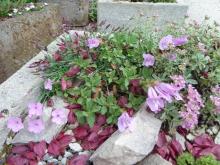
Phlox bifida:
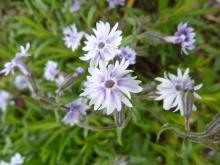
Osteospermum barberiae var. compactum 'Purple Mountain', planted in 2001, looking very good this year with many buds.. some of these South African plants certainly are hardy!
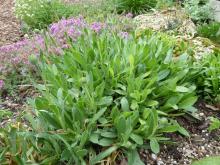
Fat buds on Edraianthus serbicus, from seed last year (Pavelka: 1400m, Konavska hills, Bulgaria; dwarf cushions, linear hairy green leaves, 2-4 blue flowers, scapes short; Sunny stoney hills; 2008 seed):
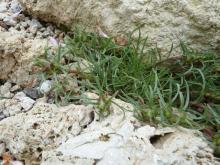
Great promise for flowering shown also by Campanula topaliana:
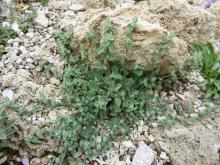
Update on Ajania tibetica (formerly Tanacetum tibeticum)...
cohan (not verified)
Re: What do you see on your garden walks?
Sat, 06/18/2011 - 11:06pmStephen, do you keep your Taraxacum faeroense wettish, or just regular garden moisture?
Lori, the little Linum is very showy! What is behind the Silene? is that a Phlomis, or..? Interesting look those have, like a little group of persons.....
Very interesting about the Osteospermum (I do recall you mentioning/showing it before, though I forget flower colour).. I've wondered what might go in a hardy African bed besides Delos....
Anne Spiegel
Re: What do you see on your garden walks?
Sun, 06/19/2011 - 8:51amLori, love the Penstemon 'Pink Holly'. That's a very special plant introduced by Mark McDonough many years ago. Wonderful that you're growing it so beautifully.
I wish Mark would weigh in on this. Is it a form of P. rupicola? Or a cross of P.rupicola with something else? With uncertain snow cover and lots of winter wind, P. rupicola was a failure here. It survived the winter but seemed to use all its energy to replace wind-butned foliage and never flowered. Finally gave up.
Anne Spiegel
Re: What do you see on your garden walks?
Sun, 06/19/2011 - 9:26amIn the garden today.
1. Heterotheca jonesii in crevice garden
2. Heterotheca jonesii - older planting in scree
3. Daphne arbuscula sp - starting to rebloom in crevice garden
Probably the next pictures will be from the Dolomites (my other garden!). We leave Thursday.
Lori S. (not verified)
Re: What do you see on your garden walks?
Sun, 06/19/2011 - 11:11amCohan, it's Marmoritis (Phyllophyton) complanatum (below)... I would like these to be very compact, and I'll move then into the soon-to-be much leaner tufa bed addition to see if that helps. Nice dandelion - the dark sepals (and dark everything!) give it a nice contrast, and it seems a richer gold colour than its weedy cousin.
Ajuga lupulina, same story as Marmoritis...
Anne - well, I'm thrilled to have one of Mark's introductions! :) Yes, Bob Nold in Penstemons says that P. 'Pink Holly' is from [[P. davidsonii x P. fruticosus] x P. rupicola] x P. rupicola 'Albus'. Yes, I find that the woodier penstemons can suffer here too from winter kill, 'Pink Holly' among them.
Wow, your groves of Heterotheca jonesii are spectacular!! My little one is just showing buds now.
cohan (not verified)
Re: What do you see on your garden walks?
Sun, 06/19/2011 - 12:45pmThese mints are nice already, will be interesting to see how they look in the leaner mix, should be very cool...
I should have moved faster today, there has been an hour or so without rain and I should have been out with the camera--I'm going to try now, but have a feeling it will be raining again before I get out....
Anne--ditto on the Heterotheca :) Have fun in your other garden!
Lori S. (not verified)
Re: What do you see on your garden walks?
Sun, 06/19/2011 - 9:47pmAethionema lepidioides:
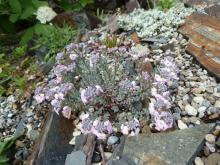
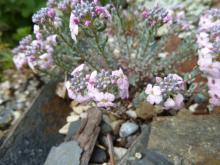
Two different plants of Aethionema glaucescens, looking slightly different:
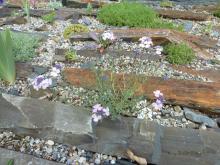
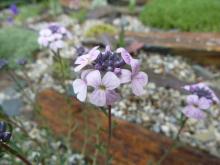
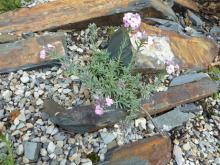
Silene zawadskii and Silene maritima:
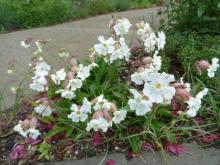
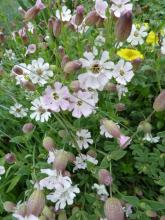
Androsace primuloides 'Chumbyi':
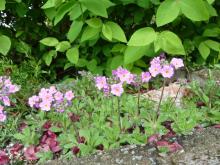
cohan (not verified)
Re: What do you see on your garden walks?
Mon, 06/20/2011 - 11:49amNice foliage on the Aethionemas-second one almost looks succulent...
I like the Silenes too, especially maritima with the hint of pink;
growing these two here would have the same sort of perversity as growing dandelions--the weedy white species is not as common as dandelions, but the seedlings pop up instantly in any cultivated soil! I love the flowers, though--particularly the calyces..
Trond Hoy
Re: What do you see on your garden walks?
Mon, 06/20/2011 - 2:47pmA plentitude of gardenworthy plants! Although I have heard of several of them I am familiar with only two: Primula veris and Silene maritima. Both are common natives at my summerhouse.
Todd Boland
Re: What do you see on your garden walks?
Mon, 06/20/2011 - 2:55pmMy goodness Lori..I had to look several of these up as I have never heard of them. Are these Halda or Holubec seed? I have not seen many of them offered in the NARGS seedex. BTW, I arrive in calgary this Saturday....any chance for a visit to your and/or Stephanie's garden on Sunday?
In the garden now...one of my alpine pots featuring Rhododendron campylogynum, Anemone fasciculata, Patrinia siberica, Papaver burseri and Oxalis Ione Hocker
Todd Boland
Re: What do you see on your garden walks?
Mon, 06/20/2011 - 2:59pmAllium zebdanense, Dianthus glacialis and Ramonda myconi
Anne Spiegel
Re: What do you see on your garden walks?
Mon, 06/20/2011 - 4:42pmGreat plants, Todd. Happy Birthday a few days in advance.
Lori S. (not verified)
Re: What do you see on your garden walks?
Mon, 06/20/2011 - 7:37pmSuperb trough/pot planting, Todd! That rhodo is amazing... I'd never even guess it was a rhodo! Your oxalis just kill me... my dinky little plants have dwindled or totally disappeared over the last 2-3 years.
A very small heuchera, Heuchera hallii (the camera doesn't handle white too well):
Silene kantzeensis, down to one measly flower this year... I think it's my wake-up call to divide this thing up and move it into different places before it gives up entirely!
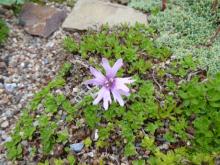
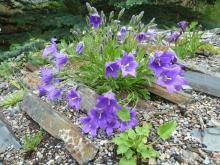
Campanula saxifraga:
And some perennials...
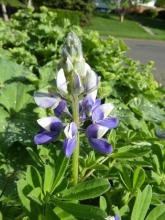
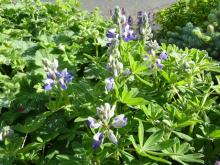
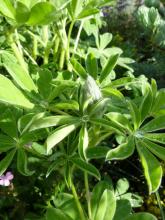
Out in Palliser's Triangle (although perhaps the name no longer applies... the area grows perennials pretty well, though it was lousy for grass!), Lupinus nootkatensis:
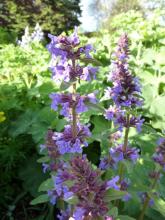
Also, Dracocephalum nutans:
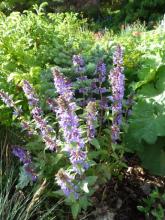
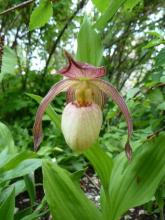
And, ending off, Cypripedium 'Aki'... I can't claim to have "grown" this - I just bought it this spring and stuck it in the ground.
Richard T. Rodich
Re: What do you see on your garden walks?
Mon, 06/20/2011 - 9:30pmGee Todd, I hope my Allium zebdanense seedlings look that good someday.
Happy Birthday from me, too.
Lori, yet another array of wonderful plants! Is Lupinus nootkatensis native in your area? Someone sent me some wild collected seed from the Alaskan panhandle once. I never grew them, but I passed them on to someone else here.
Our native lupine in Minnesota is Lupinus perennis. A friend at work collected wild seed last fall and put them in the deep freeze, and then planted them in late winter under lights. Many are starting to bloom now! He started them in regular potting mix, and transplanted them outside at his cabin in northern Minnesota where the soil is fairly clayey, so he put them in a mix of class 5 crushed limestone and peat (!?) All I can say is: it works!
My Magnolia sieboldii is nine feet tall now, and is very worthy. I wish it had fall color, though.
Cliff Booker
Re: What do you see on your garden walks?
Mon, 06/20/2011 - 11:04pmHad to look this up, Lori ... for those also in the dark ...
The driest part of the Canadian prairies is often called the Palliser Triangle, after a 19th century explorer who first described a roughly triangular area that he felt to be poorly suited for farming.
In his final report to the British government Captain John Palliser suggested that a triangular portion of what is now the southern prairie provinces was a northern extension of the arid, central desert of the United States: “This central desert extends, however, but a short way into the British territory, forming a triangle, having for its base the 49th parallel from longitude 100° to 114° W, with its apex reaching to the 52nd parallel of latitude.” Palliser described this triangular area as “desert, or semi-desert in character, which can never be expected to become occupied by settlers.” To this day Palliser’s name is attached to the most arid region of the southern Canadian prairies.
Trond Hoy
Re: What do you see on your garden walks?
Tue, 06/21/2011 - 11:14amYou have some really nice plants, Todd! How do they know you have birthday soon? (I have too, you see, next week ;))
Lori, do you never run out of space and plants to grow and show? I am really impressed by your assortment of plants!
Rick, pretty flowers of the Magnolia. Doesn't the leaves go yellow in fall?
Here are a few of the plants flowering in the garden now:
A blue allium Codonopsis clematidea Corydalis elata
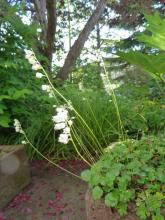
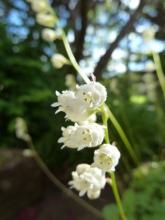
This strange Polygonatum has leaves with twining tips to help it climb in other plants. It has reached 1.5m now. The flowers are dotted.
Rosa roxburghii f normalis is in flower. I had to cut several branches last spring as it had outgrown its allowed space.
Trond Hoy
Re: What do you see on your garden walks?
Wed, 06/22/2011 - 10:13amAnother from today: Filipendula camtschatica, 250cm tall, from seed a few years ago.
Something for you, Stephen?
Btw, do you have "jordnøtt", Conopodium majus? (It is a native plant with nutlike edible corms.)
cohan (not verified)
Re: What do you see on your garden walks?
Wed, 06/22/2011 - 2:58pmBoth very interesting, Trond (the Poly, too); Filipendula is very dramatic, and edible corms are interesting--many of our edible northern plants have only greens...
Lori S. (not verified)
Re: What do you see on your garden walks?
Wed, 06/22/2011 - 10:23pmRick, L. nootkatensis is native to Alberta but it occurs in the northern subalpine area, from the Athabasca River headwaters north, according to Flora of Alberta... (which reminds me that I still haven't figured out the ID of the interesting lupin I saw in the park). L. perennis looks very nice... I'd love to get some seeds if you ever have the opportunity to collect a little bit. The magnolia looks gorgeous!
Cliff, thank you for the explanation of "Palliser's Triangle". :D It was a fitting name for our roughly-triangular boulevard section, as it consisted of a boring area of compacted lawn grass that was impossible to water adequately (and why waste water on lawn anyway?) In Palliser's terms, it was unsuitable for "agriculture"(=lawn)... True, but it is now an interesting and floriferous bed of perennials and shrubs that requires no watering!
What a strange Polygonum, Trond. Filipendula camtschatica is interesting (I have a weakness for big, burly plants)... I assume it is not rhizomatous? A common name for Conopodium majus is "pignut", apparently:
http://www.naturessecretlarder.co.uk/bushcraft-tutorials/pignut-foraging...
Here's an update on Silene bolanthoides, which is looking rather adorable, with both pink and white flowers; the whole plant is about 2 inches across:
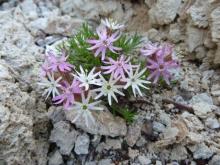
Ditto for Asperula boissieri:
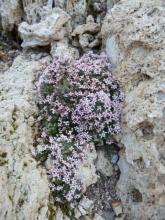
Saxifraga paniculata v. minutifolia 'Red-backed Spider':
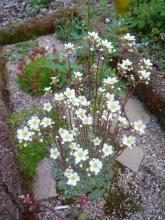
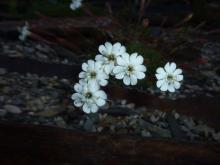
And I got home late tonight, and was out taking photos when it was really too dark to do so, but it made for sort of an interesting photo of the first flowers on Silene falcata:
Stephen Barstow
Re: What do you see on your garden walks?
Thu, 06/23/2011 - 1:17amTrond: Yes, please to the Filipendula - I had it for several years, but disappeared two winters ago, possibly too dry where I had it. I would also be interested in the Polygonatum (a genus with many wild foraged edibles :) ). Have you posted it on the Polygonatum thread at SRGC? Would be interesting to know what it is.
Lupinus nootkatensis has naturalised in Norway and there's quite a large population on a damp meadow near the fjord next to Trondheim airport at a place you'll be familiar with but probably haven't visited - Hell :) Incidentally, I live on the road to Hell. There's an annual blues festival there and several artists have recorded their Blues Live in Hell album there...
http://en.wikipedia.org/wiki/Hell_Station
Stephen Barstow
Re: What do you see on your garden walks?
Thu, 06/23/2011 - 1:34amYes, I have Pignut which has become a bit invasive in my garden - the tubers are difficult to dig out in garden soil as they sit quite deep, but aren't really a problem. They also grow quite big (picture 1 and 2) - I think that they are rarely this big in nature (probably about 5 years old); the single leaf arising from the tuber looks ridiculously small. I collected seed in the Pyrenees years ago and later also introduced from Scotland. I understand that there are different species in Southern Europe, so it could be a different species, but I've never seen a key to the genus...
I also have Bunium bulbocastanum (Great Pignut or Knollkarve in Norwegian; literally Tuberous Caraway) (picture 3 shows both pignuts)
Unfortunately, I'm one of those that get an unpleasant aftertaste if I eat raw pignuts of both species (not everyone does).
.
cohan (not verified)
Re: What do you see on your garden walks?
Thu, 06/23/2011 - 11:50amVery interesting, I'd like to try these.. you can eat them cooked as well as raw? Are they closely related to Caraway? That is an invasive here, having been planted by many European settlers.. though I haven't seen it much outside farmsteads/yards (we have it here on the acreage and it can really spread.. )
Stephen Barstow
Re: What do you see on your garden walks?
Thu, 06/23/2011 - 1:27pmYes, you can also eat them cooked, but I was put off by the raw taste... Apart from being umbellifers, I don't think they are closely related - Trond will correct me if I'm wrong. I'll try to harvest seed later...
Richard T. Rodich
Re: What do you see on your garden walks?
Thu, 06/23/2011 - 4:02pmLori, that Silene bolanthoides is really adorable now. I didn't think much about it when you showed it with just one flower. (I'm a little embarrassed.) Maggi has that wonderful quote:
You can slap me in the face now (no black eye, please)... ;D
Todd Boland
Re: What do you see on your garden walks?
Thu, 06/23/2011 - 5:53pmLooking forward to seeing that Silene in person.....BOLANthoides...almost my namesake!
Lori S. (not verified)
Re: What do you see on your garden walks?
Thu, 06/23/2011 - 8:24pmThere's a howling wind out there tonight, so I ended up deleting a lot of blurry photos...
These made the cut (I'm not that particular, I guess ;)):
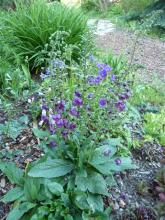
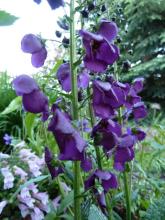
Verbascum atroviolaceum, a medium-height mullein that gets to about 20" in regular soil for me:
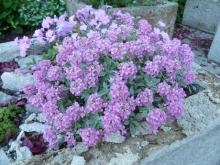
Ptilotrichum (Alyssum) spinosum:
Margaret Young
Re: What do you see on your garden walks?
Fri, 06/24/2011 - 8:22amLori, Verbascum atroviolaceum... a new one to me.... is a super colour.
Rick.... good to see you can see the wisdom in Miss Piggy... it's not always easy to see past the BBQ ribs and the bacon! :D
cohan (not verified)
Re: What do you see on your garden walks?
Fri, 06/24/2011 - 10:52amMaggi, when faced with those ribs and bacon, good to remember another Miss Piggy quote:
"Never eat anything bigger than your head"
Lori, nice Verbascum--a world apart from the big weedy one!
Lori S. (not verified)
Re: What do you see on your garden walks?
Fri, 06/24/2011 - 6:47pmMaggi, finding a plant that's unfamiliar to you is an accomplishment indeed! :o :)
A few from today:
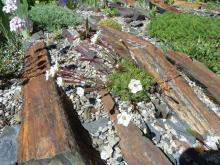
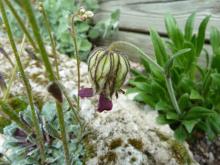
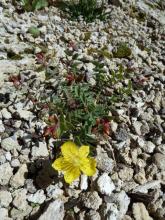
Silene falcata; Silene nigrescens; first flower on Hypericum aviculariifolium ssp. uniflorum - it looks like it will be a very showy plant!
Yellow Delosperma... the oldest plant was decimated after last winter (who says snow cover is good??), the other slightly different plant is seemingly unaffected, however:
Richard T. Rodich
Re: What do you see on your garden walks?
Fri, 06/24/2011 - 9:23pmAnother cute plant Lori: Hypericum aviculariifolium ssp. uniflorum.
It doesn't look very "uniflorum"(?) But that's a good thing. :)
Anne Spiegel
Re: What do you see on your garden walks?
Fri, 06/24/2011 - 11:10pmThe Silene bolanthoides is wonderful, Lori. How long have you been growing it and what do you know about it?
Margaret Young
Re: What do you see on your garden walks?
Sat, 06/25/2011 - 3:53amYup, another good reason to follow the teaching of the Great Piggy.
Heck no, Lori, you flatter me - it happens every day here or in the SRGC Forum. I keep seeing new plants and scurrying off to read all I can about them.. it's a real education... or it would be if I could remember more than half of what I read nowadays.
:-X
Lori S. (not verified)
Re: What do you see on your garden walks?
Sat, 06/25/2011 - 7:48amAnne, I ordered it from Mojmir Pavelka and grew it in 2010, so it's come through one winter in the tufa garden and this is the first bloom; it's 2" across at present and a little under a 1/2" tall. Here is the description from Mojmir's seed list: "1700m, Kaz Dag, Turkey; dwarf dense cushions, short linear leaves, flowers solitary or 2-4, stemless or very short scape; white to pale pink petals deeply bilobed, flowers 1.5cm across; New, rare, one of the best silene kinds. Stoney places. 2008 seed."
Margaret Young
Re: What do you see on your garden walks?
Sat, 06/25/2011 - 10:07amA case in point about my memory.... I first "met" this plant when it was featured in the International Rock Gardener of May 2010 .....
http://www.srgc.org.uk/logs/logdir/2010May271274998232IRG_5_May.pdf ......
and determined then to seek seed.... promptly forgot until I saw this plant doing so well for Lori... have now made a written note to self re seed!
Lori S. (not verified)
Re: What do you see on your garden walks?
Sat, 06/25/2011 - 1:20pmI have been appreciating the beautiful foliage on this plant, especially the intricate new tips, and while I had thought of it as a woodlander, I've just discovered it's a plant of alpine meadows (though certainly one of the bigger ones) - Sanguisorba dodecandra:
http://www.iucnredlist.org/apps/redlist/details/170361/0/full
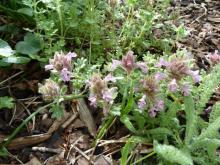
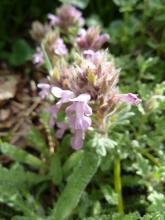
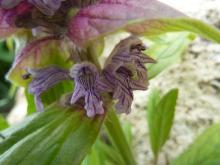
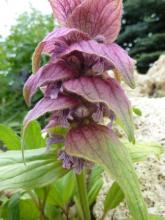
Dracocephalum botryoides:
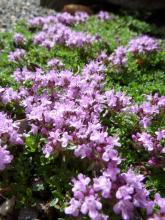
Thymus doerfleri:
Lori S. (not verified)
Re: What do you see on your garden walks?
Sat, 06/25/2011 - 3:10pmUpdate on Ajuga lupulina:
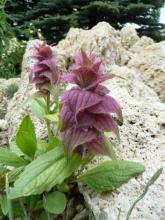
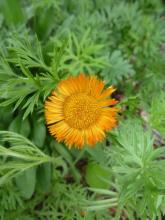
Erigeron aurantiacus; Dracocephalum heteophyllum:
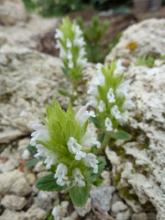
Lori S. (not verified)
Re: What do you see on your garden walks?
Sat, 06/25/2011 - 8:23pmI have been a bit surprised to realize that some alpines are at their best when the sun has passed over...
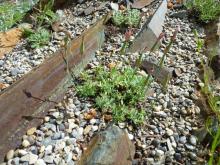
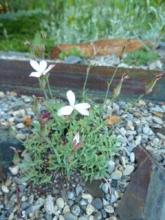
Dianthus leucophaeus is a little unusual for a dianthus, having fragrant flowers (not overly showy, however) that remain closed during the day but open in the evening:
Leptodactylon pungens ssp. pulchrifolium also has flowers fully open, and sweetly fragrant, in the evening:
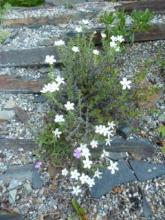
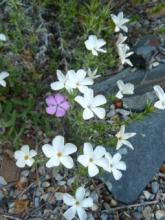
I know I've been pushing this one a lot lately but here it is again... (until some more stuff starts to bloom or someone else starts posting! :P ;D)... Silene falcata's flowers look somewhat spent during the day, but revive and look fresh in the evening:
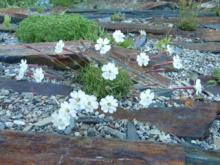
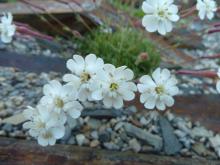
And a few others in bloom now:
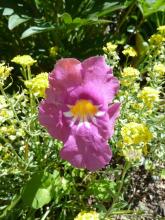
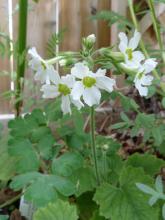
Incarvillea
himalayensezhongdianensis; Primula kisoana; something that I have noted as Silene pusilla but isn't, I don't think (as it lacks the incised petals that it should have??):cohan (not verified)
Re: What do you see on your garden walks?
Sat, 06/25/2011 - 10:51pmI always wonder where you fit all these plants on a city lot, Lori!
Maybe not surprising that some of those plants you mention as looking their best in the evening are white/light and fragrant-- traits common among moth pollinated plants..
Lori S. (not verified)
Re: What do you see on your garden walks?
Sun, 06/26/2011 - 9:26amWhere do I fit all these plants? Actually, I'd like to get a lot more different and interesting perennials and reduce the repetition of ones I have! But, as I've mentioned before, it's just the absence of lawn that provides more than the usual amount of planting space (though it doesn't always feel that way), and having said that, our lot is a little bigger than average (it's just shy of 1/3 acre).
Here's Osteospermum barberiae var. compactum 'Purple Mountain'... perhaps not so floriferous as the many bedding plant versions that people grow here, but certainly impressive for its hardiness (and I'm afraid to move it to a sunnier spot!):
cohan (not verified)
Re: What do you see on your garden walks?
Sun, 06/26/2011 - 1:11pmI understand not wanting to repeat plants to have more space, but then swathes of one species can be so nice! (space luxury, I understand)
The Osteo is cool--you could always try some seeds in a sunnier spot...
Trond Hoy
Re: What do you see on your garden walks?
Mon, 06/27/2011 - 10:59pmBusy time keeping pace with you Lori!
Have not had much time to take pictures either but here are one from a few days ago:
This unfortunate bumblebee met her end working hard for her siblings :(
cohan (not verified)
Re: What do you see on your garden walks?
Mon, 06/27/2011 - 11:18pmWow-- I shot a similar spider with a fly-ey thing the other day, but didn't think they could hold something as big as a bumblebee!
Richard T. Rodich
Re: What do you see on your garden walks?
Tue, 06/28/2011 - 5:53amSpiders frequent my flowers, too. So much so that, especially on certain ones, I carefully look for them before I touch the flower.
Nice pollen sacs on that bumble bee...
Pages