
Forums:
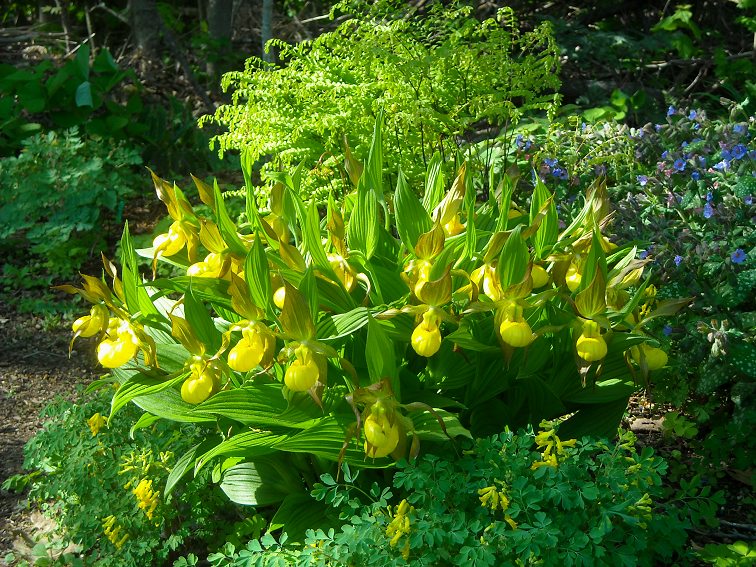
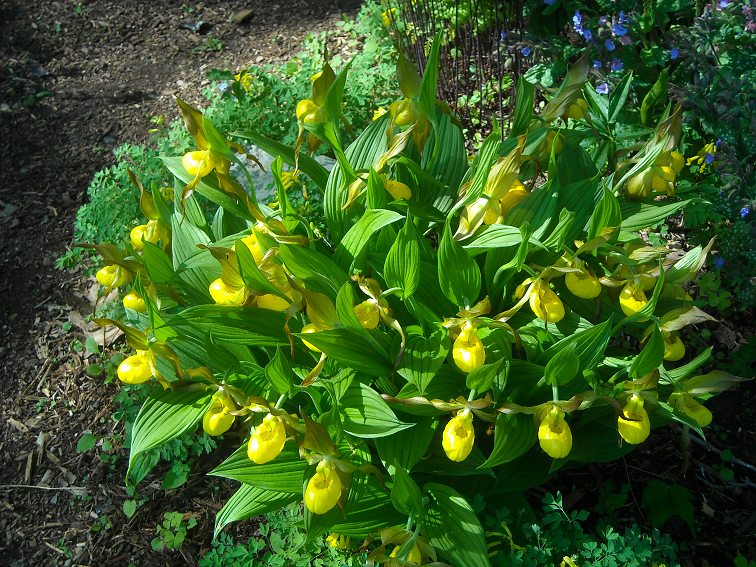
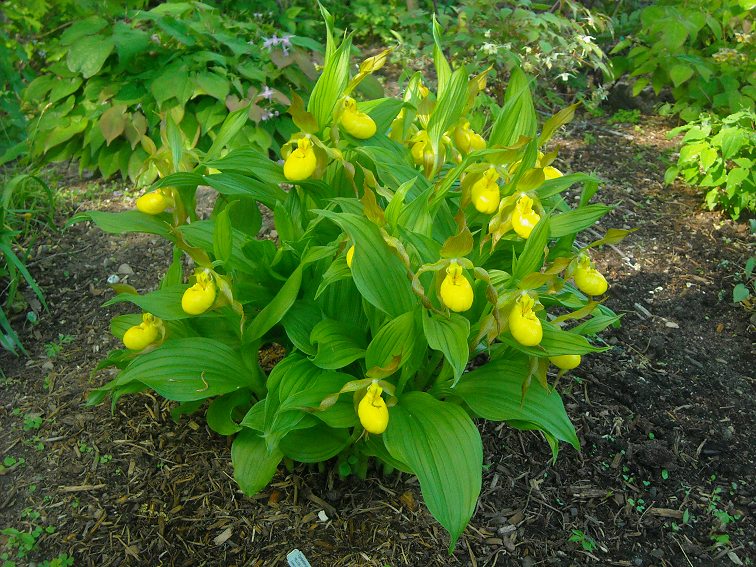
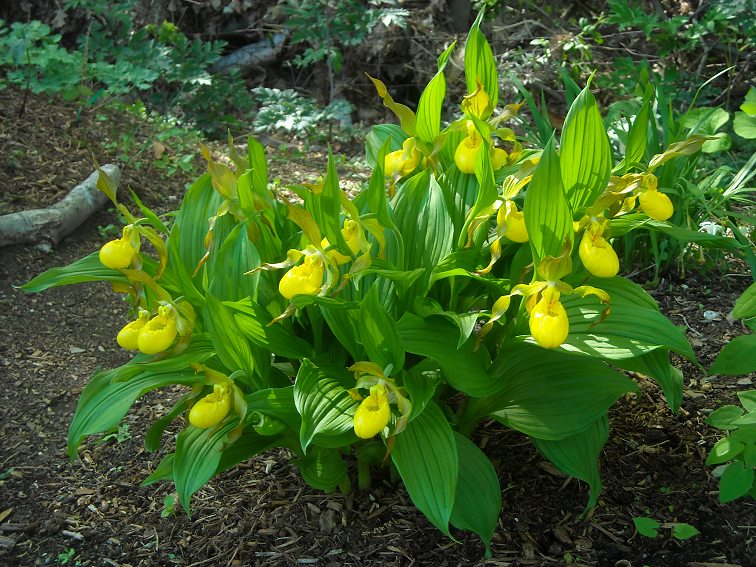
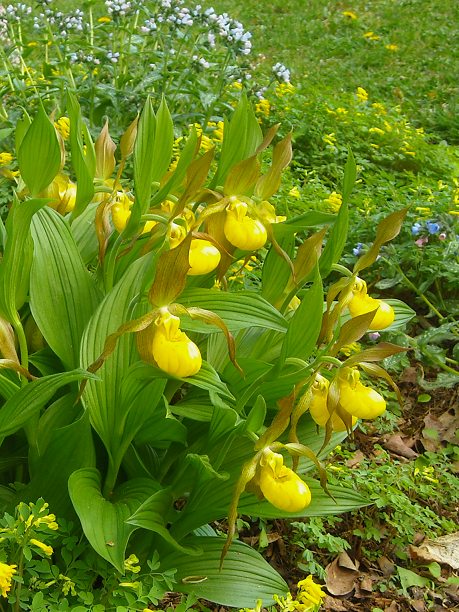
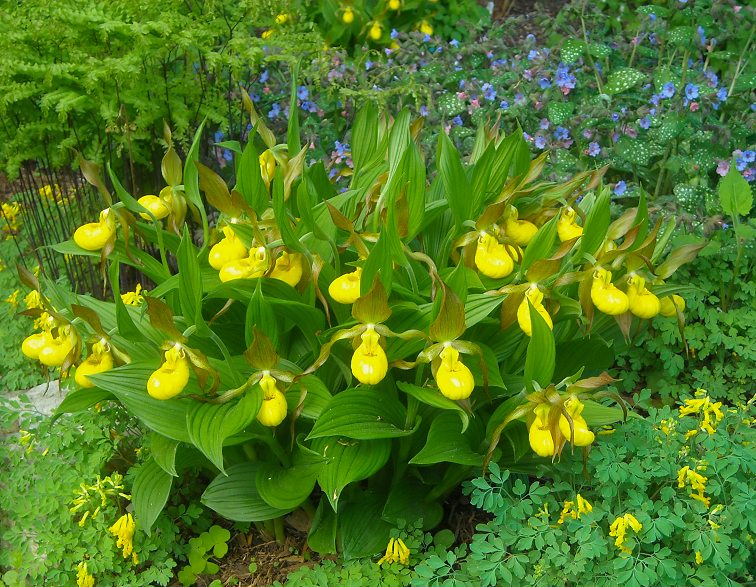
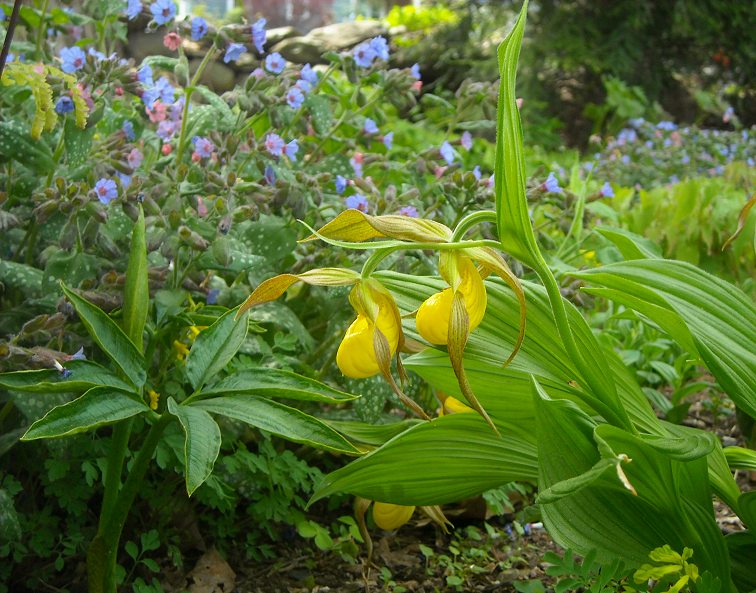
I'm starting this thread for terrestrial orchids, such as Cypripedium. I'll start out with a common "cyp" familiar to many of you, Cypripedium parviflorum var. pubescens. I know I went overboard shooting photos, but I just had to show some images, the plants have outdone themselves this year. Three unseasonably hot days pushed these along faster than I could have imagined, when they were just barely hinting as showing buds mere days ago. The bigger of my two large clumps has 32 pips this year.


Comments
Richard T. Rodich
Re: Terrestrial Orchids
Tue, 05/04/2010 - 9:12pmSometimes each pic is so good, you just can't decide which ones you shouldn't keep... Beautiful specimens, Mark.
Alas, I have no orchids in my home gardens here. But there are many, many species in varied habitats near our cabin in northern Minnesota.
Mark McDonough
Re: Terrestrial Orchids
Wed, 05/05/2010 - 3:44amIf you make any field trip and find some of these goodies, please snap a few pics and share them with us :D
PS. When I think about photographing plants, and this spring I have taken thousands of pictures (couple hundred each day), some plants are infuriatingly difficult to photograph and capture a good likeness, others like this Cyp is so photogenic, that it is impossible NOT to take great pics, each and every one ;D Now, with C. reginae coming later, I get terrible pics of that one, it is the light white and pink flower that never shows correctly.... I'll work on that one in a month or so.
BalistrieriCarlo (not verified)
Re: Terrestrial Orchids
Wed, 05/05/2010 - 5:15amFabulous Mark...what an amazing clump! You see these often enough now, but rarely with such size and flower power.
Richard T. Rodich
Re: Terrestrial Orchids
Wed, 05/05/2010 - 8:10amRegarding pics of white flower, you can set your camera to a negative exposure setting, or in close photos, hold a white sheet of paper (even small tablet size) in the camera's view while the camera sets its exposure, and remove it when you actually snap the picture.
Todd Boland
Re: Terrestrial Orchids
Fri, 05/07/2010 - 3:13amThe parviflorum in our BG are just breaking the surface, as are the C. acaule...it will be mid-June before they bloom here. You certainly have some impressive clumps!
Mark McDonough
Re: Terrestrial Orchids
Fri, 05/07/2010 - 3:41amTodd, at the BG, how do they successfully cultivate C. acaule? It is around in our woods, but I know that they don't usually move successfully. I once did yard work for a wealthy woman, who had about 10 acres of land. She wanted some of the "pink ladyslippers" moved from further in her property to someplace closer to her house and wooded garden. Few ever made it in the long run. Then for a huge apartment complex going in (the firm I worked for was the Architect for this project), I was allowed to salvage some plant materials before they fully bulldozed the site; there were magnificent stands of C. acaule; once again none of the salvaged plants made it in the long run. Maybe I just don't understand what they need. Any hints on cultivation?
Richard T. Rodich
Re: Terrestrial Orchids
Fri, 05/07/2010 - 2:06pmI wonder if anyone has thought about the needs of the other partner in the symbiotic relationship. (I am just assuming there is one.) If the fungus (or whatever it might be) dies, can the plant live on?
Todd Boland
Re: Terrestrial Orchids
Sun, 05/09/2010 - 9:18amMark, we have the C. acaule naturally in the 100 acres of forest surrounding the cultivated gardens...we have never cultivated it in captivity! I expect our native population is probably around 500 plants.
Trond Hoy
Re: Terrestrial Orchids
Sun, 05/09/2010 - 10:12amI am very impressed, Mark! I have never really tried to grow Cypripediums although I hope to do so one day.
Here in Norway they are very hard to find for sale and it is not allowed to remove the native C. regale (which I have seen twice in the wild) from the woods.
Trond Hoy
Re: Terrestrial Orchids
Sun, 05/16/2010 - 5:32amThis is a very common orchid in Norway, Orchis mascula. They are sought-after by animals! You can see the deer has taken a leafy tidbit. Before the neighbor started with sheep you could count thousends of the species in the wood here in springtime.
Lori S. (not verified)
Re: Terrestrial Orchids
Mon, 05/17/2010 - 9:18pmVery beautiful, Trond! (Too baaaa-d about the sheep though. ;) Ugh, sorry! :D)
Todd Boland
Re: Terrestrial Orchids
Tue, 05/18/2010 - 7:45amI saw loads of this orchid in the Pyrenees when I viisted there 2 springs ago.
Hatchett (not verified)
Re: Terrestrial Orchids
Sun, 06/13/2010 - 5:11pmHere in Idaho some of the orchids are allready long out of bloom. some are just getting started. I went out today June 13 2010 and took these pictures:


C. regineae
B. striata
E. gigantea
Orchis unknown
Reed (not verified)
Re: Terrestrial Orchids
Tue, 10/12/2010 - 9:55pmThe only thing that would be good about having colder weather than zone 8 (for me that is) is growing more Cypripedium. I have 6 Cypripedium macranthum from a very low elevation in China with warmer winters but they have yet to flower for me. I might have some flowers this coming Spring (I hope) they are about 6 yr from deflasked seed now. But I do grow Dactylorhiza and Bletilla ochracea and other Bletilla in the garden.
Mark McDonough
Re: Terrestrial Orchids
Thu, 10/14/2010 - 7:54pmJim, somehow I missed your post of all these orchid photos... very nice!
Trond Hoy
Re: Terrestrial Orchids
Sat, 10/16/2010 - 2:00pmI would love to grow more orchids in my garden but here in Norway they are very hard to get hold of. I don't know any supplier of garden orchid here. If I buy from abroad it is a lot of paperwork to be done (by the supplier) and they often do not dispatch to Norway.
Reed (not verified)
Re: Terrestrial Orchids
Sat, 10/16/2010 - 2:24pmI am with you on that. I wish I could find a good source for Dactylorhiza in the US there are lost of them in the UK but now they charge $60.00 per plant or bulb that is on the CITES list :( . Politics as usual you can have it if you have lots of cash. You can get lots of Orchids on Ebay from China but it is a Federal crime here unless you have a CITES permit and they cost a lot there.
Reed (not verified)
Re: Terrestrial Orchids
Thu, 10/21/2010 - 8:21pmHere it is October 21st and my Bletilla ochracea thinks it is Spring again. It is flowering now and has two more flower stalks coming up. The joys of nature :).
Trond Hoy
Re: Terrestrial Orchids
Fri, 10/22/2010 - 8:23amHow do you think the Bletilla will take the winter if it starts anew now? (Also something to add to the wishlist!)
Reed (not verified)
Re: Terrestrial Orchids
Fri, 10/22/2010 - 4:03pmGood question! I guess I will find out in spring! We usually don't get hard frost where I live till December or later depending on the year. Last year our firt frost was Dec. 12 and it got down to 10 or 12 degrees F. for 2 days (and that was way colder than normal years) then almost no frosts under 27 the rest of the winter.
WimB (not verified)
Re: Terrestrial Orchids
Tue, 05/03/2011 - 5:42amA Cypripedium in flower now:
Cypripedium 'Emil' (C. calceolus x parviflorum)
Mark McDonough
Re: Terrestrial Orchids
Mon, 05/09/2011 - 4:51pmA dramatically handsome hybrid. Judging from the parentage, it should be perfectly easy and hardy outside. Are you growing yours in a pot or the open ground? I see this often on the SRGC pages, where apparently a number of Cyp species and hybrids are available and popular in Europe, unfortunately they are virtually unavailable or unobtainable here.
WimB (not verified)
Re: Terrestrial Orchids
Mon, 05/09/2011 - 10:30pmI grow it outside...perfectly hardy as you say! I have it in the shade in a soil enriched with compost.
In Europe there are a few people who have refined the sowing of these plants and who have made alot of gardenworthy hybrids: Werner Frosch of Frosch's Cypripedium: http://www.w-frosch.de/Cypris/menu_e.htm, Jan Moors of Crustacare: http://www.crustacare.be/Plants/HomepagePlantsEnglish.html and Svante Malmgren: http://www.lidaforsgarden.com/Orchids/cypripedium_eng.htm to name a few. They are starting to be mass-produced too: on gardenfairs in Belgium and our neighbouring countries you can find a lot of these hybrids for sale already, the prices are still very high though, on average 25-35 euro's for a plant. Last year I found a batch of them for sale in a local gardencenter (probably the hybrid Ulla Silkens) for 8 euro's a piece, needless to say, i bought a few ;).
Mark McDonough
Re: Terrestrial Orchids
Tue, 05/10/2011 - 4:47amWow, only 8 euro's each :o I'll check out those links later, have to get to work now. Just checked around for USA sources, and lo and behond, there's a source right here in Massachusetts! Oh no, I can see my money flying out of my wallet already ;)
http://www.hillsidenursery.biz/orchids/index.php#bkmrk67
I might have to indulge in a couple, because if they grow as easily as C. pubescens v. parviflorum or even C. reginae, they would be long-lived investments for the garden. My larger clump of C. pubescens v. parviflorum went from 32 or 34 pips, to 42 pips this year, the smaller clump is now up to about 30 pips. Must experiment and divide one of these clumps this year.
Also, Plant Delight's Nursery has a few. Seems the going price for these beauties is between $50-$100.
http://www.plantdelights.com/Cypripedium-Dietrich-Perennial-Dietrich-Har...
WimB (not verified)
Re: Terrestrial Orchids
Tue, 05/10/2011 - 6:57amPricey, these things in the States...almost all of the hybrids (I see most of them are frosch hybrids) are very easy-growing!! You should try some...if your wallet can handle that ;)
WimB (not verified)
Re: Terrestrial Orchids
Sun, 06/26/2011 - 11:28amA couple of terrestrial orchids in flower here now:
Epipactis gigantea and
Epipactis palustris
Tony Willis (not verified)
Re: Terrestrial Orchids
Thu, 08/11/2011 - 4:49amBletilla ochracea in bloom now.
Quite pleased about this as I purchased it as Nomocharis aperta and could of course see at once when it came it was something different.
Lori S. (not verified)
Re: Terrestrial Orchids
Thu, 08/11/2011 - 11:53amWow, rarely do misidentified purchases turn out so well! I assume it is probably pot-grown, perhaps in a greenhouse. Is it hardy outdoors for you there? (Just curious... at the other end of the spectrum, Bletilla striata continues to be sold here, mass-produced in the Netherlands I think and sold bare-root, as a "hardy orchid" - fat chance. :rolleyes:)
Tony Willis (not verified)
Re: Terrestrial Orchids
Thu, 08/11/2011 - 3:15pmLori
it may be hardy but I am not taking that chance. It will overwinter frost free.
Mark McDonough
Re: Terrestrial Orchids
Thu, 09/22/2011 - 8:10pmI was at The Garden In The Woods (a display garden and natural woodlands of the New England Wildflower Society, in Framingham, Massachusetts, USA) and one plant I always check out in late summer and early autumn is Spiranthes odorata (marsh lady's tresses). Not the showiest orchid in the world, but interesting for it's very late flowering, and fragrant blooms (scented like vanilla). And even though native to southeastern US States, primarily in a band that follows the coast, it is perfectly hardy here. It seems that the colony is getting overcrowded with larger plants; I'm seeing a number of spots in this garden where maintenance appears to be taking a back seat to other priorities.
USDA Plant Profile page (marsh lady's tresses):
http://plants.usda.gov/java/profile?symbol=SPOD
USDA distribution map... if it "touches" a US State, the whole State is shaded:
http://plants.usda.gov/java/profile?symbol=SPOD
Flora of North America distribution map... much more revealing!
http://www.efloras.org/object_page.aspx?object_id=8516&flora_id=1
Anonymous (not verified)
Re: Terrestrial Orchids
Fri, 09/23/2011 - 6:48pmMark,
We have a similar orchid in the Chicago Region. Some of them have traits of Spiranthes magnicamporum. Others look exactly like the orchid you posted. The attached photo is from a colony I found that I thought was Spiranthes casei. The experts tell me the Spiranthes in the attached photo is Spiranthes cernua. I've just given up on trying to distinguish Spiranthes cernua, magnicamporum, and casei. I think at least Spiranthes cernua and Spiranthes magicamporum integrate and can only be distinguished in their most distinctive specimens.
Irregardless of taxonomic confusion, you can frequently find Spiranthes in open habitats from the Great Plains to the Atlantic Coast. The habitat is usually given as wet areas for Spiranthes cernua. However, I find Spiranthes cernua in drier locations. I think wetland habitats are listed because these were historically the only habitat in the East with a disturbance regime that kept the habitat in full sunlight. I frequently find large colonies of Spiranthes in dry fields that were previously in agriculture. I have been told it will grow from sown seed to flowering within three years in appropriate habitat. Most people I have talked to who have dug them for their gardens eventually lost them. They are so common I have always wondered why people try cultivation. If they would only look around I am sure they would find a number of wild populations nearby that they could enjoy.
James
Lori S. (not verified)
Re: Terrestrial Orchids
Sat, 09/24/2011 - 11:14amWelcome to the forum, James!
Richard T. Rodich
Re: Terrestrial Orchids
Sat, 09/24/2011 - 11:29amHello James, thanks for your input on this, and I'd love to see more. Isn't it funny (not really) how adaptable plants can be. Minnesota has three major biomes, prairie, deciduous woods and coniferous forest. It is not uncommon to observe the same species in all three, but with a different accompanying environment.
Tony Willis (not verified)
Re: Terrestrial Orchids
Sat, 09/24/2011 - 11:48amThis is a picture of Spiranthes Autumnalis in SW Turkey and following the remarks on habitat I thought you may be interested in seeing it. It is widespread in Europe in a variety of habitats and this picture is of it flowering in October in a very dry situation in sparse pine woods. At that stage there had been no rain since April and it must be triggered into growth by the area cooling down in autumn. It is about 6 inches tall.
Mark McDonough
Re: Terrestrial Orchids
Sat, 09/24/2011 - 11:58amWelcome onboard James,
I'll be attending training all next week (Sept 26-29, flying back home the 30th, 2011) in St. Charles, Illinois, 34 miles west of O'Hare airport near Chicago. I'll keep my eyes focused on the native vegetation when I'm out running each day after training. Your interesting post mentions other Spiranthes species names with which I was unfamiliar, so I googled, here are some results:
Spiranthes cernua page at MissouriPlants.com
http://www.missouriplants.com/Whitealt/Spiranthes_cernua_page.html
Article by Barry Glick (the Glickster) of Sunshine Farm and Gardens
Spiranthes cernua odorata 'Chadds Ford' (a cultivar featuring slightly taller stems and larger flowers). While S. odorata and S. cernua have been distinct species for a long time, one still finds the combination "Spiranthes cernua var. odorata (Nutt.) Correll (1940)"
http://www.sunfarm.com/picks/spiranthescernuaodoratachaddsford-124020.phtml
Spiranthes cernua on the fine Kansas Wildflowers & Grasses site, with links to Spiranthes lacera var. gracilis and Spiranthes vernalis.
http://www.kswildflower.org/flower_details.php?flowerID=248
Spiranthes in Flora of North America (23 species):
...also see long discussion under the S. cernua entry
http://www.efloras.org/florataxon.aspx?flora_id=1&taxon_id=131021
Snippet from the key in Flora of North America:
14 - Spiranthes cernua
Lip distally acute to rounded, not truncate, usually more than 7.5 mm (in shorter flowers ovary often much shorter than perianth); flowers white to yellowish, arcuate-nodding only at base of perianth.
15 - Spiranthes casei
Lip distally truncate, 5–7.5 mm; flowers yellowish, cream, or ivory, arcuate-nodding for most or all length of perianth.
Mark McDonough
Re: Terrestrial Orchids
Sat, 09/24/2011 - 12:02pmFascinating little orchids, the way the flowers spiral up around the stem. Checking IPNI.ORG, there are over 900 name entries for Spiranthes, so evidently this is a big genus. Interesting to see how such a plant with well produced spire of flowers as S. autumnalis, can do so without moisture in the summer.
Anonymous (not verified)
Re: Terrestrial Orchids
Sat, 09/24/2011 - 1:10pmTony,
The photo of Spiranthes autumnalis you posted looks a lot like the North American species, Spiranthes lacera.
James
Anonymous (not verified)
Re: Terrestrial Orchids
Sat, 09/24/2011 - 1:26pmMark,
The population of Spiranthes I found had flowers ranging from 6.5 mm long to 13 mm. The specimen that our regional expert ended up collecting was on the larger side. This is why I believe the dried specimen ended up being identified as Spiranthes cernua. This surprised me considering a consensus had been reached that the plant was Spiranthes casei based on photos I had taken earlier. These original photos were of the first plant I discovered which had flower that were only 7 mm long.
James
Tony Willis (not verified)
Re: Terrestrial Orchids
Sat, 09/24/2011 - 2:33pmJames,nice to see you on the forum. It could be the same thing!( I just saw Mark's post that flora of N. America gives 23 species of spiranthes,have they never heard of natural variation?)
It is not easy to grow and the Turkish ones are certainly tender and yet elsewhere across its range it is quite hardy.
Anonymous (not verified)
Re: Terrestrial Orchids
Sat, 09/24/2011 - 3:47pmTony,
Although I have not read the paper, I am told genetic studies have been done to distinguish at least some of the species. However, this does not mean these species cannot produce stable hybrids.
James
Anonymous (not verified)
Re: Terrestrial Orchids
Fri, 12/30/2011 - 5:09pmHoy,
Here in the States we have a group of dedicated volunteers that are working to conserve the Federally threatened Eastern Prairie Fringed Orchid, Platanthera leucophaea. In sites where pollination is not occurring volunteers make sure the job gets done. Seed is also collected and distributed to new sites. At least a few new populations have been established.
http://articles.chicagotribune.com/1996-08-04/news/9608040040_1_rare-orc...
Brush clearing is also occurring in areas where lack of light is impacting the orchid. Although, this is occurring more broadly to reverse the disappearance of prairie/savannah that has been progressing for decades from the impact of fire suppression.
These efforts to remove invasive woody vegetation may have a farther reaching impact. Grasslands reflect more solar radiation than forests. The old oak trees store more carbon than smaller diameter brush. These efforts could potentially help slow Global Warming.
Here's a story about a similar effort in arctic Russia.
http://www.msnbc.msn.com/id/40396941/ns/world_news-world_environment/t/o...
James
Tony Willis (not verified)
Re: Terrestrial Orchids
Sat, 12/31/2011 - 6:29amJames I leave the naming to others confident in the knowledge that before long somebody will come up with a new system that will prove all others wrong,until the next one......
Interestingly I have Spiranthes sinensis both pink and giant forms and the reference I consulted says these are synonymous with S. spiralis which is synonymous with S. autumnalis and so it goes on.
Mark I never answered your point on them being able to grow to flower without moisture. They, as do most of the Mediterranean orchids, have an underground tuber which sustains growth until the rain arrives and subsequent root grow starts. Many start root growth before any moisture is present. I keep mine dry in the garage during the summer and they have all started to grow at re-potting in September.
Three of mine flowering now quite out of season.
Orchis morio
Ophrys lutes
Orchis anatolica
Mark McDonough
Re: Terrestrial Orchids
Sun, 02/19/2012 - 7:38pmReflecting on the past season and scanning through digital photos, catching up with some belated images. Cypripedium reginae is a slow but steady grower here, and has finally started to increase well, almost doubling the number of pips in the last two years. Didn't get a great photo because it was raining on the weekend when the plant was at peak flowering, but this photo will suffice. It flowers so late compared to C. parviflorum, at peak in late June, thus a great addition to the woodland garden.
Amy Olmsted
Re: Terrestrial Orchids
Mon, 02/20/2012 - 6:43amBeautiful c. reginae Mark! I had one a couple years ago that I got at Cady's Falls Nursery here in VT. It flowered survived the following winter, bloomed again even better, then never made it through the next winter! I was so bummed. I'm going to try it again as I'm pretty sure my garden soil should support it with the correct PH and make up.
Mark McDonough
Re: Terrestrial Orchids
Mon, 02/20/2012 - 7:08amOh, that's too bad Amy, to have lost such a treasure. Do you think it was winter cold that did it in, or something else?
Another nursery I'm looking to purchase from is Hillside Nursery in Shelburne Falls, MA.
Here's a link to their Cypripedium offerings.
http://www.hillsidenursery.biz/orchids/index.php
I'm encouraged by how the Cyps have done here, that I'm willing to shell out $40-$60 each to get a few new cultivars or hybrids in the garden.
Trond Hoy
Re: Terrestrial Orchids
Wed, 02/22/2012 - 12:00amI have tried Cyps thrice and only one plant still survive :-\ I think it is more than one reason that I haven't succeeded - slugs, climate and maybe soil conditions. But I am inclined to try again! However, not many nurseries sell these here so I have to import and that is not cheap :(
Amy Olmsted
Re: Terrestrial Orchids
Wed, 02/22/2012 - 5:46amI'm not sure why it died....I posted a pic of it in bloom here and it was looking really gorgeous and healthy, the following winter was quite snowy so it had good protection. Perhaps it was too wet through spring?
I bought two Cyps. from Peter at the NARGS AGM in New Hampshire last June and have planted them in a different garden with morning sun instead of afternoon as before.....so we'll see. I followed the Cady's Falls planting directions.
Tony Willis (not verified)
Re: Terrestrial Orchids
Tue, 08/21/2012 - 4:49ama tiny terrestrial flowering for me now.
It has very nice leaves.
Hemipilia sp.
Trond Hoy
Re: Terrestrial Orchids
Tue, 08/21/2012 - 12:23pmI would say the leaves are the nicest!
Gordon Tingley
Re: Terrestrial Orchids
Sun, 01/20/2013 - 6:21amI am late to this thread on terrestrial orchids. Regarding Cypripedium acaule, I believe that Fraser's Thimble Farm Nursery in BC has been successful getting plants growing artificially- see http://www.thimblefarms.com/cypripedium.html
Last year I moved my Cyp reginae to a better location. Hopefully being close to a pond will give it an extra boost this year. It will have a few really nice companions as well- Platanthera lacera, Platanthera psycodes (or Platanthera grandiflora), and Lysichiton camtschatcensis along with a few seedling Japanese iris. If all goes well, I ought to be able to take a few photos to share with the group.
Pages