
A bit of a falsehood for my first posting on this thread :) --(however i promise that my next posting will be of a trip to view alpines at sea level --then into the mountains proper).
I thought members might be interested in seeing what most of New Zealand would have looked like, before land clearance and timber harvesting reduced the size of the native podocarp forests.
These forests can still be found in some parts of the North Island------ and here at the bottom of NZ in my home province of Southland. The largest podocarp forests are on the West Coast of the South Island.
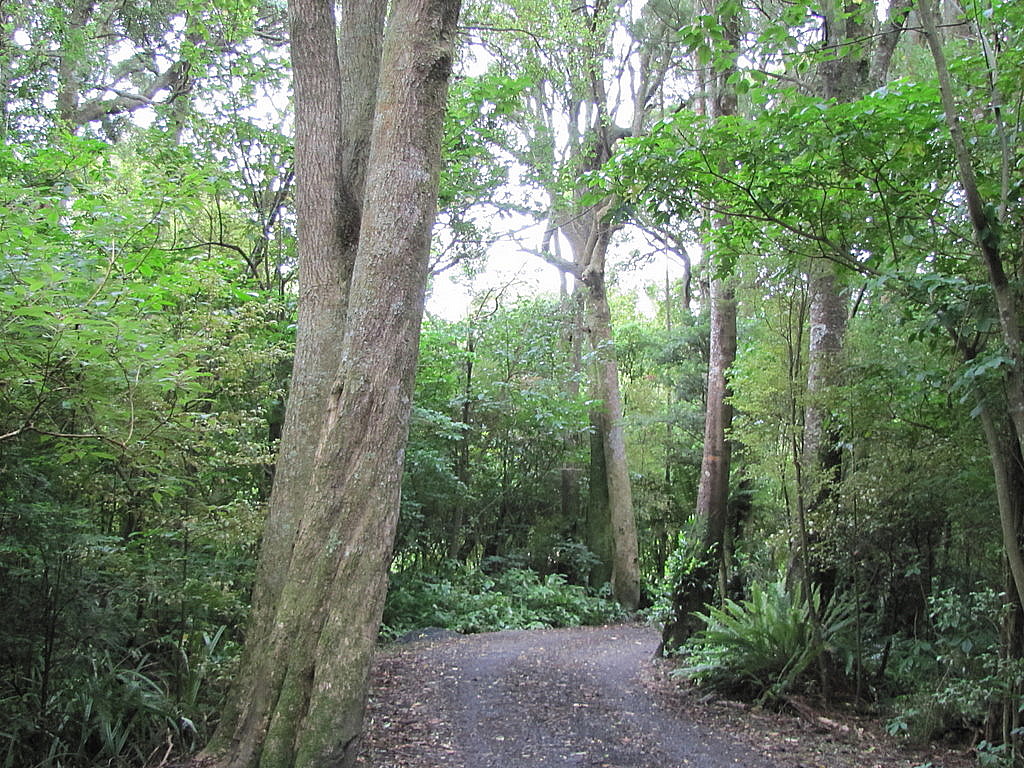
Podocarp forests are a mixture of tall podocarps and smaller trees with an understorey of shrubs, plants and ferns and soil and climate conditions play a major role in determining which species are the most dominant .
In Southland, Totara ,(up to 30 mtrs in height),grows closest to the coast, on almost pure sand. As the soil nutrient levels increase, Mataï and Rimu appear. With Kahikatea ,(up to 60mtrs in height),on the wetter sites.
Although they belong to the conifer family which reproduces using cones, podocarps spread their seeds through berries which are transported by being passed through birds. Because of the abundant range of fruits, podocarp forests also support larger communities of insects and birds such as bellbird and tui .
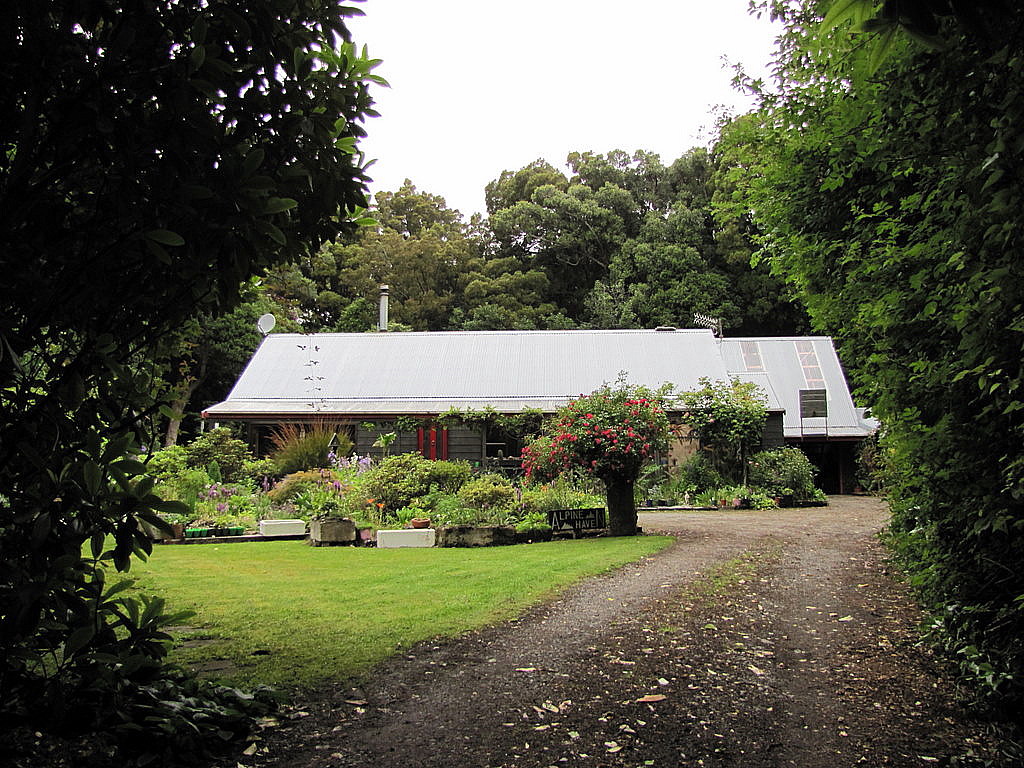
Our residence is situated in one of these forest ,(bush), remnants which backs onto a larger public native reserve and although we are only a couple of ks from the coast our bush has most of the large forest trees mentioned above.
The first pic is of our house surrounded by bush on all sides to give you an idea of scale.
The following pics are of the various genera of dominant trees ,various ferns –Asplenium and Blechnum sps ---–the long strap like leaves of the bush flax ,Astelia ---the stringy bark of a tree Fuchsia and finally the impressive Dicksonia,(tree ferns),all within a few metres of our back door.
Cheers Dave.
Comments
Margaret Young
The weather may have been a
Tue, 02/04/2014 - 10:20amThe weather may have been a bit dodgy, David and not the most comfortable for the hikers..... but you must admit it adds drama to the photos with all those clouds swirling around.
Steve Newall (not verified)
You know it's breezy Ian,
Tue, 02/04/2014 - 4:02pmYou know it's breezy Ian, when the people start swirling around . Twice I have had my glasses blown off my face
David , we were one watershed ridge north of you and we circled around above the Irthing catchment until we were nearly at the Shepherd Ck Saddle then we headed down the same ridge as you back to the hut . There is C.philocremna on the rock outcrops nor far to the north of the saddle . Shame about the wind
I will post more pictures tonight . I have spent the last few nights trying to post embedded images but I can't . It is either my computer or our rural internet connection . So says my wife and she knows everything
Steve Newall (not verified)
Hi Fermi . I'm sure we can
Wed, 02/05/2014 - 12:37amHi Fermi . I'm sure we can come up with some good captions .
Heading your way later in the month for a bit of culture . The Soundwave Festival in Sydney on Feb 23 and the opening night of the Mrs. Brown's Boys tour in Woollongong the next day . Should get a giggle or two if I wear a wig as I bear a strong resemblance to Agnes Brown and she could be my brother from another mother . Unfortunately I'm the only gardener on the trip so I doubt I will be allowed out of the pubs by myself
Steve Newall (not verified)
The ridge we travelled up is
Wed, 02/05/2014 - 12:52amThe ridge we travelled up is upstream from Shepherd's Creek Hut and after the first creek crossing on the true right . Halfway up is a very distinctive stone column
Jane Peak , the highest point in the Eyre Mtns (complete with some snow ) and the Windley Creek valley
Clint Callens and the first Celmisia philocremna we saw from some distance away
Favoured habitat of C.philocremna .and Raoulia buchananaii . Rocky outcrops facing the sun and the prevailing winds
Raoulia buchananii with a toupee of Celmisia viscosa
Steve Newall (not verified)
The next day was a trip to
Wed, 02/05/2014 - 11:12amThe next day was a trip to the Gertrude Saddle near Milford Sound in Fiordland . Only a few days earlier there was doubt about the weather as the forecasts were bad but the weather improved . Probably because the summer holidays were over and everyone was back at work .
Dave and I have been here before and there are pictures posted earlier in this thread . It is a great place to revisit but the highlight for us is taking someone there for the first time . In this case it was Doug Logan who had not been anywhere in Fiordland before and Fiordland put on a dramatic show for him . On the drive in low cloud obscured the scenery and he had no idea what was out there then with only half a mile to go the clouds disappeared and the views opened up . Lots of OMG's
First 2 pictures are of ranunculus lyallii . There was a lot of avalanche activity last year especially at the head of the Gertrude Valley . The avalanches also bring down a lot of rock and gravel and when the avalanche snow melts large areas of gravel remain smothering the vegetation . R.lyallii is often the first to recover sending up stems through the debris from it's extensive rootstocks below ground
Suicidal Plant Adventure Tour members in their SPAT cave . From left - Steve , Clint , Doug and Dave
The fanciest track cairn around
A couple of pictures of Aciphylla congesta
Adelaide Saddle is the next saddle around the trail . Getting there is a bit too dodgy for me . I've been halfway there
Milford Sound and Aciphylla multisecta flowering
Fermi de Sousa
Excellent report on an
Wed, 02/05/2014 - 11:41pmExcellent report on an excellent trip!
May I propose that you re-name your group to "Suicidal Plant-Lovers Adventure Troupe"?
Keep on adventuring, guys,
cheers
fermi
PS disturbing news that the NZ$ is nearing parity with the AU$! But it'll be good news for your trip to Sydney. Pity you can't get away for a look at some gardens like the Mt Tomah Botanic garden in the Blue Mountains.
Toole (not verified)
SPLAT is probably what will
Thu, 02/06/2014 - 12:25amSPLAT is probably what will happen if one of us has a fall off one of the ridges Fermi .......... .
.
Nice shots Steve .I especially love the Aciphylla with the small tarn and mountain backdrop in your last posting.
I thought about a walk today however decided to continue collecting home Trillium seed and sowing that plus NARGS seed ,(a big thank you to the seed donors/ team),as well as SPCNI seed that arrived yesterday.
Leaves the weekend free so I'll see how a double pair of socks work.
Lori S. (not verified)
Great postings, fellows!
Fri, 02/07/2014 - 3:38pmGreat postings, fellows! Wish I was up in that sort of country in that season!
Fermi de Sousa
Toole wrote:
Sat, 02/08/2014 - 7:39pm[quote=Toole]
SPLAT is probably what will happen if one of us has a fall off one of the ridges Fermi
[/quote]
I rest my case! It's the Plant-Lovers who are daring, not the plants! They are endearing!
cheers
fermi
Trond Hoy
Yes please, keep up walking
Sun, 02/09/2014 - 4:06amYes please, keep up walking and posting pictures. And don't take chances. Don't want to see any obituaries here.
Toole (not verified)
Thanks Lori and Hoy
Sun, 02/09/2014 - 11:52pmThanks Lori and Hoy
I must confess I've been bit slack this season .I had the opportunity to head away by myself over the weekend however I couldn't be bothered .Must be getting too reliant on the company of others ....

Spent most of the weekend instead ,picking and sowing Trillium seed.
Steve Newall (not verified)
You're in a bad way Toolie
Mon, 02/10/2014 - 11:02amYou're in a bad way Toolie .You might have Mates Syndrome . I would seek counselling and therapy before it's too late .
Thanks Lori . It will not be too long before you are out and about and I look forward to seeing where you have been
Have some seeds drying out for you Trond and will send them next week
David L (not verified)
Despite not having as good
Tue, 02/11/2014 - 12:47amDespite not having as good weather as the S.P.A.T crew I found a couple of things on my trip to Eyre Creek;
We have an abundance of imported yellow dandelions but we also have an indigenous one that is fairly rare and this is the first time I have found it in flower
A rather nice whipcord hebe that was flowering. We have not managed to get a consensus for the name yet; it is not Hebe propinqua which is what I thought it was when I took the photo.The next name I came up with was Hebe annulata but it is not that either.
We found a patch of the little grass lily Herpolirion novae-zelandiae in flower
Last an orchid Gastrodia cunninghamii. It is not an alpine but was growing in beech( Nothofagus) forest on the valley floor.
Margaret Young
The Herpolirion novae
Tue, 02/11/2014 - 2:32amThe Herpolirion novae-zelandiae is a delight to see.
What is the name of the indigenous dandelion, please, David?
Gordon Tingley
That whipcord Hebe is a nice
Tue, 02/11/2014 - 4:57amThat whipcord Hebe is a nice specimen, would love to have something like that in our garden! Sadly there are no whipcords in the nursery trade in Nova Scotia. The only Hebes I have been able to find are H. odora (sold as Hebe buxifolia), and H. pinguifolia var. pagei. Both are blanketed in snow at the moment, and in spite of winter temperatures dipping below -15 C at night, last month (and last winter as well), they seem to thrive here. I wonder which whipcord would have a reasonable chance at surviving here?
Margaret Young
In this area of NE Scotland
Tue, 02/11/2014 - 5:06amIn this area of NE Scotland Hebe ochracea is pretty hardy - particularly the variety 'James Stirling' - surviving when other whipcords and other types have suffered quite a lot.
If you can source a 'James Stirling' I'd certainly give it a try.
David L (not verified)
Maggi,
Tue, 02/11/2014 - 2:10pmMaggi,
The name of the dandelion that I inadvertently omitted is Kirkianella novae-zealandiae.
Tingley,
If Hebe odora survives in Nova Scotia most whipcord species should survive there too as they are often found growing together. Both Hebe odora and Hebe pinguifolia are widespread species with a lot of genetic variation present. There is a great deal of variation in the whipcord species hence the named cultivars which are clonally propagated variants. Until recently this was segregated out as a number of different species but in the most recent treatment a number of these species have been lumped together. Hebes are easy to propagate from cuttings and the smaller ones are quite happy growing in pots.
Here is an example of Hebe odora
and another species Hebe rakaiensis flowering particularly well
Here is an example of Hebe hectorii with particularly robust branches and a second picture showing the variation present in this species
Margaret Young
Thank you, David. I'm
Tue, 02/11/2014 - 2:14pmThank you, David. I'm slightly worried that I'm finding a dandelion attractive though, even if it does make a very nice rosette of foliage. - must be the effects of the cold weather addling my senses .
David L (not verified)
It is a strangely attractive
Tue, 02/11/2014 - 2:42pmIt is a strangely attractive plant for a dandelion; here is another picture showing the flower buds with their unusual bristly black hairs
Margaret Young
A yet more interesting detail
Tue, 02/11/2014 - 2:45pmA yet more interesting detail - thank you.
Gordon Tingley
David, that Hebe rakaiensis
Tue, 02/11/2014 - 4:17pmDavid, that Hebe rakaiensis is a beautiful specimen, and the Hebe hectorii variants are really fascinating! Many different Hebes were quite commonly seen in gardens when we lived in Vancouver BC. Of course at the time, there was no room in our postage stamp sized, light-challenged garden. Now that we have returned to the east coast of Canada, they are as rare as hen's teeth, so I am always on the lookout for seeds on the various seed exchanges... probably the most likely way I'll get my hands on more than the two already here.
Both Hebe odora and Hebe pinguifolia have handled some tough winters with ease. In 2012-13 we had very little snow cover, and temperatures bouncing all over the map - near zero C one day, then -16 C the following several days, then back above freezing. This winter has been colder, but with more snow cover protecting the plants from wind and extreme cold. Temperature fluctuations haven't been as extreme or as frequent. H. pinguifolia var pagei seems to be a bit more prone to browning off in exposed cold conditions, but it bounced back last summer to the point that no lasting damage could be detected by mid summer. Eventually I'll find a few more Hebes to add to the landscape, will keep rakaiensis, hectorii, and ochracea in mind.
Cheers,
Gordon
Toole (not verified)
David L wrote:
Tue, 02/11/2014 - 8:49pm[quote=David L]
The name of the dandelion that I inadvertently omitted is Kirkianella novae-zealandia
[/quote]
Hello David
Nice detailed shots of Kirkianella novae-zelandiae..As you say it is quite attractive.
I thought there was only one native dandelion and that was Taraxacum magellanicum ?.
Cheers Dave.
Toole (not verified)
Spent yesterday just down the
Sat, 02/22/2014 - 2:45pmSpent yesterday just down the coast from here with members of the Otago Botanical Society looking at plants on the Omaui peninsula.
In wet areas the small creeping Euphrasia repens .
Also a fruiting spike of Gunnera monoica,
another orange one ,this time Nertera balfouriana.Plants were everywhere so in places it was difficult to avoid stepping on them .
The sand dune community includes numerous cushions of Raoulia hookeri, the only mainland population of Gunnera hamiltonii ,(John having a close inspection),
Close up of Raoulia and Gunnera,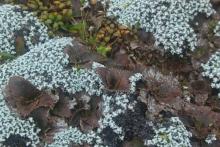
and Geranium sessiliflorum var. arenarium.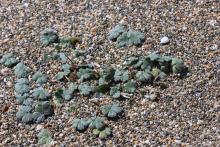
Toole (not verified)
David Lyttle up high braving
Sat, 02/22/2014 - 3:12pmDavid Lyttle up high braving the wind.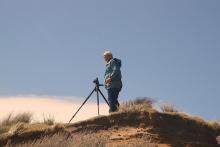
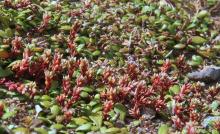
On coastal turf close to the beach, the shore stonecrop ,Crassula moschata and close up .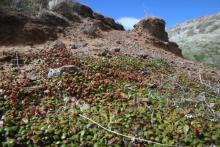
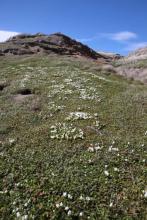
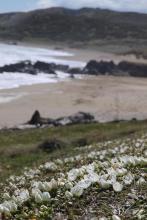
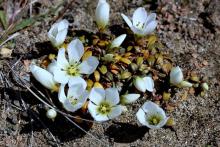
Highlight of the trip for me ,also on coastal turf, was a bank with Gentianella saxosa in full bloom.

Probably a common sight when a bunch of 'planty' folk ,(a couple of botanists ,one or two enthusiasts ...) get together. .
.
Mid afternoon we started to head back to our vehicles as the Otago people had a 3 hour journey home.View back over the shore.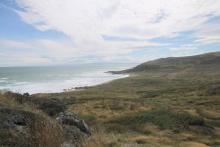
Cheers Dave.
Trond Hoy
I have one or two whipcords
Tue, 02/11/2014 - 2:02pmI have one or two whipcords in my garden and you can find some in the trade here but I don't remember the names. Some are sold without a name too, just a sixpack of hebes!
Although the hebes usually survive they flower only sparingly, lack of sun I presume.
Trond Hoy
Steve Newall wrote:
Tue, 02/11/2014 - 1:57pm[quote=Steve Newall]
You're in a bad way Toolie .You might have Mates Syndrome . I would seek counselling and therapy before it's too late .
Thanks Lori . It will not be too long before you are out and about and I look forward to seeing where you have been
Have some seeds drying out for you Trond and will send them next week
[/quote]
Thanks, Steve, looking forward to that!
Toole (not verified)
Steve Newall wrote:
Tue, 02/11/2014 - 8:40pm[quote=Steve Newall]
You're in a bad way Toolie .You might have Mates Syndrome . I would seek counselling and therapy before it's too late .
[/quote]
Spoke to the medical staff Steve and Mrs Toole says its terminal and there is no going back..........

David L (not verified)
Nice pictures Dave, you have
Wed, 12/11/2013 - 8:47pmNice pictures Dave, you have not mentioned the Rumex flexuosus growing with your Carex petriei
Toole (not verified)
David L wrote:
Wed, 12/11/2013 - 8:59pm[quote=David L]
Nice pictures Dave, you have not mentioned the Rumex flexuosus growing with your Carex petriei
[/quote]
Thanks David
Funny enough we did talk about the Rumex ,(NZ dock) .Steve grows this at home at his seed farm and his plants are so vigorous and attractive when grown in cultivation .....
David L (not verified)
I see you have saved the best
Wed, 12/11/2013 - 11:03pmI see you have saved the best to last or do you have more, lovely pictures of Aciphylla spedenii and Ranunculus piliferus. makes me want to get into the car and head out; everything seems to flowering early.
David L (not verified)
Dave,
Thu, 12/12/2013 - 12:08amDave,
Since you missed out on the Mt Kakanui trip last weekend I will post some picture on for you and our North American friends. The plants were not is spectacular as yours. We did find some interesting things. Now I have a GPS unit for my camera I can download the images and see exactly where I have taken them thanks to Google Earth. It is accurate to within a few metres.
First Aciphylla montana with separate male and female plants
Aciphylla scott-thomsonii - large plants growing in profusion in a damp gully and a picture of a single plant in flower
Anisotome flexuosa
Next the daisy Brachyscome longiscapa. The genus Brachyscome in New Zealand contains a number of different entities not all have been described
An undescribed species of Cardamine. The New Zealand species are presently being revised We are probably going to end up with 30 + species up from the present 5
Two Celmisias; Celmisia brevifolia and Celmisia lyallii
David L (not verified)
Another Celmisia - this one
Thu, 12/12/2013 - 1:15amAnother Celmisia - this one is Celmisia viscosa. It is rare to see it flowering so well. Second picture shows a plant growing in Chionochloa tussock grassland.
For those of you who like cushions( and chickweeds) here is a plant of Colobanthus buchananii (Caryophyllaceae)
Dracophyllum pronum (Ericaceae formerly Epacridaceae)
Growing on scree Gingidia enysii, a carrot relative
A tiny mat daisy Leptinelle pectinata subsp. villosa tucked in amongst some stones. This species is quite easy to grow in a rock garden.
Lobelia linnaeiodes; I have been trying to get a good photo of this for several years. This is about the best I have managed; the flowers move in the slightest breeze.
Montia sessiliflora, a large flowering clump and the flowers close up.
Phyllachne colensoi This one is growing on a rock outcrop. It is found in bogs as well.
David L (not verified)
Here is a picture of
Thu, 12/12/2013 - 1:31amHere is a picture of Ranunculus acraeus which is closely related to Ranunculus piliferus that was posted by Dave and Steve earlier. It is not flowering but confirms a historical location record for the species. It has suffered through the depredations of hares and grazing by livestock so it is not longer common throughout its former range. It was good to find it.
The next picture is entitled " Find the buttercup ". The cryptic buttercup Ranunculus crithmifolius growing on scree. Flowering is over and the plant blends perfectly with its background.
Last in this posting an unusual dark form of Viola cunninghamii growing on scree. There is more colour in the flowers than is usual for this species.
Toole (not verified)
Thanks for posting your pics
Fri, 12/13/2013 - 12:08amThanks for posting your pics David.
Some really nice stuff there especially Aciphylla montana with it's yellow stem and flowering head .
I'm hoping to find Celmisia viscosa and other 'weeds' in bloom on the Old Man Range tomorrow.
Cheers Dave.
Toole (not verified)
Seems Aciphyllas are
Sat, 12/14/2013 - 5:30pmSeems Aciphyllas are flowering in profusion everywhere David .Here's some I came across on the 'hill' yesterday ......
Aciphylla scott-thomsonii.
Aciphylla simplex.
Two more ---Either Aciphylla kirkii or A.hectorii ,(I'm not going there .... ), including a damn weevil on the last one ............
Cheers Dave.
Steve Newall (not verified)
Yep , great year to be a
Sun, 12/15/2013 - 12:14amYep , great year to be a seedpicker Dave
Cliff Booker
Hope so, buddy!!! Wonderful
Sun, 12/15/2013 - 10:50pmHope so, buddy!!! Wonderful images folks ... keep 'em coming please.
Cliff Booker
Many thanks to all the
Wed, 12/18/2013 - 2:23amMany thanks to all the wonderful guys who shared our 'buttercup hunting' hikes on South Island.
Two images of David Lyttle ... a most splendid and knowledgeable guide.
David L (not verified)
ThanKs Cliff, my 15 sec of
Thu, 12/19/2013 - 12:50amThanKs Cliff, my 15 sec of fame!
Dave , you need to look at your picture of Myosotis pulvinaris again; it is Chionohebe thomsonii. There are some nice plants of Celmisia brevifolia on that patch you photographed. It is one species of Celmisia that seems to flower reliably every year.
Off to the Rock and Pillars tomorrow morning with Alan Mark and a Swedish colleague. I doubt if I will have much time to do any photography. I have been given the task of filming a video clip, something that I have never done before. If all else fails read the camera manual!
Toole (not verified)
David L wrote:
Thu, 12/19/2013 - 1:41am[quote=David L]
ThanKs Cliff, my 15 sec of fame!
Dave , you need to look at your picture of Myosotis pulvinaris again; it is Chionohebe thomsonii. There are some nice plants of Celmisia brevifolia on that patch you photographed. It is one species of Celmisia that seems to flower reliably every year.
Off to the Rock and Pillars tomorrow morning with Alan Mark and a Swedish colleague. I doubt if I will have much time to do any photography. I have been given the task of filming a video clip, something that I have never done before. If all else fails read the camera manual!
[/quote]
Oops Thanks for that .I'll make a correction above and insert a pic of Myosotis pulvinaris .
Enjoy the Rock and Pillar.
David L (not verified)
Dave,
Sun, 12/15/2013 - 11:48pmDave,
A lovely Lyperobius weevil; they are taonga as well. I like your picture of Aciphylla scott-thomsonii with the Garvies in the background. I will not attempt to identify your Aciphyllas (since indeterminate Aciphylla pictures are your speciality).
Cliff.
you should have stayed in New Zealand longer as your company in the field was most welcome.
Toole (not verified)
David L wrote:
Mon, 12/16/2013 - 12:45am[quote=David L]
Dave,
I will not attempt to identify your Aciphyllas (since indeterminate Aciphylla pictures are your speciality)
[/quote]
Ha
 .
.
Here's a few more from Saturdays trip to the Old Man Range --Central Otago.
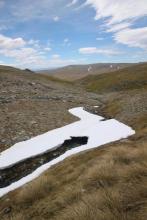
While most of the snow was gone from the exposed ridges there were still snow banks in and beside the hollows.
.
Celmisia ramulosa var tuberculata in cushion field.
Close up of the very small woolly Anisotome lanuginosa ,(male), growing on a cushion of Dracophyllum muscoides .
Yellow cushions of Phyllachne rubra and close up.
A good flowering year for Celmisia haastii var haastii.
As well as the creeping growths of Ourisia glandulosa .
Rightio that's enough for tonight.
Cheers Dave.
Gordon Tingley
These photos are feeding my
Tue, 12/17/2013 - 5:46amThese photos are feeding my plant addiction, I see a need for a trip to New Zealand in my future! Like Rick, I find Phyllachne rubra particularly striking, and am fascinated by Celmisia ramulosa var tuberculata. What is with the species name of the Phyllachne? Are the seed heads reddish, or is it one of those plants with changeable foliage colour, depending on the season?
Richard T. Rodich
Anisotome lanuginosa and
Mon, 12/16/2013 - 8:03pmAnisotome lanuginosa and Phyllachne rubra really caught my eye!
Old Man Range "air temperature extremes range between 24 and -19C."
Sigh.....
Richard T. Rodich
I wondered about the "rubra"
Tue, 12/17/2013 - 8:08amI wondered about the "rubra" epithet, too.
Toole (not verified)
Hello Gordon and Rick.
Thu, 12/19/2013 - 2:15pmHello Gordon and Rick.
I understand 'rubra' refers to the colour of the spent flowers.....
Final pics from last weekends trip.
Fields of Celmisia brevifolia --apologies for the blown out white colours .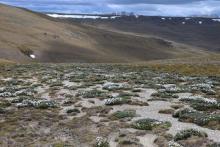
Celmisia brevifolia.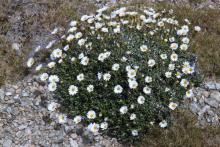
Near snow melt the ground was covered with Ranunculus pachyrrizus with a visitor enjoying the extra warmth the flowers provide.
Chionohebe thomsonii is one of the prominent cushions on depleted vegetative spots.
A very good sized plant of Brachyscome montana .I counted over 30 flowering heads or buds yet to open.(Thanks to David Lyttle for the species id).
Anisotome imbricata var imbricata.
Racing against incoming bad weather I searched quickly trying to locate the cushion forget me not ,Myosotis pulvinaris .Having no luck and deciding to call it quits I returned to find a small plant right beside the motorbike!. .
.

A stop out of the howling wind while on the way back down to the truck ,Ranunculus gracilipes growing in boggy area .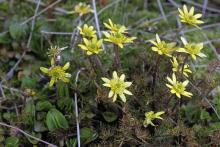
Cheers Dave.
David L (not verified)
It was an interesting day. We
Sun, 02/23/2014 - 12:23amIt was an interesting day. We saw a number of rare and unusual coastal plants and some that you would expect to find in the subalpine zone rather than on the coast.
Dave may not have mentioned it because he is a native of those parts; it was blowing really hard. Here is a picture of two hardy Southern men; Brian Rance our botanist and Dave Toole.
A rock polished by wind-blown sand
Coastal turf dominated by Gentianella saxosa in flower.
Mark McDonough
I've mostly been lurking here
Sun, 02/23/2014 - 6:08pmI've mostly been lurking here, but really enjoying the plants, panoramas and people. You New Zealanders have some of the coolest plants ever, and remarkable that even at the seashore there are choice treasures all about, plants one normally associates with alpine zones. I'm really taken with the ground-level foliage on Geranium sessiliflorum var. arenarium, and the mixed community of Raoulia hookeri with Gunnera hamiltonii. Of course Nertera fruits and cushions of Gentianella saxosa aren't bad either. Thanks for sharing your excursions.
David L (not verified)
The Omaui/Three Sisters dune
Mon, 02/24/2014 - 2:17amThe Omaui/Three Sisters dune site is unique. It has a number of rare species in particular Gunnera hamiltonii ( six individuals (clones) known in the wild). There was one patch (clone) at Omaui. Raoulia hookeri is usually found in subalpine river beds but there is a coastal form which may be distinct that occurs sporadically at various localities round the southern coast. It is abundant at Omaui. On the southern coast of the South Island a number of subalpine species mainly bog species descend to sea level. In most places round New Zealand the native coastal vegetation has been heavily modified and replaced by exotics. The native sand binding sedge Ficinia spiralis has been almost totally replaced by marram (Ammophila arenaria). Lupinus arboreus from California is dominant over large areas of dunes. Coastal dune areas where indigenous plants still form a significant part of the vegetation are now very rare.
Trond Hoy
Dave/David; very nice to see!
Tue, 02/25/2014 - 12:07pmDave/David; very nice to see! I like coastal areas very much as I have spent all my childhood summers along the shores of an archipelago.
It is saddening that the native plants loose the battle against foreigners - it is a little strange too. The natives should be better adapted? We have the same problem here too. Like the escaped garden rose R. rugosa which covers much of the beaches in many places now.
Pages