
Forums:
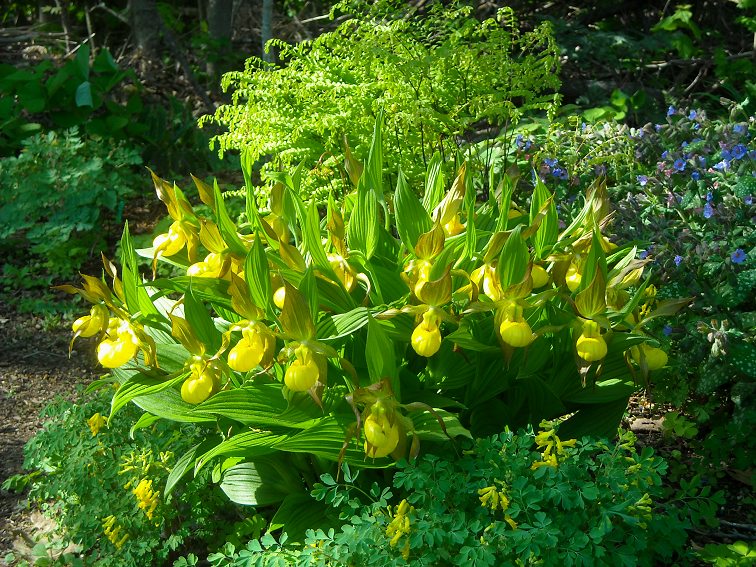
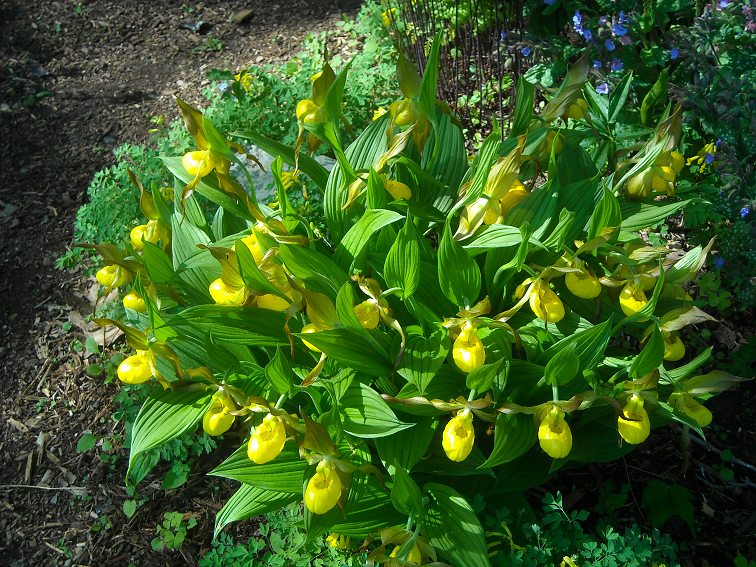
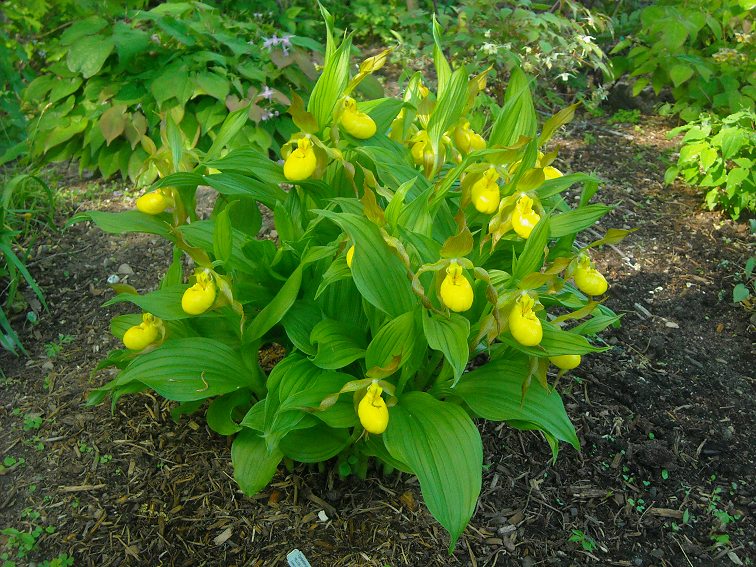
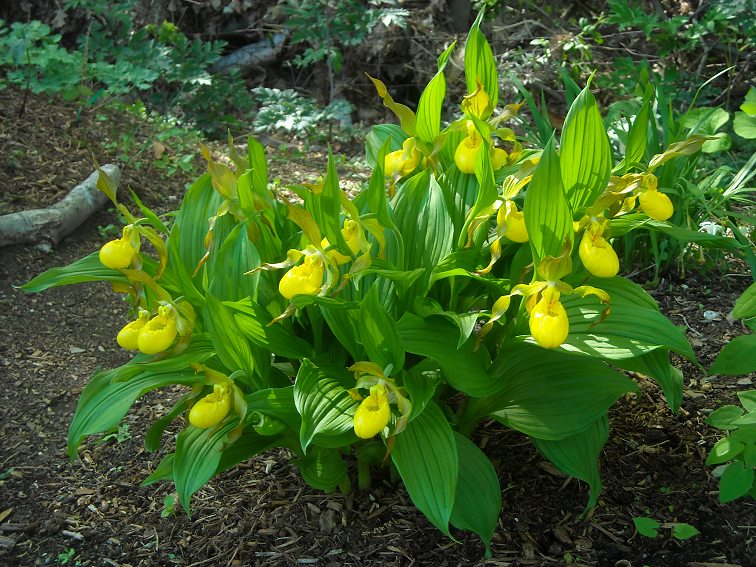
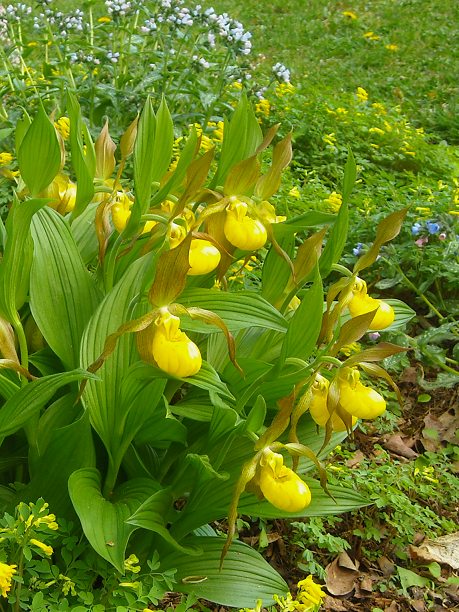
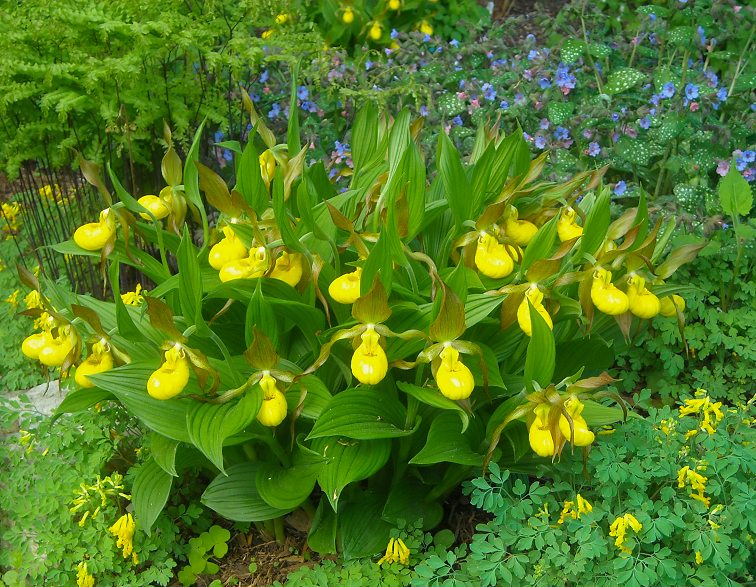
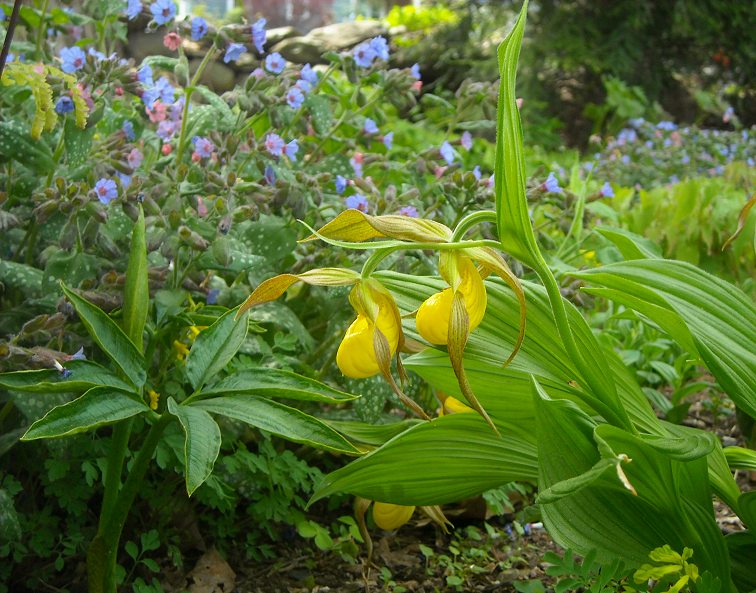
I'm starting this thread for terrestrial orchids, such as Cypripedium. I'll start out with a common "cyp" familiar to many of you, Cypripedium parviflorum var. pubescens. I know I went overboard shooting photos, but I just had to show some images, the plants have outdone themselves this year. Three unseasonably hot days pushed these along faster than I could have imagined, when they were just barely hinting as showing buds mere days ago. The bigger of my two large clumps has 32 pips this year.


Comments
Mark McDonough
Re: Terrestrial Orchids
Tue, 05/21/2013 - 2:24pmAn elegant orchid, love the slight undulation of the leaves.
Trond Hoy
Re: Terrestrial Orchids
Wed, 05/22/2013 - 10:43amTony, I have always dreamed of encounter a Cephalanthera in the wild but this is almost as good!
Clair, I think your D fuchsii have a lot of maculata in them. The lip is more like a maculata than a fuchsii.
Claire Cockcroft
Re: Terrestrial Orchids
Wed, 05/22/2013 - 5:44pmI'm sure you're right about the maculata genes in my hybrids, Trond, though it's interesting to note that the pure D. maculata species blooms later than the hybrids in my garden. D. fuchsii is just beginning its bloom. I'll post pictures when things peak.
Trond Hoy
Re: Terrestrial Orchids
Thu, 05/23/2013 - 2:49amTime of blooming depends as much on provenance as on species.
Claire Cockcroft
Re: Terrestrial Orchids
Sat, 06/08/2013 - 8:25pmDactylorhiza fuchsii 'Bressingham Bonus'
Claire Cockcroft
Re: Terrestrial Orchids
Sat, 06/08/2013 - 8:28pmMore hybrid dactylorhizas, good markings and a two-toned flower, and a happy pollinator, whom I can blame for all the mixed-up genes!
Claire Cockcroft
Re: Terrestrial Orchids
Sat, 06/08/2013 - 8:30pmOne last post -- a hybrid dactylorhiza showing lots of D. majalis influence (This was the one with leopard spotted leaves in an earlier post.)
Mark McDonough
Re: Terrestrial Orchids
Sat, 06/08/2013 - 9:46pmClaire, what is the source for all these wonderful dactylorhizas? I know many you show are hybrids occurring in your garden, but is there a commercial source for some of them? How hardy are they?
Claire Cockcroft
Re: Terrestrial Orchids
Sun, 06/09/2013 - 10:29amSources? I started with 3 plants of D. fuchsii, 1 plant of D. maculata, and 1 plant of D. majalis, all gifts from gardening friends. Since then, I've actively propagated each species and the bees have cross-pollinated things for me, so seedlings that arise in the garden can have a little of everything mixed in. I've wholesaled many, many extra plants to nurserymen here in the Pacific Northwest and they've brought in plants from their own sources as well. Far Reaches Farm in Port Townsend, WA, Keeping It Green in Stanwood, WA, and Edelweiss in OR have all offered dactylorhizas. (Rick Lupp at Mt. Tahoma has had them for sale.) Since it can be slow to build up stock, they often sell out pretty rapidly.
All of these plants have proven reliably hardy in my gardening zone, zone 7 or 8 depending on the winter. Others in colder areas, like Rick Lupp near Mt. Rainier and friends down in Hillsboro, OR, have also overwintered dactylorhizas with no problems.
If anyone wants to trade plants, I'm open to that, especially if you will take a hybrid rather than a species. Keeping a true line of species is difficult when they seed so readily. I usually divide and replant bigger clumps at the end of summer when the stalks start to die -- August or September.
Mark McDonough
Re: Terrestrial Orchids
Sun, 06/09/2013 - 6:08pmThanks Claire, I may have to give dactylorhizas a try some time, they certainly seem to be rewarding plants.
Trond Hoy
Re: Terrestrial Orchids
Mon, 06/10/2013 - 2:26pmThey are beautiful, Claire! Better than those I encounter in the wild here ;)
Mark, both fuchsii and maculata is very hardy species here, growing also in winter cold places. Majalis a little less, I presume.
Longma (not verified)
One of the few orchids we
Wed, 06/26/2013 - 6:56amOne of the few orchids we have in the garden, ( although I am adding more this year ), Dactylorhiza fuchsii. Not such a nice form as the ones shown by Claire earlier ( excellent plants ), but its a good representation of the commoner form of the species. I am fairly sure there is no other species mixed in, but with all Dactylorhiza it is very hard to be absolutely certain :)
Longma (not verified)
A couple of weeks ago I
Thu, 06/27/2013 - 10:31amA couple of weeks ago I visited, with a very good friend ( who is a superb plantsman ) an area of grassland and ponds, where we knew various species of terrestrial orchids grew. The season here is a little late and we were a little early. Not very much in evidence on the day we visited.
My friend revisited the site today and this is some of what he saw. Needless to say, I'll be there ASAP!!
Mark McDonough
Splendid! Not being a very
Thu, 06/27/2013 - 5:44pmSplendid! Personally not being a very knowledgeable orchid guy, I assume most of these are Dactylorhiza, what is the white one in the second photo?
Lori S. (not verified)
WOW! Stunning Dactylorhiza
Thu, 06/27/2013 - 9:12pmWOW! Stunning Dactylorhiza photos, both in the garden and in the wild! Thank you for posting, Claire and Longma!
Here's a solitary clump of Cypripedium parviflora along the ravine bike path heading into the river valley that I first noticed last spring... a gem among the weeds!
Longma (not verified)
A gem amongst weeds indeed
Sat, 06/29/2013 - 1:25pmA gem amongst weeds indeed Lori ! What a superb find. Just the one? Was it something you would expect to find in the area? I would ( were you? ) be very excited to find such a plant. What a lovely discovery :-)
Lori S. (not verified)
Yes, there was just the one
Sat, 06/29/2013 - 2:21pmYes, there was just the one there. The species is native here, and it's reasonably common in woodland edge sort of areas, but this particular ravine heading down to the river was rather unfortunate in having been developed back in the '70's(?) before it seemed worth preserving natural areas in the city (I suppose). The natural springs were channelized into storm sewers and weedy "ornamental" tree species were planted, along with lawn grass (since taken over by weeds). I saw another one once a few years back a couple of miles further along the river valley along the bike path - just a single flower; I still keep looking for it after several years but have never seen it again. It's great to see this nice clump being able to recolonize there and remain unmolested so far!
Trond Hoy
Wish I could find some
Mon, 07/01/2013 - 9:12amWish I could find some Cypripedium calceolus on my way! I have seen that species only twice. However it is not uncommon and where it grows there can be fields of them.
Was on a little hike yesterday in an area with mostly poor peaty soil but I spotted 4 different orchid species. The commonest (evereywher in fact) was Dactylorhiza maculata which come in many hues. The flowers can be almost white with little markings and almost pink with heavy markings. The leaves can be plain green or reddish with lots of dark spots.
Here are a few.
I also found Dactylorhiza incarnata on a grassy bog:
The lat two were Platanthera bifolia (the old stem to the right). In my youth I followed my nose in the night to try to find flowering Platanthera in the woods!
The last one is the tiny Listera cordata (
ovatacorrection).Longma (not verified)
Wonderful finds Trond, and
Mon, 07/01/2013 - 12:02pmWonderful finds Trond, and lovely pictures. Hope you'll be doing some more of your 'little hikes' leading to more discoveries to show.
What type of environment did you found the Listera in? Same as the others you show?
Trond Hoy
Sorry, I used the wrong latin
Mon, 07/01/2013 - 1:34pmSorry, I used the wrong latin epithet: It is Listera cordata, not ovata!
While Listera cordata always grows in moss in not too rich environments, L. ovata is more demanding. You can find it in very moist Sphagnum in bogs but also in drier woodland conditions.
We usually take some hikes for a day or two during the summer. So stay tuned ;-)
Longma (not verified)
Hoy wrote:
Tue, 07/02/2013 - 4:52am[quote=Hoy]
We usually take some hikes for a day or two during the summer. So stay tuned ;-)
[/quote]
Certainly will :-)
I believe that this species, Epipactis gigantea, is the only native North American member of this genus, the other two being European imports ( E. helleborine and E. atrorubens ). Apparently it is confined to the western states, from the Rocky Mountains to the Pacific. In his book "Wild Orchids Across North America - A Botanical Travelogue", ( a wonderful easy read, and one that I read again and again! ), Philip E. Keenan describes E. gigantea as "neither common nor rare, but often locally abundant". He goes on to say " ......mountain streams in California are a typical site. Also typical but less well known are microclimates in otherwise dry almost semi-desert conditions." We have found this to be a very tough little plant ( not 'gigantic' at all! ), increasing, and performing florally very well, each year. A most accommodating orchid.
Longma (not verified)
Looking for Bee Orchids in
Sat, 07/06/2013 - 5:55amLooking for Bee Orchids in the UK
Yesterday we spent the full day checking likely sites for the Bee Orchid, Ophrys apifera. Wherever we went we were able to get our bearings thanks to this ancient building, looking down on us from the distance
.
The Ophrys were few and far between this year, compared with the hundreds we found on the same sites last year. The Dactylorhiza sp. the Epipactis sp. the Platanthera sp. and the Neottia sp. are all having a bumper year however, and each site we visited was carpeted with these.
The few Ophrys we did find were, however, good strong plants and of good colouration.
Mark McDonough
What an exquisite orchid
Sat, 07/06/2013 - 6:26amWhat an exquisite orchid (Ophrys apifera), in my ignorance I had no idea of the distribution of Ophrys and was completely surprised by your post, googled, and learned that it is widespread throughout Europe and found in England and Ireland, I had always assumed all Ophrys were Mediterranan and preferring hot climates. Beautiful set of images you posted.
http://en.wikipedia.org/wiki/Ophrys_apifera
By the way, I'm answering hastily here because in the new NARGS Forum, there's no way (that I'm aware of) to reset a topic "as NEW", so after checking out NEW forum topics, once read they are out of sight / out of mind, and I typically fail to go back to them. Will be asking the web developer if there is a way to add back in this basic functionality we had in the former NARGS Forum .
Longma (not verified)
Yes O. apifera can be found
Sun, 07/07/2013 - 4:12amYes O. apifera can be found in many areas of UK. It certainly cannot be said to be a common plant though, its sites being usually small and local. Three other species of Ophrys occur in England, though all are much rarer than O. apifera. These are O. insectifera, O. fuciflora and O. sphegodes. We visited a site for O. insectifera on this trip, but couldn't find it this time. Some nice pictures of these species here -
http://ophrysphotography.co.uk/pages/ophrys.htm
If you ( or any other NARGS member ) ever find yourself over here at this time of year, I'd gladly take you around and show them to you.
I was rather hoping that the 'Bookmark' option might have something to do with being able to return to a previous post in order to reply after viewing it previously. I think however I am mistaken, and can't get it to do anything anyway!! :-(
Mark McDonough
Ron, the site you provide a
Sun, 07/07/2013 - 6:41pmRon, the site you provide a link to is exemplary, with excellent photographs, these are such fascinating and amusing plants, I see all kinds of faces and characters in the markings and floral shapes.
Regarding the 'Bookmark' option, I assume you're seeing this is you right-click on a page, and the menu gives you a bookmark option. This would be your browser's bookmarks or "favorites", which could be used as a workaround, but hopefully we can find a fix and the web developer can add a bona fide "save as new" button to the bottom of any topic; stay tuned.
Trond Hoy
Ophrys apifera is a nice one,
Mon, 07/08/2013 - 11:21pmOphrys apifera is a nice one, Ron!
I have never seen it, it doesn't grow in Norway. However I have seen the relative O. insectifera a few times. It is not common.
Trond Hoy
Visited a bog nearby our
Thu, 07/11/2013 - 2:33pmVisited a bog nearby our cabin to look for orchid. Found only two species.
Coelogossum viride and Gymnadenia conopsea. The first one is rather common, you find it everywhere but only a few plants, the other is not so common but you often find many specimens together.
Gymnadenia conopsea doesn't grow as big here as in the lowlands.
Longma (not verified)
Nice finds Trond. We've
Mon, 07/15/2013 - 9:03amNice finds Trond. We've visited 5 'sites' of Coelogossum viride this year, but haven't been able to find one specimen. Gymnadenia conopsea is just beginning to flower here.( lovely inclusion of the bee / fly ? in the first picture of this sp. :-) ). Its common name here is Fragrant Orchid, .... with good reason :-)
Here's the last, for this year, of the orchids from our garden. A single plant of Anacamptis pyramidalis. We're hoping that this sp. will eventually establish itself in the tightly cropped grassy areas of the garden.
Its only small at the moment, flowering for only the second year ( first with us ). Hopefully it will achieve the beauty of these plants, growing 'in nature', (these from last year).
Trond Hoy
Haven't seen Anacamptis
Mon, 07/29/2013 - 12:22amHaven't seen Anacamptis pyramidalis since I visited Gotland many, many years ago!
If you haven't been there you should once - the Swedish islands Gotland and Öland are famous for their orchids (and wildflowers in general).
Tony Willis (not verified)
A couple of orchids in flower
Sat, 11/30/2013 - 10:52amA couple of orchids in flower now
Pleione maculata
and Corybas incurvus which is flowering two months earlier than last year
Mark McDonough
Tony, those two look
Sat, 11/30/2013 - 9:10amTony, those two look delightful. Thanks for persevering and uploading the photos again, so that they do resize, each orchid is wonderful.
Longma (not verified)
Absolute gems Tony. You do
Sun, 12/01/2013 - 8:12amAbsolute gems Tony. You do grow some magnificent , unusual plants, and I know these two are certainly not the easiest to accommodate. Wonderful
Trond Hoy
Ron, I have tried Epipactis
Mon, 07/08/2013 - 11:16pmRon, I have tried Epipactis gigantea once in my garden but it died in two years. Presumabely it didn't like the spot I had put it. Seems I must try once more!
Trond Hoy
Mark McD wrote:
Fri, 06/28/2013 - 12:10am[quote=Mark McD]
Splendid! Personally not being a very knowledgeable orchid guy, I assume most of these are Dactylorhiza, what is the white one in the second photo?
[/quote]
Platanthera chlorantha. Place your cursor at the picture!
Very nice, indeed!
Longma (not verified)
Indeed, it is Platanthera
Fri, 06/28/2013 - 6:56amIndeed, it is Platanthera chlorantha. Interestingly we saw them on the earlier trip, but this time growing in ancient woodland, deep in shade. As the shafts of light penetrated the canopy and moved around, they highlighted the flowers, making them appear 'ghostly', floating above the gloomy woodland floor.
Trond Hoy
Longma, have you ever tried
Fri, 06/28/2013 - 12:31pmLongma, have you ever tried spotting Platanthera orchids during the night with the help of your nose? It is a remarkable experience!
Longma (not verified)
I haven't Trond, but all of
Fri, 06/28/2013 - 12:55pmI haven't Trond, but all of that Vanilla scent would be so enticing I think?
This guy seems to think so too -
https://www.youtube.com/watch?v=3398Ll7fM1M
Pages