The plants Wim showed with the beautiful showy flowers were previously distinguished from Thalictrum, and referred to as a different genus (for obvious reasons!)- Anemonella - but have been since been lumped. ??? (I'm sure there is some reason but come on!!)Anemonella/Thalictrum are are hardy here though, and may be worth trying in your area, Cohan?
I actually had that in my mind, Lori, (Anemonella) but didn't look it up to check.. I'm always interested in woodlanders ;D that's why I was curious about Rick's native form.... I've looked at-- I think-- some Asian/Russian sp on some seed lists.. among thousands of other things ;D
Rick, on your wild T thalictroides, are the flowers at all large like these cultivars?
It's a hard to tell, but judging from leaf and petal size comparison and the angle of Wim's close up photos, my wild ones in the garden seem pretty close to the same size. I think Wim could answer better if he looks at the pics below. In the wild, as you would expect, size is quite variable, but overall a bit smaller. I have one cultivar, Schoaff's Double, and its flower width is definitely smaller, but it sure packs on the "petals".
1-2. Thalictrum thalictroides - indigenous type in the garden 3. Thalictrum thalictroides 'Schoaff's Double'
Rick, on your wild T thalictroides, are the flowers at all large like these cultivars?
It's a hard to tell, but judging from leaf and petal size comparison and the angle of Wim's close up photos, my wild ones in the garden seem pretty close to the same size. I think Wim could answer better if he looks at the pics below. In the wild, as you would expect, size is quite variable, but overall a bit smaller. I have one cultivar, Schoaff's Double, and its flower width is definitely smaller, but it sure packs on the "petals".
1-2. Thalictrum thalictroides - indigenous type in the garden 3. Thalictrum thalictroides 'Schoaff's Double'
Thanks for that, Rick--no doubt the cultivars have some bigger flowers--at least the names suggest it ;D but the wild form looks perfectly charming :) I'll have to watch for seed.. I do like colour variants, but tend to be less fond of doubles or other sorts of cultivars-- though I find it endlessly fascinating to see what can be coaxed out of a plant's genome!
I have well over a dozen plants, and they seed and volunteer profusely. Those pics are from 2005. I'll try to remember you when seed ripens, Cohan. They bloom for a very long time in the garden, early May through June, and even into July since they don't seem to have such a driving ephemeral instinct like they do in the woods. Feel free to remind me in early June. :)
interesting to see the Thalictrum, our local sp has sprays of tiny flowers, and flowers in summer,, Rick, on your wild T thalictroides, are the flowers at all large like these cultivars?
Cohan,
I have some wild-collected (from seed) Th. thalictroides too and they all have smaller flowers but I've heard they can be very variable in the wild and I think European sellers want to make a quick buck by giving different name to barely different clones (like 'Big' and 'XXL' for example, both form the same seller).
Wim-- nothing new or surprising there :) I heard of someone who collected cacti in South America for a European nursery, many years ago--they were paid by the number of 'species' they found.. you can imagine there were a lot more species found than reason would dictate ;D Nowadays there is probably more money in named cultivars..... :rolleyes: Oh well, as long as you can see the plant you are buying, and you like it, doesn't matter what they call it...lol
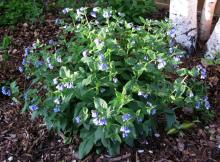
This is Mertensia virginica. A plant native in the USA. In my part of the world seldom seen in culture. I wonder if you regard this plant as special, or regard it as almost weed. I understand one won't grow a plant in his garden, while it grows in everybody's garden. Myself I like it very much, because of it's color,a deep, heavenly blue.
A lovely plant, Gerrit, not native here, but we have M paniculata, a very common wild plant here, but one which I love--it can form very nice full stands, and there are a number of them on my property, as well as roadsides and open woods throughout the area.. I doubt it is much grown in gardens, but if it wasn't native to my land, I'd surely plant it ! There are nice alpine species as well, for those with less space! two shots from 'wild' places on the farm,
And a nice clump under a spruce tree (dry place!!) where we store our lawnmower! year before this patch was even more impressive...
This is Mertensia virginica. A plant native in the USA. In my part of the world seldom seen in culture. I wonder if you regard this plant as special, or regard it as almost weed. I understand one won't grow a plant in his garden, while it grows in everybody's garden. Myself I like it very much, because of it's color,a deep, heavenly blue.
Gerrit, I would love to grow M virginica and have tried to establish it several times but the slug think I plant them for their sake and devour the plants almost before I have left the site.
not sure if these qualify as woodlanders but here is Meconopsis punicea flowering for me now. In the main picture the one second from the left is clearly a hybrid
not sure if these qualify as woodlanders but here is Meconopsis punicea flowering for me now. In the main picture the one second from the left is clearly a hybrid
Pretty plants! I have tried to establish M punicea here for years but without success so far.....
Mertensia virginica (Virginia Bluebells) is fairly common among shade gardeners here, although fairly difficult to find in nurseries. It is well loved, and though it is native in Minnesota, it is only abundant in the very southeast portion of the state. Some gardeners find it a bit weedy, but easy to control, while most are delighted with the gentle self seeding. Two State parks are especially famous for their natural ephemeral wildflowers, and each have quarter acre areas of mostly Virginia bluebells, with Erythronium spp., Enemion (Isopyrum) biternatum, Thalictrum spp., Asarum canadense, Uvularia grandiflora, etc. They are truly a sight to see.
Mertensia paniculata grows in the northern half of Minnesota, and I grew a plant at my parents (along with Mertensia virginca) for many years when I was growing up. Some years after I moved out, my brother (the machinist turned self proclaimed naturalist) destroyed it while it was dormant, replacing it with Wild Ginger. :'( Our form has a much more metalic blue color that practically sparkles, rather than your matte baby blue, Cohan. The shape is more rigid and regular, too.
not sure if these qualify as woodlanders but here is Meconopsis punicea flowering for me now.
Wow, most enviable, Tony! Meconopsis tend to need special conditions to survive here in "The Big High and Dry" (as I've seen it described by a local gardening writer :)) any more than a season or two... which I'm much too lazy to provide...
gerrit wrote:
This is Mertensia virginica. A plant native in the USA. In my part of the world seldom seen in culture. I wonder if you regard this plant as special, or regard it as almost weed.
Definitely special! (And I rigorously distinguish native plants from weeds, as well. Having said that, it just depends on the native plant's habits, and how well I can grow it, as to whether I keep it in the garden.)
Both the natural areas and your sadly-missed planting sound wonderful, Rick.
I loving seeing our native M. paniculata also. I find it rather spready in the garden... given that I don't have unlimited space, I think I will be pulling a few more offshoots out next year.
I like Mertensia ciliata in the garden, and have lots these days from seeding... and please correct me (always) if I'm misidentifying this!... not native here, but no doubt a locally-native plant for someone on this forum. One strange thing... these used to go dormant for me after the spring bloom, but have ceased doing that in the last 3 years or so ( ???), and in fact, get lax and floppy enough that I cut them back. The emerging foliage is a gorgeous dusky purple-green, as shown in this older photo (the foliage was barely breaking the ground on the most precocious plant last weekend, before the latest snow). Here are also photos of it in bloom.
I've also been growing Mertensia ciliata for a number of years, at least that's what I got it as (I'm adding a few pictures). I have it in a fairly open sunny location and perhaps because of that it looks taller than Lori's plant. I also cut it right back as it falls over. I'm looking forward to comparing with M. paniculata which I planted out last year (from seed that Cohan kindly sent).
not sure if these qualify as woodlanders but here is Meconopsis punicea flowering for me now. In the main picture the one second from the left is clearly a hybrid
Wonderful colour! Is this the mature form of the flower? Very interesting... Does the species name refers to pomegranates, presumably for the colour?
not sure if these qualify as woodlanders but here is Meconopsis punicea flowering for me now. In the main picture the one second from the left is clearly a hybrid
Wonderful colour! Is this the mature form of the flower? Very interesting... Does the species name refers to pomegranates, presumably for the colour?
My understanding is the word relates to red which is also the colour of pomegranates but there are numerous other plants with it in their name
M ciliata seems nice.. there are several species on Alplains' list I am thinking about .. I'd want something quite distinct from paniculata, since there is so much of that here! Lori, I wonder if ciliata has not gone dormant the last two years since we didn't have summer? ;) and the year before that was record rainfall, though warm, here, not sure about Calgary.. BTW, I wonder if paniculata would be considered ephemeral in a longer/hotter summer? By the time they are dying down here, summer is over anyway!
BTW, I wonder if paniculata would be considered ephemeral in a longer/hotter summer? By the time they are dying down here, summer is over anyway!
I've never noticed if M. paniculata goes summer dormant in Northern Minnesota. I haven't traversed areas where it is at that time of year. While it did go dormant near St. Paul, MN (southcentral MN), I am not sure if it was because of the heat or the dry. It was planted on an oak forested hillside with a gravel/sand subsoil.
I don't find that M. paniculata goes dormant here in the garden, and where it grows in natural spots along the bike path, I think I see it all through the summer too - there, it's on a shaded steep slope that has many springs. I'll have to pay more attention this year to confirm that.
As I think about it, it was probably a lot more than 3 years ago that M. ciliata stopped going dormant in my yard... I can't think of any particular weather pattern that coincided. It's strange, anyway.
Mertensia virginica (Virginia Bluebells) is fairly common among shade gardeners here, although fairly difficult to find in nurseries. It is well loved, and though it is native in Minnesota, it is only abundant in the very southeast portion of the state. Some gardeners find it a bit weedy, but easy to control, while most are delighted with the gentle self seeding. Two State parks are especially famous for their natural ephemeral wildflowers, and each have quarter acre areas of mostly Virginia bluebells, with Erythronium spp., Enemion (Isopyrum) biternatum, Thalictrum spp., Asarum canadense, Uvularia grandiflora, etc. They are truly a sight to see.
Mertensia paniculata grows in the northern half of Minnesota, and I grew a plant at my parents (along with Mertensia virginca) for many years when I was growing up. Some years after I moved out, my brother (the machinist turned self proclaimed naturalist) destroyed it while it was dormant, replacing it with Wild Ginger. :'( Our form has a much more metalic blue color that practically sparkles, rather than your matte baby blue, Cohan. The shape is more rigid and regular, too.
This was a very interesting discussing about Mertensia. Thank all authors. By the way: Rick, did you forgive your brother?
I don't find that M. paniculata goes dormant here in the garden, and where it grows in natural spots along the bike path, I think I see it all through the summer too - there, it's on a shaded steep slope that has many springs. I'll have to pay more attention this year to confirm that.
M paniculata grows in sunny, shady, wet and dry places here; none of them go dormant before fall frosts, but summer is so short I hardly think it counts...lol.. I can't think offhand of any native plants in my area that go dormant before summer is over.. why would they?..lol
By the way: Rick, did you forgive your brother? Gerrit
I would blow up if I held grudges.
There's the time he fell a large ash tree and destroyed my only two Paw Paw trees; when he decided to clear the part of the woods one fall where I had planted fruiting Viburnum trilobum and Liparis lilifolia, and where Galearis (Orchis) spectabilis grew naturally; when he decided to cut down some ancient and very picturesque native Nanyberry Viburnum understory trees; when he decide it was a good idea to cut all the forest edge small trees and shrubs so he could see into the woods -- it let so much light in that it is now a tangle of invasive buckthorn and the wildflowers that used to thrive there are all but gone....shall I go on? (This would be a whole chapter if I were to write a memoir.)
Oh, and the crème de la crème: we use to have a small hillside where morel mushrooms grew. He decided to build a road for the tractor there.
The lateflowering Scilla lilio-hyacinthus has started its show in the woodland. Very shade tolerant (notice the broad leaves) and moderately expanding by bulbs and seed.
Also blooming now is the latest of the Anemone nemorosa types I have, seedlings of some blue popping up many places in the garden and woodland. They are among the biggest of the kind too.
Very nice, Trond and Wim! I think I'd need a constant drip irrigation system to keep the blue corydalis happy here - I've seen them do reasonably well in gardens where they are watered daily (a notion that shocks me!) For me, they come back but dwindle from year to year, and my guess is it's way too dry, though I don't think hardiness seems to be a problem (have only tried the more commonly-available ones).
Trond, the wide leaves on the Scilla are very nice, as are the pale Anemones.. Lori, I'm with you on the watering! I think perennial beds should rarely if ever need watering once established! Though it might be easy for me to say, since parts of my property are not very dry generally--really depends on the year, though! Things are pretty soggy currently, with snow still to melt in places..
Todd--the Pulmonaria is a really nice colour, and nice change to typical spring colours..
Very nice, Trond and Wim! I think I'd need a constant drip irrigation system to keep the blue corydalis happy here - I've seen them do reasonably well in gardens where they are watered daily (a notion that shocks me!) For me, they come back but dwindle from year to year, and my guess is it's way too dry, though I don't think hardiness seems to be a problem (have only tried the more commonly-available ones).
The blue corydalis I show here is a species with corms and it is ephemeral, although not as shortflowering as the solida types. It also tolerates relatively dry summers. The other kinds of blue corydalis have rhizomes and need moist soil. They are much later flowering too.
I can't remember the name of it but probably did I buy it from Janis Ruksans.
Rick, for some reason my B. ciliata never sets seed ??? I've had many requests over the years. I've never heard of a pulsatilla that won't set seed yet my P. flavescens doesn't...I have a strange garden!
did you ever try Corydalis x 'Craigton Blue' from Ian Young? It grows very easily in almost any condition (I grow it in the shade but I've seen it grown in full sun too). Or do you want to grow a pure species blue one?
Todd, love the reddish Pulmonaria. A very nice color.
And some more flowering shade-lovers which I almost forgot:
Meconopsis quintuplinervia x betonicifolia (a perennial form) Paris bashanensis Primula japonica 'Miller's Crimson' Ramberlea Ramonda myconi 'Alba' and Ramonda myconi
Rick, for some reason my B. ciliata never sets seed ??? I've had many requests over the years.
Er...um... not that I don't like your Bergenia, Todd, but I was hinting to Trond about seed from for his blue Corydalis. ;D ---------------------------- The corms of Aconitum incisifidum are evident in this photo:
Just to go back to Ypsilandra from earlier in this thread - they propagate well from leaf cuttings, either cut into short sections or simply looped into the compost, they will root at both ends. This is a great way of propagating quite a range of plants (also good for Eucomis), and always quite a surprise when you prick out the small plantlets. Having said that I struggle with it here through our dry summers but it can make a superb specimen in a pot.
Just to go back to Ypsilandra from earlier in this thread - they propagate well from leaf cuttings, either cut into short sections or simply looped into the compost, they will root at both ends. This is a great way of propagating quite a range of plants (also good for Eucomis), and always quite a surprise when you prick out the small plantlets. Having said that I struggle with it here through our dry summers but it can make a superb specimen in a pot.
I did not know that Ypsilandra would come from leaf cuttings.... will be trying it soon, though.... thanks Tim!
Trond, Corydalis turczaninovii is tuberous, I think. Could that be it?
Very nice, indeed. Wouldn't mind any seed of that, if it makes any...
OK, I'll be at the lookout! The oldest flowers fade now and I can discern small seedpods. Hope they last! I think I have planted turczaninovii from Janis once, so maybe . . . .
Just to go back to Ypsilandra from earlier in this thread - they propagate well from leaf cuttings, either cut into short sections or simply looped into the compost, they will root at both ends. This is a great way of propagating quite a range of plants (also good for Eucomis), and always quite a surprise when you prick out the small plantlets. Having said that I struggle with it here through our dry summers but it can make a superb specimen in a pot.
I did not know that Ypsilandra would come from leaf cuttings.... will be trying it soon, though.... thanks Tim!
MY
Neither did I. I will try if my plant survive. It is suffering badly from the harsh winter.

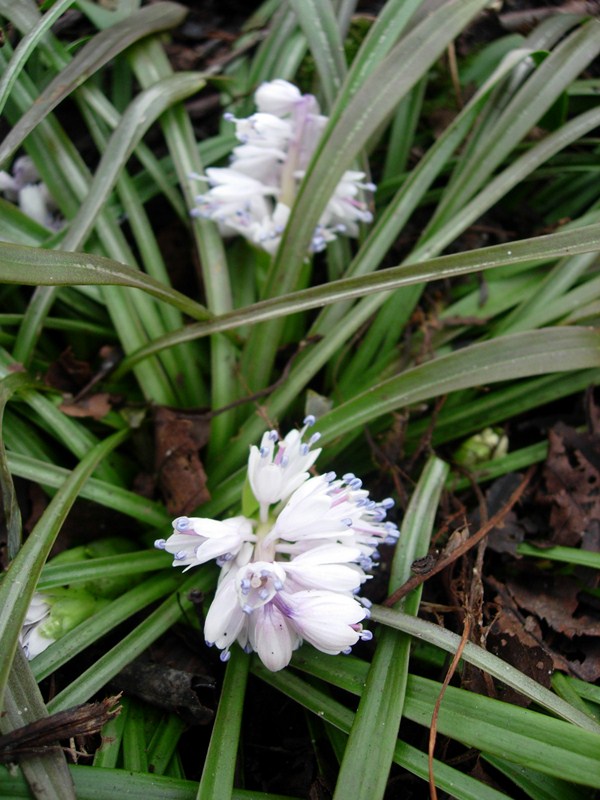
Comments
Lori S. (not verified)
Re: Miscellaneous Woodlanders
Sun, 04/10/2011 - 4:41pmThe plants Wim showed with the beautiful showy flowers were previously distinguished from Thalictrum, and referred to as a different genus (for obvious reasons!)- Anemonella - but have been since been lumped. ??? (I'm sure there is some reason but come on!!) Anemonella/Thalictrum are are hardy here though, and may be worth trying in your area, Cohan?
cohan (not verified)
Re: Miscellaneous Woodlanders
Sun, 04/10/2011 - 5:04pmI actually had that in my mind, Lori, (Anemonella) but didn't look it up to check..
I'm always interested in woodlanders ;D that's why I was curious about Rick's native form.... I've looked at-- I think-- some Asian/Russian sp on some seed lists.. among thousands of other things ;D
Richard T. Rodich
Re: Miscellaneous Woodlanders
Sun, 04/10/2011 - 5:10pmIt's a hard to tell, but judging from leaf and petal size comparison and the angle of Wim's close up photos, my wild ones in the garden seem pretty close to the same size. I think Wim could answer better if he looks at the pics below. In the wild, as you would expect, size is quite variable, but overall a bit smaller. I have one cultivar, Schoaff's Double, and its flower width is definitely smaller, but it sure packs on the "petals".
1-2. Thalictrum thalictroides - indigenous type in the garden
3. Thalictrum thalictroides 'Schoaff's Double'
cohan (not verified)
Re: Miscellaneous Woodlanders
Sun, 04/10/2011 - 5:24pmThanks for that, Rick--no doubt the cultivars have some bigger flowers--at least the names suggest it ;D but the wild form looks perfectly charming :) I'll have to watch for seed.. I do like colour variants, but tend to be less fond of doubles or other sorts of cultivars-- though I find it endlessly fascinating to see what can be coaxed out of a plant's genome!
Richard T. Rodich
Re: Miscellaneous Woodlanders
Sun, 04/10/2011 - 6:21pmI have well over a dozen plants, and they seed and volunteer profusely. Those pics are from 2005. I'll try to remember you when seed ripens, Cohan. They bloom for a very long time in the garden, early May through June, and even into July since they don't seem to have such a driving ephemeral instinct like they do in the woods. Feel free to remind me in early June. :)
cohan (not verified)
Re: Miscellaneous Woodlanders
Sun, 04/10/2011 - 6:58pmthanks, Rick, that would be great :)
WimB (not verified)
Re: Miscellaneous Woodlanders
Sun, 04/10/2011 - 11:15pmCohan,
I have some wild-collected (from seed) Th. thalictroides too and they all have smaller flowers but I've heard they can be very variable in the wild and I think European sellers want to make a quick buck by giving different name to barely different clones (like 'Big' and 'XXL' for example, both form the same seller).
cohan (not verified)
Re: Miscellaneous Woodlanders
Mon, 04/11/2011 - 1:16amWim-- nothing new or surprising there :) I heard of someone who collected cacti in South America for a European nursery, many years ago--they were paid by the number of 'species' they found.. you can imagine there were a lot more species found than reason would dictate ;D
Nowadays there is probably more money in named cultivars..... :rolleyes:
Oh well, as long as you can see the plant you are buying, and you like it, doesn't matter what they call it...lol
gerrit (not verified)
Re: Miscellaneous Woodlanders
Thu, 04/14/2011 - 10:35amThis is Mertensia virginica. A plant native in the USA. In my part of the world seldom seen in culture. I wonder if you regard this plant as special, or regard it as almost weed. I understand one won't grow a plant in his garden, while it grows in everybody's garden.
Myself I like it very much, because of it's color,a deep, heavenly blue.
cohan (not verified)
Re: Miscellaneous Woodlanders
Thu, 04/14/2011 - 11:39amA lovely plant, Gerrit, not native here, but we have M paniculata, a very common wild plant here, but one which I love--it can form very nice full stands, and there are a number of them on my property, as well as roadsides and open woods throughout the area.. I doubt it is much grown in gardens, but if it wasn't native to my land, I'd surely plant it ! There are nice alpine species as well, for those with less space!
two shots from 'wild' places on the farm,
And a nice clump under a spruce tree (dry place!!) where we store our lawnmower! year before this patch was even more impressive...
Trond Hoy
Re: Miscellaneous Woodlanders
Thu, 04/14/2011 - 1:22pmGerrit, I would love to grow M virginica and have tried to establish it several times but the slug think I plant them for their sake and devour the plants almost before I have left the site.
Tony Willis (not verified)
Re: Miscellaneous Woodlanders
Thu, 04/14/2011 - 1:29pmnot sure if these qualify as woodlanders but here is Meconopsis punicea flowering for me now. In the main picture the one second from the left is clearly a hybrid
Trond Hoy
Re: Miscellaneous Woodlanders
Thu, 04/14/2011 - 1:32pmPretty plants! I have tried to establish M punicea here for years but without success so far.....
Richard T. Rodich
Re: Miscellaneous Woodlanders
Thu, 04/14/2011 - 5:52pmMertensia virginica (Virginia Bluebells) is fairly common among shade gardeners here, although fairly difficult to find in nurseries. It is well loved, and though it is native in Minnesota, it is only abundant in the very southeast portion of the state. Some gardeners find it a bit weedy, but easy to control, while most are delighted with the gentle self seeding. Two State parks are especially famous for their natural ephemeral wildflowers, and each have quarter acre areas of mostly Virginia bluebells, with Erythronium spp., Enemion (Isopyrum) biternatum, Thalictrum spp., Asarum canadense, Uvularia grandiflora, etc. They are truly a sight to see.
Mertensia paniculata grows in the northern half of Minnesota, and I grew a plant at my parents (along with Mertensia virginca) for many years when I was growing up. Some years after I moved out, my brother (the machinist turned self proclaimed naturalist) destroyed it while it was dormant, replacing it with Wild Ginger. :'( Our form has a much more metalic blue color that practically sparkles, rather than your matte baby blue, Cohan. The shape is more rigid and regular, too.
Lori S. (not verified)
Re: Miscellaneous Woodlanders
Thu, 04/14/2011 - 8:26pmWow, most enviable, Tony! Meconopsis tend to need special conditions to survive here in "The Big High and Dry" (as I've seen it described by a local gardening writer :)) any more than a season or two... which I'm much too lazy to provide...
Definitely special! (And I rigorously distinguish native plants from weeds, as well. Having said that, it just depends on the native plant's habits, and how well I can grow it, as to whether I keep it in the garden.)
Both the natural areas and your sadly-missed planting sound wonderful, Rick.
I loving seeing our native M. paniculata also. I find it rather spready in the garden... given that I don't have unlimited space, I think I will be pulling a few more offshoots out next year.
I like Mertensia ciliata in the garden, and have lots these days from seeding... and please correct me (always) if I'm misidentifying this!... not native here, but no doubt a locally-native plant for someone on this forum. One strange thing... these used to go dormant for me after the spring bloom, but have ceased doing that in the last 3 years or so ( ???), and in fact, get lax and floppy enough that I cut them back.
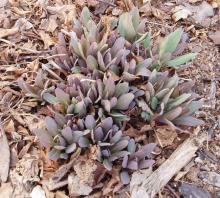
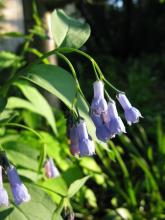
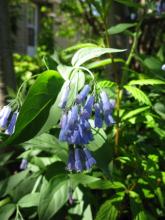
The emerging foliage is a gorgeous dusky purple-green, as shown in this older photo (the foliage was barely breaking the ground on the most precocious plant last weekend, before the latest snow). Here are also photos of it in bloom.
Stephen Barstow
Re: Miscellaneous Woodlanders
Fri, 04/15/2011 - 3:13amI've also been growing Mertensia ciliata for a number of years, at least that's what I got it as (I'm adding a few pictures). I have it in a fairly open sunny location and perhaps because of that it looks taller than Lori's plant. I also cut it right back as it falls over. I'm looking forward to comparing with M. paniculata which I planted out last year (from seed that Cohan kindly sent).
cohan (not verified)
Re: Miscellaneous Woodlanders
Fri, 04/15/2011 - 10:52amWonderful colour! Is this the mature form of the flower? Very interesting... Does the species name refers to pomegranates, presumably for the colour?
Tony Willis (not verified)
Re: Miscellaneous Woodlanders
Sat, 04/16/2011 - 2:47pmMy understanding is the word relates to red which is also the colour of pomegranates but there are numerous other plants with it in their name
Lori S. (not verified)
Re: Miscellaneous Woodlanders
Sat, 04/16/2011 - 5:30pmYes, according to the site below, "puniceus" is purple, red, or reddish:
http://humanum.arts.cuhk.edu.hk/Lexis/Latin/
cohan (not verified)
Re: Miscellaneous Woodlanders
Sat, 04/16/2011 - 6:32pmM ciliata seems nice.. there are several species on Alplains' list I am thinking about .. I'd want something quite distinct from paniculata, since there is so much of that here! Lori, I wonder if ciliata has not gone dormant the last two years since we didn't have summer? ;) and the year before that was record rainfall, though warm, here, not sure about Calgary..
BTW, I wonder if paniculata would be considered ephemeral in a longer/hotter summer? By the time they are dying down here, summer is over anyway!
Richard T. Rodich
Re: Miscellaneous Woodlanders
Sun, 04/17/2011 - 8:27amI've never noticed if M. paniculata goes summer dormant in Northern Minnesota. I haven't traversed areas where it is at that time of year. While it did go dormant near St. Paul, MN (southcentral MN), I am not sure if it was because of the heat or the dry. It was planted on an oak forested hillside with a gravel/sand subsoil.
Lori S. (not verified)
Re: Miscellaneous Woodlanders
Sun, 04/17/2011 - 8:48amI don't find that M. paniculata goes dormant here in the garden, and where it grows in natural spots along the bike path, I think I see it all through the summer too - there, it's on a shaded steep slope that has many springs. I'll have to pay more attention this year to confirm that.
As I think about it, it was probably a lot more than 3 years ago that M. ciliata stopped going dormant in my yard... I can't think of any particular weather pattern that coincided. It's strange, anyway.
gerrit (not verified)
Re: Miscellaneous Woodlanders
Sun, 04/17/2011 - 10:50amThis was a very interesting discussing about Mertensia. Thank all authors. By the way: Rick, did you forgive your brother?
Gerrit
cohan (not verified)
Re: Miscellaneous Woodlanders
Sun, 04/17/2011 - 2:47pmM paniculata grows in sunny, shady, wet and dry places here; none of them go dormant before fall frosts, but summer is so short I hardly think it counts...lol.. I can't think offhand of any native plants in my area that go dormant before summer is over.. why would they?..lol
Richard T. Rodich
Re: Miscellaneous Woodlanders
Sun, 04/17/2011 - 7:48pmI would blow up if I held grudges.
There's the time he fell a large ash tree and destroyed my only two Paw Paw trees; when he decided to clear the part of the woods one fall where I had planted fruiting Viburnum trilobum and Liparis lilifolia, and where Galearis (Orchis) spectabilis grew naturally; when he decided to cut down some ancient and very picturesque native Nanyberry Viburnum understory trees; when he decide it was a good idea to cut all the forest edge small trees and shrubs so he could see into the woods -- it let so much light in that it is now a tangle of invasive buckthorn and the wildflowers that used to thrive there are all but gone....shall I go on? (This would be a whole chapter if I were to write a memoir.)
Oh, and the crème de la crème: we use to have a small hillside where morel mushrooms grew. He decided to build a road for the tractor there.
cohan (not verified)
Re: Miscellaneous Woodlanders
Sun, 04/17/2011 - 8:11pmOh my! one man destroyer of the forest! ;)
gerrit (not verified)
Re: Miscellaneous Woodlanders
Mon, 04/18/2011 - 12:33amWell Rick, I'm looking forward to read your memoirs. It's clear you have talent. (and of course a brother)
Thanks for posting this 'funny' story.
Gerrit.
Trond Hoy
Re: Miscellaneous Woodlanders
Tue, 04/19/2011 - 5:04amWell, Rick, I am glad he isn't my brother - or rather that my sister hasn't done anything like that yet :o
WimB (not verified)
Re: Miscellaneous Woodlanders
Sat, 04/23/2011 - 1:22pmSome Calanthes flowering here:
Calanthe tricarinata
and Calanthe hancockii
Trond Hoy
Re: Miscellaneous Woodlanders
Mon, 04/25/2011 - 10:22amNice Calanthes, Wim.
I have tried some in my woodland but they are prone to slug damage.
However, this blue corydalis is unaffected by slugs.
cohan (not verified)
Re: Miscellaneous Woodlanders
Mon, 04/25/2011 - 10:31am;)Calanthes are very sweet!
So's blue Cory :)
Trond Hoy
Re: Miscellaneous Woodlanders
Sun, 05/01/2011 - 12:23amThe lateflowering Scilla lilio-hyacinthus has started its show in the woodland. Very shade tolerant (notice the broad leaves) and moderately expanding by bulbs and seed.
Also blooming now is the latest of the Anemone nemorosa types I have, seedlings of some blue popping up many places in the garden and woodland. They are among the biggest of the kind too.
Lori S. (not verified)
Re: Miscellaneous Woodlanders
Sun, 05/01/2011 - 8:34amVery nice, Trond and Wim!
I think I'd need a constant drip irrigation system to keep the blue corydalis happy here - I've seen them do reasonably well in gardens where they are watered daily (a notion that shocks me!) For me, they come back but dwindle from year to year, and my guess is it's way too dry, though I don't think hardiness seems to be a problem (have only tried the more commonly-available ones).
Todd Boland
Re: Miscellaneous Woodlanders
Sun, 05/01/2011 - 2:30pmI cannot grow the blue corydalis either...and dryness is not a problem here. Can't figure out what the issue is ???
Pulmonaria montana blooming at the moment, along with Helleborus orientalis and first Corydalis solida.
cohan (not verified)
Re: Miscellaneous Woodlanders
Sun, 05/01/2011 - 4:05pmTrond, the wide leaves on the Scilla are very nice, as are the pale Anemones..
Lori, I'm with you on the watering! I think perennial beds should rarely if ever need watering once established! Though it might be easy for me to say, since parts of my property are not very dry generally--really depends on the year, though! Things are pretty soggy currently, with snow still to melt in places..
Todd--the Pulmonaria is a really nice colour, and nice change to typical spring colours..
Trond Hoy
Re: Miscellaneous Woodlanders
Mon, 05/02/2011 - 12:50pmThe blue corydalis I show here is a species with corms and it is ephemeral, although not as shortflowering as the solida types. It also tolerates relatively dry summers. The other kinds of blue corydalis have rhizomes and need moist soil. They are much later flowering too.
I can't remember the name of it but probably did I buy it from Janis Ruksans.
Todd Boland
Re: Miscellaneous Woodlanders
Mon, 05/02/2011 - 3:45pmBergenia ciliata is starting...it will bloom for a good 6 weeks.
Richard T. Rodich
Re: Miscellaneous Woodlanders
Mon, 05/02/2011 - 5:34pmTrond, Corydalis turczaninovii is tuberous, I think. Could that be it?
Very nice, indeed. Wouldn't mind any seed of that, if it makes any...
Todd Boland
Re: Miscellaneous Woodlanders
Tue, 05/03/2011 - 2:56amRick, for some reason my B. ciliata never sets seed ??? I've had many requests over the years. I've never heard of a pulsatilla that won't set seed yet my P. flavescens doesn't...I have a strange garden!
WimB (not verified)
Re: Miscellaneous Woodlanders
Tue, 05/03/2011 - 5:58amTodd and Lori,
did you ever try Corydalis x 'Craigton Blue' from Ian Young? It grows very easily in almost any condition (I grow it in the shade but I've seen it grown in full sun too). Or do you want to grow a pure species blue one?
Todd, love the reddish Pulmonaria. A very nice color.
WimB (not verified)
Re: Miscellaneous Woodlanders
Tue, 05/03/2011 - 6:01amSome other shade-plants...more for the leaves than for the flowers and very prone to slug-damage:
Mini-hosta's:
'Cat's Eye'
'Dew Drop'
'Pandora's Box'
'Sunlight Child'
venusta 'Minuet
WimB (not verified)
Re: Miscellaneous Woodlanders
Tue, 05/03/2011 - 6:20amAnd some more flowering shade-lovers which I almost forgot:
Meconopsis quintuplinervia x betonicifolia (a perennial form)
Paris bashanensis
Primula japonica 'Miller's Crimson'
Ramberlea
Ramonda myconi 'Alba'
and Ramonda myconi
Stephen Barstow
Re: Miscellaneous Woodlanders
Tue, 05/03/2011 - 6:46amYour lungwort looks like what I have under the name P. rubra, an occasional garden escape around here - it's also in flower here:
Richard T. Rodich
Re: Miscellaneous Woodlanders
Tue, 05/03/2011 - 7:54pmEr...um... not that I don't like your Bergenia, Todd, but I was hinting to Trond about seed from for his blue Corydalis. ;D
----------------------------
The corms of Aconitum incisifidum are evident in this photo:
cohan (not verified)
Re: Miscellaneous Woodlanders
Tue, 05/03/2011 - 8:47pmWim, I must be mistaken-- I thought I remembered you said you had a small garden? But the plants keep coming.......
nice blue cory for sure :)
WimB (not verified)
Re: Miscellaneous Woodlanders
Tue, 05/03/2011 - 11:30pmSmall garden, packed with plants ;) ;)
Tim Ingram (not verified)
Re: Miscellaneous Woodlanders
Wed, 05/04/2011 - 11:12amJust to go back to Ypsilandra from earlier in this thread - they propagate well from leaf cuttings, either cut into short sections or simply looped into the compost, they will root at both ends. This is a great way of propagating quite a range of plants (also good for Eucomis), and always quite a surprise when you prick out the small plantlets. Having said that I struggle with it here through our dry summers but it can make a superb specimen in a pot.
Margaret Young
Re: Miscellaneous Woodlanders
Wed, 05/04/2011 - 12:30pmI did not know that Ypsilandra would come from leaf cuttings.... will be trying it soon, though.... thanks Tim!
MY
Trond Hoy
Re: Miscellaneous Woodlanders
Wed, 05/04/2011 - 12:33pmOK, I'll be at the lookout! The oldest flowers fade now and I can discern small seedpods. Hope they last!
I think I have planted turczaninovii from Janis once, so maybe . . . .
Trond Hoy
Re: Miscellaneous Woodlanders
Wed, 05/04/2011 - 12:35pmNeither did I. I will try if my plant survive. It is suffering badly from the harsh winter.
Pages