
Wood anemone (Anemone nemorosa it is here - hvitveis in Norwegian) is one of my favorite plants. The wild ones start flowering late March/early April and continue through May.
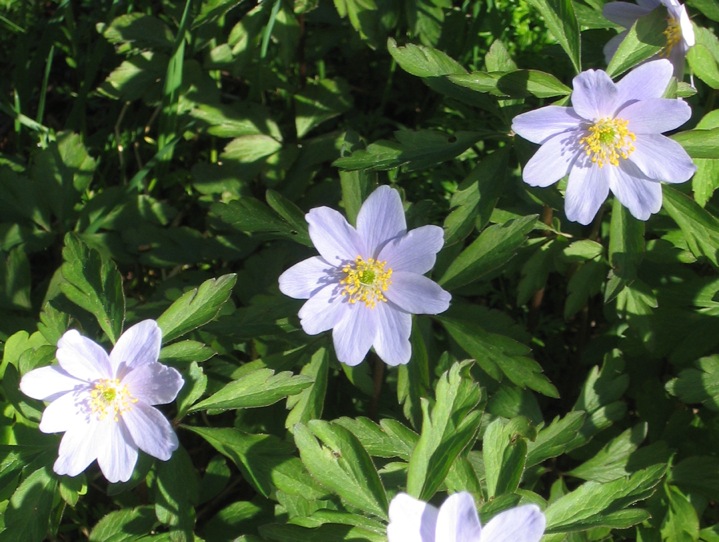
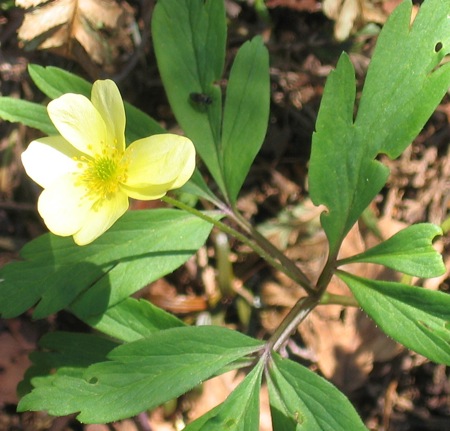
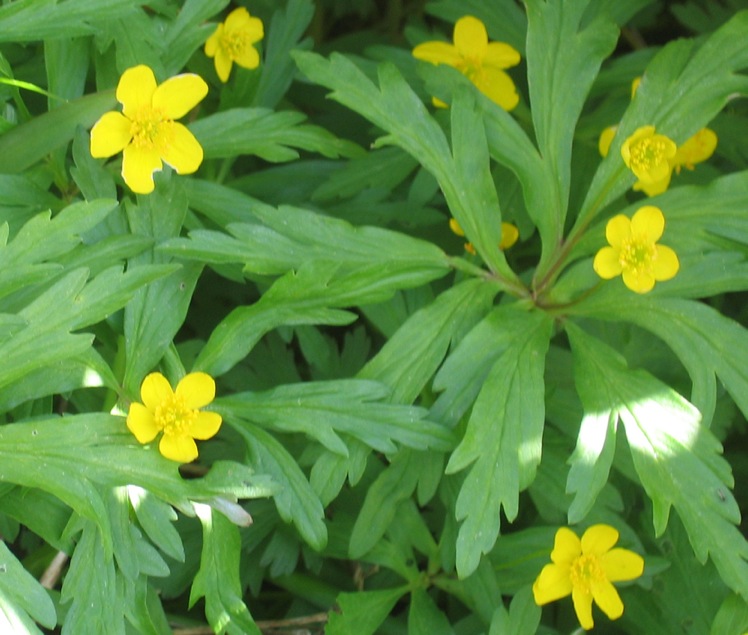
In the garden I have several forms, here are three:
The light blue (or what you will call that color) is a seedling of A. nemorosa 'Robinsoniana' I think. It pops up many places in the garden. The cream yellow is a cross between nemorosa and ranunculoides. I had to buy a new one, the big clump I had was conquered by lesser celandine (a weed here). The yellow is A. ranunculoides, a Norwegian native though not common. I have three distinct types. They differ from nemorosa in color and in having more than one flower pr stem.
Comments
Todd Boland
Re: Wood anemone and relatives
Wed, 05/12/2010 - 5:44amI have several of these in my garden but alas, they are just starting to bud...the straight species is just about to open if we could get a sunny day.
Trond Hoy
Re: Wood anemone and relatives
Thu, 05/20/2010 - 12:54pmAnemone obtusifolia was new to me when I bought three small plants to try. They have behaved well and slowly increased.
Todd Boland
Re: Wood anemone and relatives
Thu, 05/20/2010 - 4:46pmTrond, we seem to have the same Anemone....mine are just opened...A. ranunculoides, A. ranunculoides X nemorosa and A. nemorosa 'Robinsoniana'.
BTW, A. obtusiloba is delightful. I've tried it from seed, but no luck.
Trond Hoy
Re: Wood anemone and relatives
Fri, 05/21/2010 - 12:25amI tried from seed too but had to buy plants.
Lori S. (not verified)
Re: Wood anemone and relatives
Fri, 05/21/2010 - 7:41amIt seems some of these will survive a wide range of climatic conditions, given that they can even be grown here.
Anemone obtusiloba is exquisite, especially the blue! I read the glowing write-up in the Wrightman's catalogue, but with so many seedlings, I didn't make an order - now I regret it, seeing yours!
Here is Anemone trifoliata - very pristine white flowers:
Trond Hoy
Re: Wood anemone and relatives
Fri, 05/21/2010 - 8:44amA. trifoliata is very pretty! I had a little colony but they have disappeared defeated by a rhododendron.
WimB (not verified)
Re: Wood anemone and relatives
Sun, 04/17/2011 - 11:07amSome Anemone's flowering here during the last week:
Anemone nemorosa 'Vestal'
Anemone oppositifolia 'Yellow'
Martin Tversted (not verified)
Re: Wood anemone and relatives
Sun, 04/17/2011 - 11:15pmI just collected a wild A nemorosa with lilla/purple colors in the white. Very nice indeed.
Maybe a new cultivar?
Martin
WimB (not verified)
Re: Wood anemone and relatives
Mon, 04/18/2011 - 3:26amMartin,
do you have a picture of the flower? i'm curious.
I saw on your site you grow Drosera brevifolia. Is that species hardy for you?
Martin Tversted (not verified)
Re: Wood anemone and relatives
Mon, 04/18/2011 - 9:50amI get some pix updated. But they are not good and the flowers are fading. Not the best time to transplant them.
No, brevifolia is an annual here as it is many places in nature.
Martin
Trond Hoy
Re: Wood anemone and relatives
Tue, 04/19/2011 - 5:10amA nemorosa with lilla/purple colors are not uncommon here. Some clones are more colored than other but often it is related to age of the flower. If your plant show the color from start of flowering then that would be nice.
cohan (not verified)
Re: Wood anemone and relatives
Wed, 04/20/2011 - 1:48pmLove all of these--especially the blue (lilac) and creamy yellow colours..
I sowed some nemorosa in '09 ( I think)..wonder if its time to give up hope of seeing anything?..lol of course nothing is doing anything for this year yet..
Lori S. (not verified)
Re: Wood anemone and relatives
Sun, 06/05/2011 - 9:53pmAnemone nemorosa 'Vestal', now in bloom:
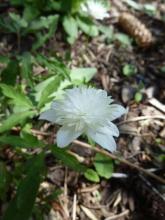
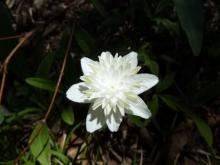
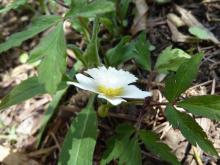
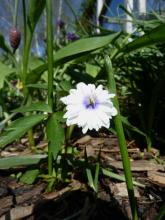
A new little one planted last year, A. nemorosa 'Blue Eyes':
Tim Ingram (not verified)
Re: Wood anemone and relatives
Sun, 06/05/2011 - 11:41pmOur wood anemones are well over, especially with this dry spring, but they were superb in the local woods earlier on - very little variation, just occasionally one a little pinker on opening. However, I was given a very deep pink form, turning purple as it aged, by a customer years ago (we called it 'Westwell Pink' after the woods where it was found). It is strong growing but I think little different to quite a few other forms, just nice for its association with the area.
I grow a good number in the garden including that extraordinary 'Double White Blue Eyes' which I think Irish gardeners first grew. 'Robinsoniana' and 'Allenii' have long been favourites, as well as the beautiful cross between nemorosa and ranunculoides. There is not much I can find written about them but there is a good article in 'The Plantsman', Vol.3 (1981/2), pp.167-174, by Ulrich Toubøl where he speaks of quite significant variation in beech woods in Denmark and describes most of the well known varieties. I have visions of them carpeting under our rows of apple trees after the snowdrops and hellebores have finished and I also plant them around hostas which are so much later to come into growth and take over for the summer.
Richard T. Rodich
Re: Wood anemone and relatives
Thu, 01/05/2012 - 8:46pmMy first plants of Anemone rivularis (from seed) bloomed in 2009 with some rather wimpy, but nicely colored white flowers with purple-blue tinted petal backs. The 2010 spring was rather warm, but with ample rainfall. Anemone rivularis shot up strong 12+ inch stems in pots and 24 inch stems in the garden. Flowers were far more robust, larger, and with more petals. But the heat (I assume) of the early summer (June) washed every bit of color out of the pristine white flowers. But they were still quite nice.
Trond Hoy
Re: Wood anemone and relatives
Fri, 01/06/2012 - 10:46amBravo, Rick! Anemone is one of my favorite genera!
cohan (not verified)
Re: Wood anemone and relatives
Fri, 01/06/2012 - 10:57amNice one, Rick, good to see these- I wasn't clear on how different rivularis would look from my local cylindrica, but I see its quite different... much showier flowers.. I've decided the greatest advantages of cylindrica are non-floral- nice leaves including fall colour sometimes, and wooly cylindrical seedheads persisting through winter..
Tim Ingram (not verified)
Re: Wood anemone and relatives
Fri, 01/06/2012 - 11:38amIt will be a little while until the wood anemones appear again but to whet the appetite these are pictures of stands of A. nemorosa in Blean Woods near to Canterbury last spring. En masse like this they are very lovely, but there is hardly any variation, just a few going pink as they age.
Lori S. (not verified)
Re: Wood anemone and relatives
Fri, 01/06/2012 - 11:56amWell done, Rick! You certainly have a lot more patience with seed-starting than I do.
What a beautiful sight, Tim!
Here is a bad photo, unfortunately, but after pondering it many times, I finally realized it's Anemone richardsonii, a yellow-flowered species that I had not seen before. This little colony is growing in wet conditions along a stream in a subalpine meadow in Banff N. P..
Richard T. Rodich
Re: Wood anemone and relatives
Fri, 01/06/2012 - 1:49pmCohan, Anemone cylindrica is common her also. Long ago, I too took notice of the foliage, and "discarded" the flowers. Fall color is always nice here.
I have grown two A. rivularis batches from two different sources to flowering (although no provenance was ever mentioned), and they are quite literally identical. I have two more batches coming, hoping that one of the four will have more "blue" on the petals for better ornamental value.
Tim, a very lovely woodland carpet! In our native woodlands it is very uncommon to see such large dominance of a single native herbaceous species, unless it has reduced itself to non-flowering status and acts simply as a groundcover (ex: Big leaf aster in the shade). Our woodland herbs tend to remain quite diverse in their natural setting. A sign of a healthy ecosystem, I would hope. Of course, we are not talking about any invasive materials, and in a garden stiuation natives can overtake, too.
Thalictrum thalictroides, our native Mayflower, would eventually overtake parts of my garden if I didn't keep it in check. The species makes a very nice background plant, as in this photo, with Syneilesis aconitifolia.
cohan (not verified)
Re: Wood anemone and relatives
Fri, 01/06/2012 - 11:35pmBeautiful, Tim- always love these sorts of deciduous forest spring displays, which we simply do not have-for one thing, we have almost no spring flowering forbs in our forested areas (apart from some tiny violets) our closest to this sort of display being Caltha palustris which can rather carpet really wet woods- where it has a bit less competition from grasses/sedges than it does where it grows in the open- but you still never get this sort of extent of one species as in your photos...
Trond Hoy
Re: Wood anemone and relatives
Sat, 01/07/2012 - 2:12amInspiring, Tim! Do I spot something blueflowered in the first picture? Hepatica nobilis maybe or a violet?
Lori, never heard of A richardsonii before. Seems to be a nice plant.
Rick, I wouldn't remove a single plant if Thalictrum thalictroides did spread! I have tried to plant it several times and they live but do not spread - often they disappear after some years too. And they are expensive to buy as live plants as it is often some rare cultivars which is for sale. Do you know if it is easy from seed and does the seed to be fresh?
Here are some pictures from my favorite spring flower wood on the island of Jomfruland near the town of Kragerø wher I have my summerhouse. Early spring it is Hepatica nobilis which is among the first but the blue colour has a tendency to "drown" in the dead leaves. When the wood anemone starts some days later all the wood brightens a lot.
cohan (not verified)
Re: Wood anemone and relatives
Sun, 01/08/2012 - 4:23pmBeautiful place, Trond!
Its funny looking at these to think that our local A canadensis (not a spring flower) is considered aggressive, but (at least among its native vegetation) it never gets to an extent like this, nor have I ever encountered such exclusive stands of it (nor any other plant here, for that matter)..
Richard T. Rodich
Re: Wood anemone and relatives
Sun, 01/08/2012 - 5:50pmExactly the same here with our native Anemone canadensis. I have only seen its "aggressiveness" in the cultivated garden.
Trond, regarding Thalictrum thalictroides, I have never tried to purposely germinate the seed. My plants are descendents of the locally wild Minnesota natives. Plants in the wild bloom for 2 or 3 weeks, but in the garden they bloom for 2 months without deadheading. this is what Dr. Deno says on germination:
******************************
Anemonella (Ranunculaceae). A. thalictroides germination has been very
low despite the fact that this species is native on the property. The only germinations so far were from two samples of fresh seed in 70D-40-70L(3% in 3rd w) and 40-70D-40-70D(3% in 3rd w). The cotyledons develop within a week of germination, and the seedlings developed normally. DS seed immediately rots on contacting moisture and is dead. Outdoor treatment and GA-3 need to be tried.
******************************
conditioning is always 3 months
70L = 3 months at 70F with light
70D = 3 months at 70F in dark
40 = 3 months at 40F
3% in 3rd w = 3% germiination in the third week of conditioning
Last year I tried to take note of seed development, but observations were haphazard at best since it was low on my priority list. So not keeping very good track of individual seed clusters, I remember thinking to myself that I need to be more diligent, as I could tell which seeds were mature and which weren't. I'll try to keep you in mind next season.
Trond Hoy
Re: Wood anemone and relatives
Mon, 01/09/2012 - 1:11pmOK, thank you Rick.
Maybe the seed of Thalictrum thalictroides is reluctant to germinate as it "keeps some seed in the seedbank" for germination subsequent years.