Forums:
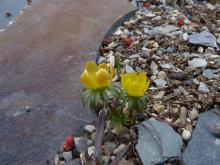
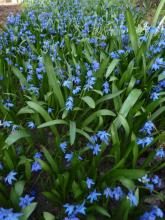
Figured there weren't enough Chionodoxa species to warrant their own thread so this one can include the miscellaneous spring bulbs. This is my first Chionodoxa forbesii (luciliae) of the season.
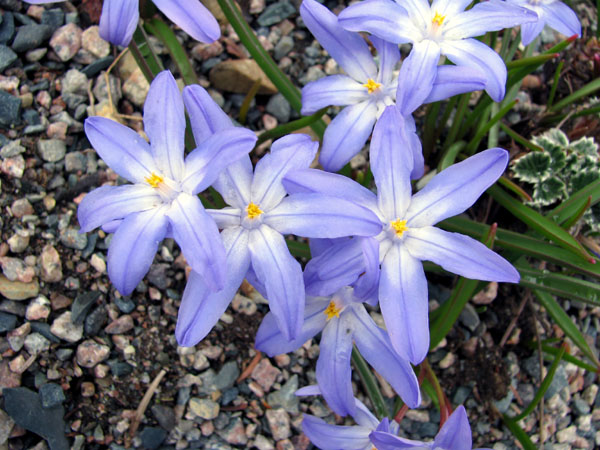

Figured there weren't enough Chionodoxa species to warrant their own thread so this one can include the miscellaneous spring bulbs. This is my first Chionodoxa forbesii (luciliae) of the season.
Comments
WimB (not verified)
Re: Miscellaneous spring bulbs
Wed, 04/27/2011 - 11:07am;D ;D It's just shy...you should boost its self-confidence....
Tony Willis (not verified)
Re: Miscellaneous spring bulbs
Wed, 04/27/2011 - 11:58amSome arum species which might be of interest,
Arum rupicola which is one of the 'flag' group widespread across Turkey
Arum balansanum a rare species from NW turkey
Arum sp from the same area and may be a larger version
Arum conophalloides var virescens another of the 'flag' group from SW Turkey and adjacent Iran and a side view to show the exterior colouring
Stephen Barstow
Re: Miscellaneous spring bulbs
Wed, 04/27/2011 - 12:16pmNice patch! My virginica (from Marathon, WI) hasn't spread much whereas sibirica would if given a chance!
Sellars (not verified)
Re: Miscellaneous spring bulbs
Wed, 04/27/2011 - 6:46pmHere is Fritillaria gentneri flowering today in the magnificent hilltop cemetery in historic Jacksonville in southern Oregon.
Sellars (not verified)
Re: Miscellaneous spring bulbs
Wed, 04/27/2011 - 6:53pmChildren's paintings of Fritillaria gentneri are posted in almost every shop window in the town of Jacksonville. Some are very creative as shown in the second photo below. I was delighted that each painting has "Fritillaria" written on it rather than the common name used hereabouts: Red Bells.
cohan (not verified)
Re: Miscellaneous spring bulbs
Wed, 04/27/2011 - 7:50pmStunning plant! Kudos to whomever in the community/schools is getting those children to be aware of the wildflower :)
Tony Willis (not verified)
Re: Miscellaneous spring bulbs
Thu, 04/28/2011 - 2:34amThat is beautiful. We passed through there this time two years ago in complete ignorance, if only we knew what we don't know.
Sellars (not verified)
Re: Miscellaneous spring bulbs
Thu, 04/28/2011 - 7:55pmTony:
Today we discovered even more delights in Jacksonville. The Jacksonville Woodlands Association has managed to preserve a necklace of open space around the town. There is an extensive trail system with an excellent map.
http://www.jvwoodlands.org/images/map.pdf
There are lots of Fritillaria gentneri in the woodlands and the more common Fritillaria recurva. It is interesting to compare the two as they are closely related. Dodecatheon hendersonii carpets the ground and we also found Trillium albidum.
Here are the two Fritillaria in the Jacksonville woods:
Tony Willis (not verified)
Re: Miscellaneous spring bulbs
Fri, 04/29/2011 - 2:06amDavid they are really lovely. We did see Fritillaria recurva at McArthur -Burney Falls between Shasta and Lassen Volcanic Park it is a fine plant and Trillium albidum out from Crescent City but we are we ever satisfied!! We shall be there again at the end of June to see a different selection of plants.
Trond Hoy
Re: Miscellaneous spring bulbs
Fri, 04/29/2011 - 5:33amThese frits really are magnifique! Anybody growing them in the garden?
I have read that American frits are difficult to grow in the garden. Is that so?
Mark McDonough
Re: Miscellaneous spring bulbs
Sat, 04/30/2011 - 11:47amDavid, you are creating such plant LUST with those awesome red fritillaries, absolutely stunning. I have always wondered why these brilliant frits are not more often grown. Not sure how hardy they will be in colder winter climates, but one can dream. From 2003, I have this tiny little sprig of F. eastwoodiae which I got from Jane McGary. Every year it comes up and makes a brief wispy show of vegetation, then goes dormant. This year, finally, it is budded. The whole thing is about 3-4" tall so far, I wonder if I have it in the wrong sort of situation, do you know what F. eastwoodiae wants? Here's a not-so-good photo, the thing is so skinny that it is hard for the camera to focus.
Todd Boland
Re: Miscellaneous spring bulbs
Sat, 04/30/2011 - 11:48amI can't even grow Asian frits, let along American ones...only F. meleagris is reliable here.
Mark McDonough
Re: Miscellaneous spring bulbs
Sat, 04/30/2011 - 11:56amTodd, at least F. meleagris is one of the best.... I love it. There must be some other more moisture tolerant or moisture loving species that would be okay in your cool and moist climate. Back to F. meleagris, ever notice how it takes a bow before standing upright to present its plump checkered bells? May I present my meager little plant of F. meleagris ;)
By the way, I too agree that it is wonderful to see some early education, appreciation and respect for native flora, thanks for showing us those drawings David, they brought a smile to my face.
Lori S. (not verified)
Re: Miscellaneous spring bulbs
Sat, 04/30/2011 - 5:25pmI am miserable at growing fritillarias, but aside from F. meleagris, F. pallidiflora does well here in regular conditions. Just out of curiosity, have you tried that one, Todd?
Mark McDonough
Re: Miscellaneous spring bulbs
Sat, 04/30/2011 - 7:42pmTony, cool aroids... do they smell bad? I like how your cold frame glass pane has to be open otherwise these puppies wouldn't fit! I love Arisaema, but haven't yet succeeded with other aroid sorts.... tried a few Arums and Biarums from Mike Salmon seed years ago, but nothing successful developed with these.
Richard T. Rodich
Re: Miscellaneous spring bulbs
Sat, 04/30/2011 - 7:46pmI am very surprised that Fritillaria camschatcensis doesn't grow for you, Todd. It seems to love the wet in the wild.
I have not started F. meleagris from seed, but F. pallidiflora, after F. camschatcensis, is the easiest from seed so far. Although, neither have flowered yet - probably next year. (I have no wet areas on my land, but F. camschatcensis that I have from bulbs do fine in my wettest part.)
Glad you mentioned the "bowing" characteristic of F. meleagris, Mark. I had wondered if it was just my plants. Both regular and the white forms do it.
Mark McDonough
Re: Miscellaneous spring bulbs
Sat, 04/30/2011 - 7:59pmOh, glad to hear others noticed this too... one of those little things that makes plants so fun and unique, these quirky little habits. I think I shall start calling it the "Polite Fritilllary". Pictures of the plant in flower always show such straight up perky looking plants, but maybe the "other" common name for this plant; Snake's Head Fritillary, versus the more common Guinea-hen Flower, refers to the plant in early bud.
Sellars (not verified)
Re: Miscellaneous spring bulbs
Sat, 04/30/2011 - 8:52pmLust is the right word Mark. If only they would grow like that in the garden we would be satiated.
We hear a lot about Asian frits that require packhorse expeditions to reach and not so much about the stunning North American species that are a few minutes walk from a coffee shop or even gracing a Rest Area off I5. I have not yet tried to grow Fritillaria recurva but I would not expect it to do well in our wet climate. The only Frits we grow in the open garden are F. meleagris and F. acmopetala. Both do very well here.
I will have to try F. pallidiflora as you suggest. F. camschatcensis grows in the wild in the Fraser River delta a few km from here and I have some coming from seed. They should do well in wetter areas of our garden.
Stephen Barstow
Re: Miscellaneous spring bulbs
Sun, 05/01/2011 - 4:36amThe same ones grow best here: meleagris, pallidiflora, acmopetala and camschatcensis. Here's a few pictrures
1. F. acmopetala and camschatcensis (with Camassia quamash)
2. F. pallidiflora (almost weedy - have tried to remove it a couple of times in one place and it still comes back!)
3-4. An unknown, planted as F. cirrhosa - any ideas?
Just noticed that F. involucrata seedlings planted out last year have re-emerged!
Mark McDonough
Re: Miscellaneous spring bulbs
Sun, 05/01/2011 - 4:57amStephen, it would seem that some frits excel in your climate, I've seen your wonderful combo of acmopetala and camschatcensis before, but never have I seen a finer clump of F. pallidiflora! I had a single-stemmed plant flower for a couple years then it disappeared. Don't know the ID of your unknown one, but it is handsome.
I should have lots more frits in the garden in the coming years, I actively scratch seed into garden beds and the seedlings come up thickly. Here's a small patch of 2-year seedlings... since not labeled, it is most likely F. crassifolia ssp. kurdica, which invariably sets fat seed pods.
Tony Willis (not verified)
Re: Miscellaneous spring bulbs
Mon, 05/02/2011 - 1:26amMark they absolutely stink particularly the non flag ones. I have disposed of most of my collection on the basis that they make large plants and take up too much room only flowering for about three days in the year. They are a weed in the garden, self seeding and should not be let loose. Most of my dracunculus in the frame are dead killed by the cold. but a clump in the garden is fine. They will be much deeper in the soil and so will have avoided freezing hard.
Stephen Barstow
Re: Miscellaneous spring bulbs
Mon, 05/02/2011 - 3:09amThanks! It had never occurred to me that this was a particularly fine clump :) Incidentally, it's never received any fertiliser! I remember once seeing a picture of a whole field of this species in flower in Roger Phillips' book Herbs - it is cultivated in NE China for the bulbs which are also used medicinally (this is also mentioned in Flora of China).
Margaret Young
Re: Miscellaneous spring bulbs
Mon, 05/02/2011 - 6:57amWhile I am a devotee of the red Frits. from America, recurva, gentneri etc, (they are exquisite creatures!) I have to admire Stephen's fine patch of F. pallidiflora ;)
Your unknown is indeed not cirrhosa, Stephen, more like F. messanensis.
Maggi
Stephen Barstow
Re: Miscellaneous spring bulbs
Mon, 05/02/2011 - 7:03amThanks, Maggi! Will look that one up...
Todd Boland
Re: Miscellaneous spring bulbs
Mon, 05/02/2011 - 3:43pmI am planning on ordering a F. camschatcensis this fall. Pallidiflora only bloomed once. Imperialis is long lived here but only blooms every 3-4 years. I've managed to keep persica as well but again, irregular blooming (no blooms this year). Uva-vulpis and michailovski are essentially annuals.
Muscari azureum is currently in bloom.
Gustafson (not verified)
Re: Miscellaneous spring bulbs
Mon, 05/02/2011 - 3:51pmHi old friends, Jacksonville Oregon is only 3 miles from here and the type local for Fritillaria gentneri (rare and endangered). As David pointed out it grows together with F. recurva and also F. affinis through out the town and woods near by. To encourage people to protect the plants on their property the town celebrates with 'Fritillaria Days'. The children are encouraged to look for the plants in the woods on the extensive trail systems and on private properties as well. With a huge population of deer throughout the town people are learning to protect the plants. Now people that don't know many other plants all know and love their Frits. I saw the first one in bloom in the cemetery this year about a week before David and Wendy came. I'm happy they got to see them all over town.
Mark McDonough
Re: Miscellaneous spring bulbs
Mon, 05/02/2011 - 6:23pmTodd, great shot of M. azureum!
And Phyllis (Gustafson), welcome to the NARGS Forum, very happy to have you aboard.
Lori S. (not verified)
Re: Miscellaneous spring bulbs
Mon, 05/02/2011 - 7:43pmWell, at least F. imperialis blooms again eventually for you - for me, they live forever but quit blooming after the first couple of years! I think the original, soft-ball-sized bulb breaks down and the many replacements somehow never get to blooming size.
What is the coldest zone for F. persica? I have yet to find them hardy here, but maybe I need to try again.
Nothing special or rare here, but it's a delight to see flowers after the winter!
cohan (not verified)
Re: Miscellaneous spring bulbs
Mon, 05/02/2011 - 7:55pmGood stuff, Lori--you're getting some nice expanse to the spring bloom, which to me is the most important of the year--for probably obvious reasons...lol
Lori S. (not verified)
Re: Miscellaneous spring bulbs
Mon, 05/02/2011 - 8:16pmA couple more...
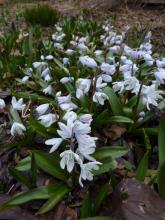
Scilla mischtshenkoana; not as good a display yet as formerly (but at least the house sparrows have not yet eaten off the flowers, as happened last year. ??? )
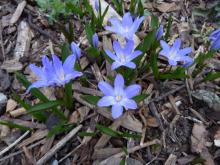
Chionodoxa starting to bloom:
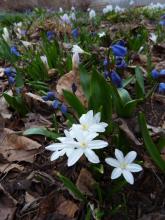
Eranthis hyemalis; I show these puny things only to ask if they get more than 1/2" tall for anyone else in this area/zone?!?
Cliff Booker
Re: Miscellaneous spring bulbs
Mon, 05/02/2011 - 10:51pmWelcome to this wonderful forum Phyllis ... I hoped we might meet again at the Nottingham Conference? Greetings from a very sunny and windy Lancashire, U.K.
Todd Boland
Re: Miscellaneous spring bulbs
Tue, 05/03/2011 - 2:59amLori, it seems we are pretty much the same in regards to what's blooming in our gardens. After the winter we have boith experienced, we can fully appreciate the 'common' stuff!
WimB (not verified)
Re: Miscellaneous spring bulbs
Tue, 05/03/2011 - 6:21amFlowering here now; the very good smelling ;) Sauromatum venosum
Trond Hoy
Re: Miscellaneous spring bulbs
Wed, 05/04/2011 - 4:59amImperalis blooms every spring at my summerhouse, but those I have at home do not. I think the soil is to sandy and lean and that the bulbs are planted to shallow.
I have had persica outside but they die in pots and survive in the soil. This last winter was cold and we had penetrating freezing in the soil but the bulbs survived. However, no flowers.
Lori S. (not verified)
Re: Miscellaneous spring bulbs
Sat, 05/14/2011 - 9:34pmJust more of the common stuff... but the thought of it does get me through the winter! :)
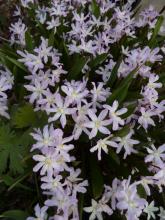
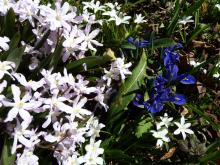
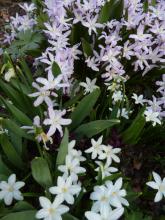
Chionodoxa luciliae including 'Pink Giant' and 'Alba' and Iris reticulata:

Muscari azureum are slowing starting to naturalize:
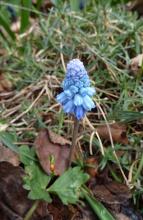
The daffodils are starting to bloom... here's one of the first clumps of Narcissus 'Téte-á-téte':
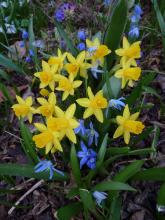
Tulipa uremiensis:
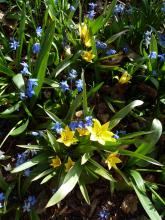
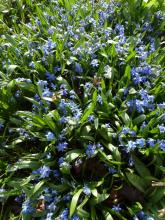
Do you think I need to plant more Scilla sibirica???? ;D ;D
WimB (not verified)
Re: Miscellaneous spring bulbs
Sat, 05/14/2011 - 11:02pmCommon or not, it's very nice...all that spring color.
cohan (not verified)
Re: Miscellaneous spring bulbs
Sun, 05/15/2011 - 11:35amI believe more and more that the spring flowers are the most important ones, certainly in this climate!
Trond Hoy
Re: Miscellaneous spring bulbs
Mon, 05/16/2011 - 9:24amLori, I think you should plant more S sibiraca - of other proveniences - then you'll get even more selfsowing ;D ;D ;D
Amy Olmsted
Re: Miscellaneous spring bulbs
Mon, 05/16/2011 - 12:56pmWim...I just dumped a huge pot of Sauromatum and there were literally dozens of bulbs of all different sizes! I sorted them out and potted them up into corresponding pots for sale later in the season. What a very cool bulb! ;D
WimB (not verified)
Re: Miscellaneous spring bulbs
Mon, 05/16/2011 - 1:19pm:D Cool, it multiplies VERY quickly over here too, I have it for 10 years now and I have enough bulbs to stink up the entire neighbourhood ;) :P I give some away to friends every year and I plant some out in the garden (they survive in our climate when grown in the warmest spot in the garden against a southfacing wall)
externmed (not verified)
Re: Miscellaneous spring bulbs
Thu, 09/29/2011 - 10:12amOrder arrived today form (Paul Christian) Rare Bulbs. Definitely worth checking out www.rarebulbs.co.uk
So far, with 2 orders, they seem to have perfected hassle-free overseas shipping. Great quality.
Worth checking out
Charles Swanson MA USA
Mark McDonough
Re: Miscellaneous spring bulbs
Thu, 09/29/2011 - 4:24pmCharles, please tempt us by telling about some of the goodies you ordered. :)
Trond Hoy
Re: Miscellaneous spring bulbs
Sat, 10/01/2011 - 1:10amI have used Paul Christian for several years and he always delivers on time and good quality plants. I got some nice (and rather expensive) Frits last week but something dug up and ate all the bulbs during the first night :'( I had planted the bulbs on the shed roof too to avoid slugs >:(
Mark McDonough
Re: Miscellaneous spring bulbs
Sat, 10/01/2011 - 8:02amMy goodness Trond, what A sad development. You might have to cover your bulbs with wire mesh in the future to protect them, or as some people do, plant them in sunken wire "baskets" so that the protected bulbs can be lifted and divided somewhere down the road. The squirrels and chipmunks are working overtime right now at peak acorn season, digging a billion little holes in the yard to bury the acorns, so I worry about their incessant diggings too.
Richard T. Rodich
Re: Miscellaneous spring bulbs
Sat, 10/01/2011 - 8:45amI think we have all had that experience at least once. I had collected some wild seedlings of native sassafras from a northern outpost in Illinois one autumn. The big, fat buds must have been very scrumptious...
Trond Hoy
Re: Miscellaneous spring bulbs
Sun, 10/02/2011 - 8:13amRick, had it only been once. . .
Mark, you said it! I believed some kind of rodent were to blame, but we have had an invasion of squirrels the last weeks ravaging the crop of hazelnuts. Certainly they like bulbs too :(
Pages