Mark, those Chrysogonum roots look pretty scary, like they are going to take over the world! I think the hard life under an evergreen might be just the right place for them. I know exactly what you mean about the amazing amount of brush removed when limbing those evergreens, even from just for one tree. By the way, if the fir limbs were down to the ground previously, that initial limbing up will be very stressful on the tree. Think about the conditions before (deeply shaded, relatively moist with little air movement) compared to now. I limbed mine up over a 2 year period. This year, I planted some excess Orangekönigin epimedium under a white spruce, a white pine and and arborvitae... watered them once and left them to there own devices. We did have all that extra rain this spring and summer, but none for an entire month now, and they still look treat.
Cohan, let us know what your seedlings end up being
Rick, never thought of the possibility limbing a tree up would be stressful on the tree. The bulk of the limb material is dead, and I imagined "lightening the load" on the tree would actually be beneficial. The first tree in this row of trees, I did 2 years ago, to have some shade to plant out Epimedium seedlings; all went well. So this year I finished the row of trees (6 in all), must have been 50 heaping wheelbarrow loads of chopped up limbs. One of the six is a Blue Spruce, and it is not as aggressive on roots, nice planting pockets beneath, the others are firs (I remember the label on one of them when they were small, as white fir), and digging planting pockets around them is tough, definitely some root cutting. When we first moved in 26 years ago, the evergreen trees in this long row were small, I used a number of them as Christmas trees until they go too big.
I've taken some photos of the project, and hope to post here on NARGS, as a way to show recuperating valuable space, and to gain some shade gardening opportunities in a yard that is essentially sun, sun, sun, or so it was when we first moved in.
A high mountain fir like Abies concolor (White fir) will have deeper root systems than others, and this would also include a Colorado spruce, too. They would be less affected by limbing up than any lowland species in general. As far as lightening the load, don't know about that, but I know they both are breathing a sigh of fresh air relief. Being mountain species they are adapted to constant winds and need good air circulation for long term health. The Colorado spruce, especially, suffers in the high humidity and stagnant air that the eastern half of the US experiences.This is why lower branches of trees 30ft and taller have lower branches that die, even though they receive ample sun; they are susceptible to a cytospera canker in our climates due to the excess moisture that lingers in the lower parts of the tree the longest.
I've grow Pachysandra procumbens in different locations in the yard for seven years now. They don't seem to multiply this far north, or at least in my yard, but they are remarkably tenacious in warm and very dry shade. They are here as a curiosity, 'cause they sure aren't a groundcover for me! My pines are getting bigger now, and perhaps they will do better with the slightly more acidic conditions under them. (Note to self: transplant Pachysandra).
The 2-2.5 inch flower stalks are always fun, especially since they open so early, and even though plants don't look that great, they reliably bloom every year.
Yes, it is lovely! P. terminalis barely survives here (the neighbour grows it), not sure it's ever managed to flower. I assume P. procumbens is less hardy?
A few more from the woodland as it isn't much flowering in my new rock garden. The sunny and dry weather we have now is not easy for the new plants in the sandy soil there! I've already lost some although I water as often as I can.
The plants growing in the shade of the trees and shrubs do better although it is starting to be very dry there too!
Allium triquetrum Anemone narcissiflora(?) pink form from seed several years ago - first flowers. Polygonatum prattii(?)
Arisaema candidissumum Arisaema elephas(?) has made a nice group An unknown Arisaema
Meconopsis sp from Chadwell seeds, a prickly biennial species. And finally the unknown Roscoe species.

Comments
Richard T. Rodich
Mark, those Chrysogonum roots
Sun, 09/15/2013 - 6:29pmMark, those Chrysogonum roots look pretty scary, like they are going to take over the world! I think the hard life under an evergreen might be just the right place for them. I know exactly what you mean about the amazing amount of brush removed when limbing those evergreens, even from just for one tree. By the way, if the fir limbs were down to the ground previously, that initial limbing up will be very stressful on the tree. Think about the conditions before (deeply shaded, relatively moist with little air movement) compared to now. I limbed mine up over a 2 year period. This year, I planted some excess Orangekönigin epimedium under a white spruce, a white pine and and arborvitae... watered them once and left them to there own devices. We did have all that extra rain this spring and summer, but none for an entire month now, and they still look treat.
Mark McDonough
Cohan, let us know what your
Sun, 09/15/2013 - 7:32pmCohan, let us know what your seedlings end up being
Rick, never thought of the possibility limbing a tree up would be stressful on the tree. The bulk of the limb material is dead, and I imagined "lightening the load" on the tree would actually be beneficial. The first tree in this row of trees, I did 2 years ago, to have some shade to plant out Epimedium seedlings; all went well. So this year I finished the row of trees (6 in all), must have been 50 heaping wheelbarrow loads of chopped up limbs. One of the six is a Blue Spruce, and it is not as aggressive on roots, nice planting pockets beneath, the others are firs (I remember the label on one of them when they were small, as white fir), and digging planting pockets around them is tough, definitely some root cutting. When we first moved in 26 years ago, the evergreen trees in this long row were small, I used a number of them as Christmas trees until they go too big.
I've taken some photos of the project, and hope to post here on NARGS, as a way to show recuperating valuable space, and to gain some shade gardening opportunities in a yard that is essentially sun, sun, sun, or so it was when we first moved in.
Richard T. Rodich
A high mountain fir like
Sun, 09/15/2013 - 10:37pmA high mountain fir like Abies concolor (White fir) will have deeper root systems than others, and this would also include a Colorado spruce, too. They would be less affected by limbing up than any lowland species in general. As far as lightening the load, don't know about that, but I know they both are breathing a sigh of fresh air relief. Being mountain species they are adapted to constant winds and need good air circulation for long term health. The Colorado spruce, especially, suffers in the high humidity and stagnant air that the eastern half of the US experiences.This is why lower branches of trees 30ft and taller have lower branches that die, even though they receive ample sun; they are susceptible to a cytospera canker in our climates due to the excess moisture that lingers in the lower parts of the tree the longest.
Richard T. Rodich
I've grow Pachysandra
Wed, 04/30/2014 - 1:22pmI've grow Pachysandra procumbens in different locations in the yard for seven years now. They don't seem to multiply this far north, or at least in my yard, but they are remarkably tenacious in warm and very dry shade. They are here as a curiosity, 'cause they sure aren't a groundcover for me! My pines are getting bigger now, and perhaps they will do better with the slightly more acidic conditions under them. (Note to self: transplant Pachysandra).
The 2-2.5 inch flower stalks are always fun, especially since they open so early, and even though plants don't look that great, they reliably bloom every year.
20 April 2014
30 April 2014
Trond Hoy
Rick, I´ve grown P.
Sat, 05/03/2014 - 1:33pmRick, I´ve grown P. terminalis but procumbens looks more exotic!
Lori S. (not verified)
Yes, it is lovely! P.
Sat, 05/03/2014 - 1:52pmYes, it is lovely! P. terminalis barely survives here (the neighbour grows it), not sure it's ever managed to flower. I assume P. procumbens is less hardy?
Trond Hoy
A few plants from my woodland
Sun, 05/25/2014 - 11:49amA few plants from my woodland today:
Anemone prattii with huge flowers. This one has 4 petals, but 5 is common.
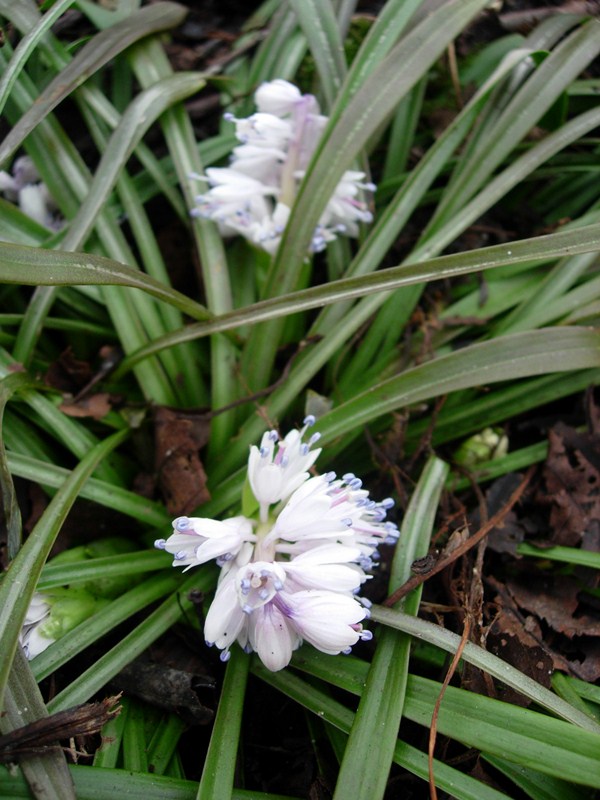
Ariaema elephas coming strong Convallaria majalis var rosea, the fragrance is beautiful but the colour is not. Melittis melissophyllum
Primula alpicola? and Primula heucherifolia?, both from seeds last year.
deesen (not verified)
Lovely woodland pictures
Mon, 05/26/2014 - 11:57amLovely woodland pictures Trond.
Trond Hoy
Thanks, David, one day I'll
Wed, 05/28/2014 - 1:14pmThanks, David, one day I'll show you the weeds!
Trond Hoy
A few more from the woodland
Sun, 06/01/2014 - 11:34amA few more from the woodland as it isn't much flowering in my new rock garden. The sunny and dry weather we have now is not easy for the new plants in the sandy soil there! I've already lost some although I water as often as I can.
The plants growing in the shade of the trees and shrubs do better although it is starting to be very dry there too!
Allium triquetrum Anemone narcissiflora(?) pink form from seed several years ago - first flowers. Polygonatum prattii(?)
Arisaema candidissumum Arisaema elephas(?) has made a nice group An unknown Arisaema
Meconopsis sp from Chadwell seeds, a prickly biennial species. And finally the unknown Roscoe species.
Longma (not verified)
I would suggest that it's
Mon, 06/02/2014 - 1:17amI would suggest that it's Roscoea humeana Trond,
Trond Hoy
Longma wrote:
Mon, 06/02/2014 - 1:55pm[quote=Longma]
I would suggest that it's Roscoea humeana Trond,
[/quote]
Thanks, Ron. That make sense.
Pages