
We are 11 days late on this topic!
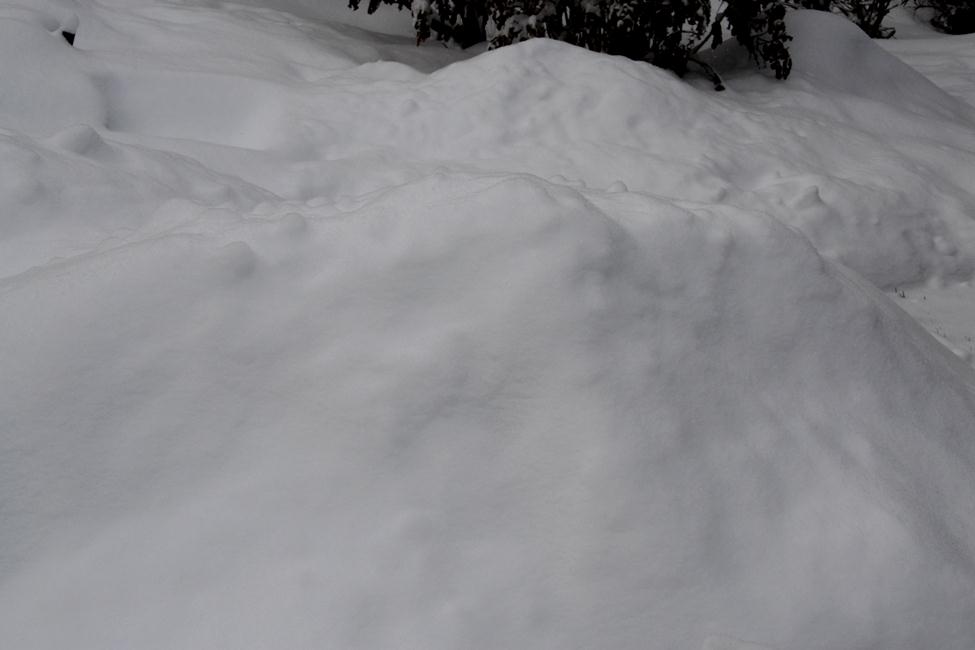
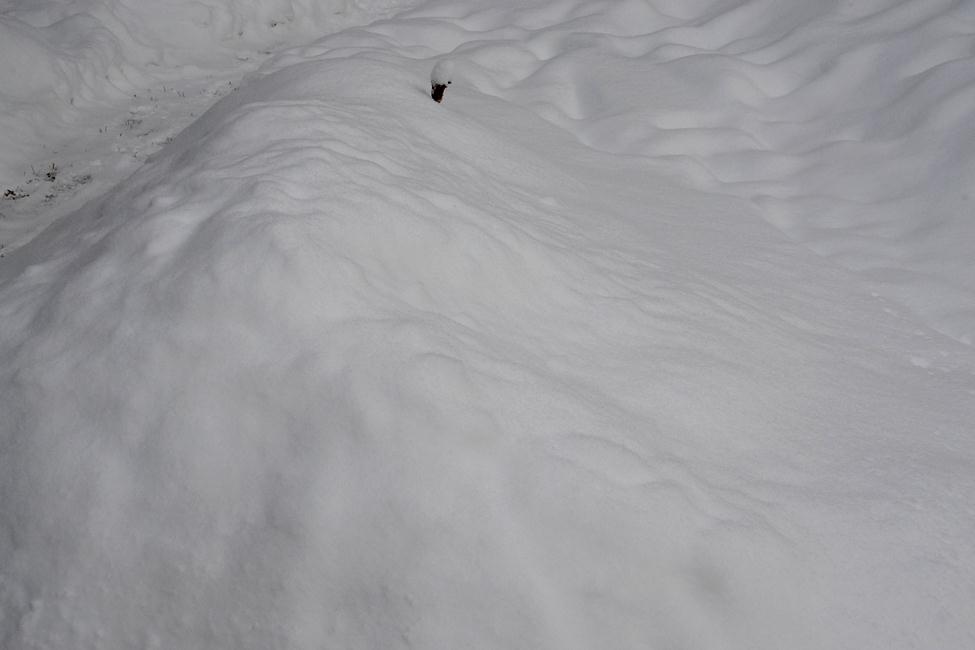
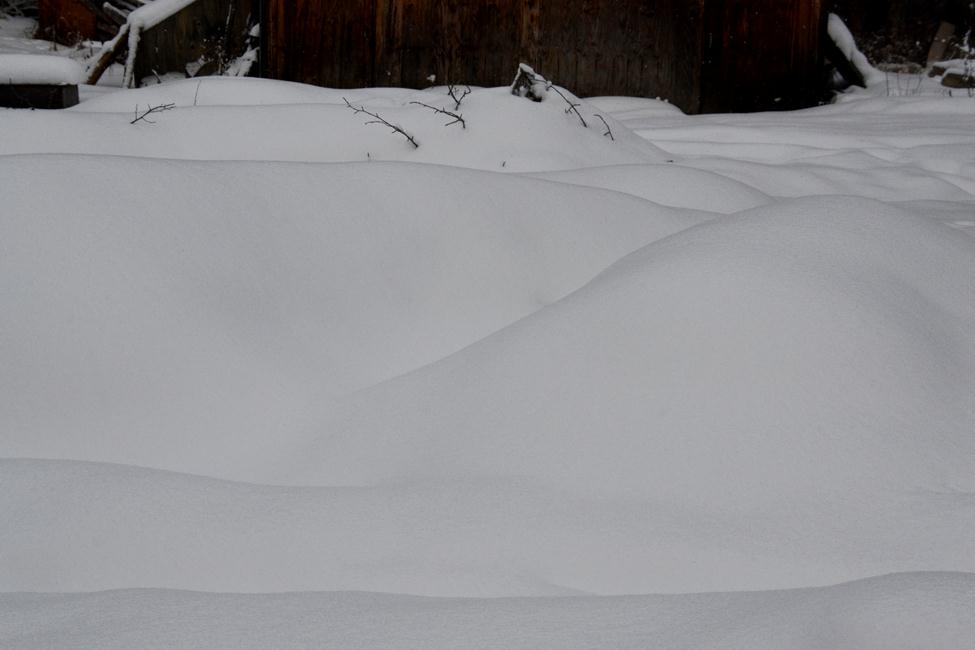
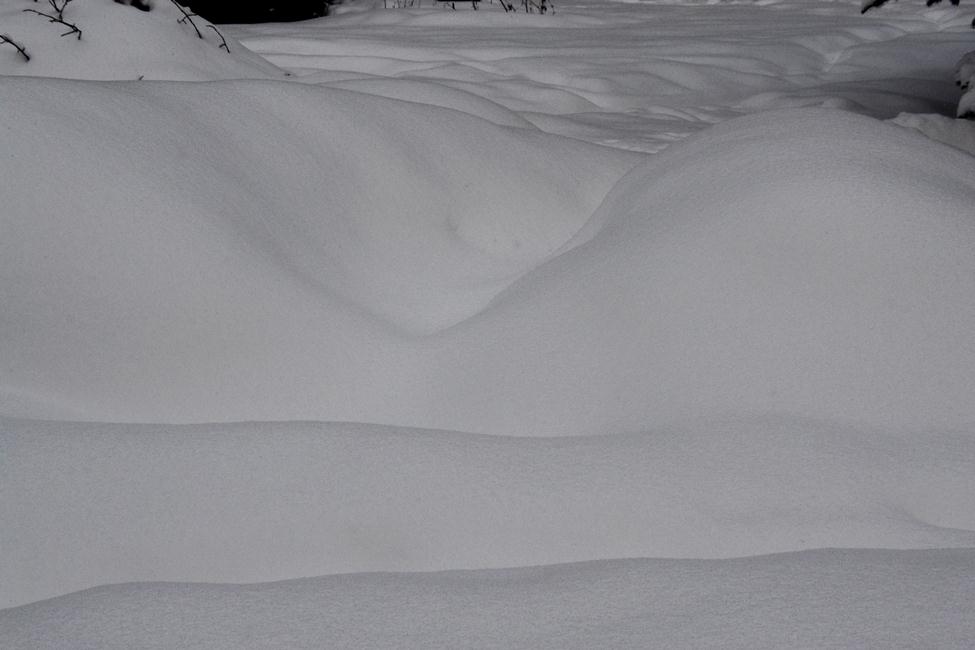
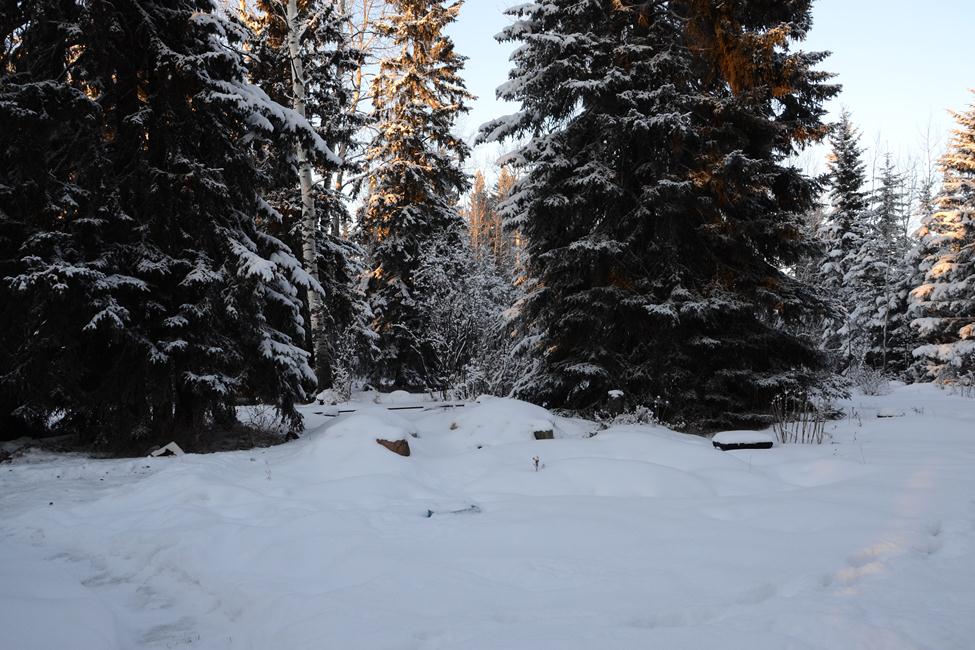
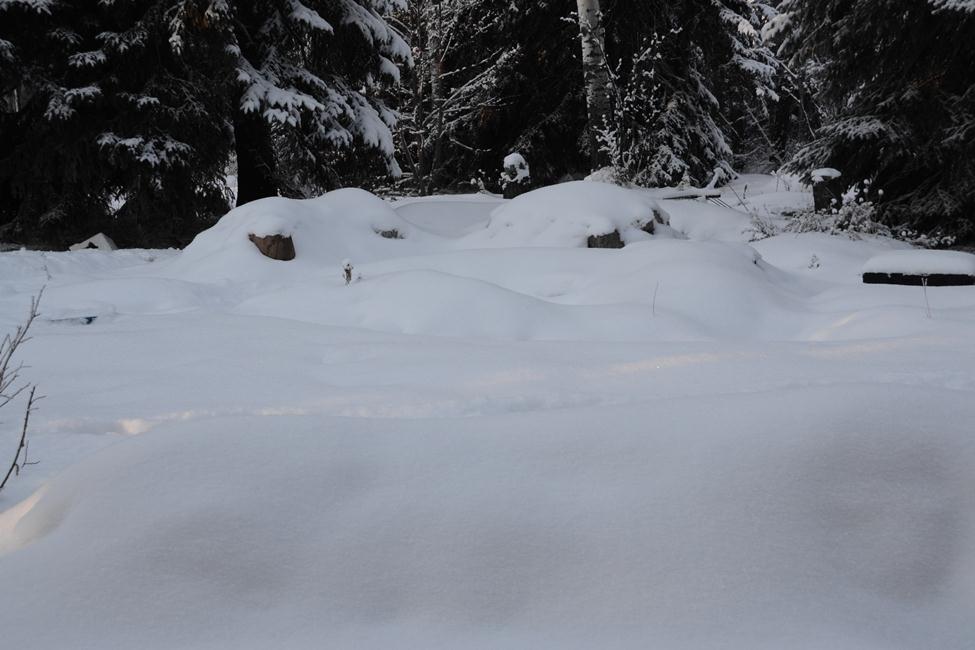
A couple views of some of my garden beds in the last couple of days-- not a whole lot to see! but you see some of the 'ridges' of the rock gardens and berms I've been developing, and looking at them this winter under snow, I've realised that these winter shapes should be taken into account at the design phase, since this is what I see for months at a time!
1-3 the rock beds in front of the house which get extra snow, being surrounded by shovelled paths; in #3 you can see a bit of the tallest Sempervivum flower stalk sticking through the snow still..
4,5 a couple of rock beds and berms in a different part of the acreage- these are in the moister part of the property, and (not counting the shovelling mentioned above) get the deepest snow
6,7 the third rock garden area, this is on the drier end of the property, and drier yet between the two large spruce trees- the two taller ridges have had the least snow cover of any of my plantings, so time will tell what plants that will favour (naturally, I am planting things that generally want to be drier in this area)

Comments
Richard T. Rodich
Re: What do you see on your garden walks? 2013
Tue, 02/19/2013 - 9:21pmNow that makes it REALLY special! :o :o ;D
cohan (not verified)
Re: What do you see on your garden walks? 2013
Thu, 02/21/2013 - 11:20amMine is more basic ;) I was looking at bigger 'sleds' used for pulling calves in winter (when they are born outdoors in cold weather and need to be moved) but they are wider- good for getting more wood on them, but not good for squeezing between trees, so I'm glad I got the narrow one...
Lori S. (not verified)
Re: What do you see on your garden walks? 2013
Sun, 02/24/2013 - 5:55pmA few things have melted out of the snow... Needless to say, those that are evergreen are much more interesting than those that are not!
Gentiana verna; Draba acaulis; Dianthus scardicus:
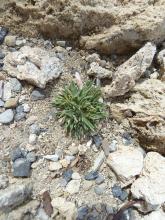
Gray on gray... clockwise from lower left, Achillea umbellata, Artemisia caucasica, ??, and for some green, Pulsatilla vulgaris 'Pearl Bells'
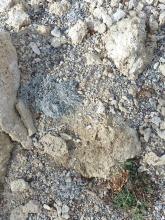
Cotula hispida; Armeria juniperifolia and blackened stems of Satureja montana illyrica (the bases will still be alive); clockwise from lower left, Townsendia parryi, Erigeron sp., Campanula topaliana:
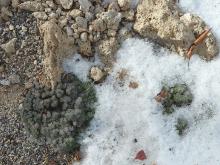
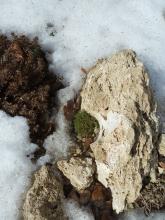
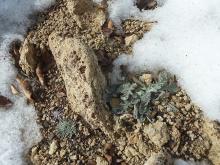
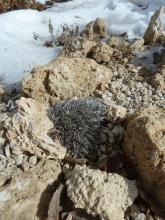
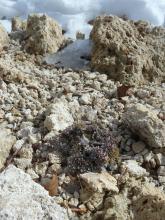
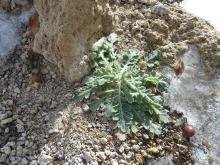
Eritrichium howardii - alive or dead? - with Salvia pachyphylla in the background; my wizened little specimen of Petrophyton caespitosum that survived transplanting and somehow keeps hanging on without growing or blooming; Achillea holosericea:
Lori S. (not verified)
Re: What do you see on your garden walks? 2013
Sun, 02/24/2013 - 6:06pmThis Thuja occidentalis 'Teddy' in the back yard tufa garden looks okay (although there's more winter yet to come). The other one planted in a trough out front looks awful - yellow and burnt.
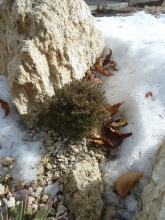
Trachelium rumelianum; Bukiniczia cabulica:
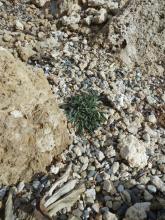
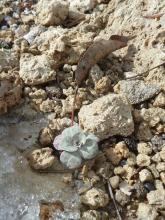
Cottony Pyrethrum leontopodium with Sideritis phlomoides on the left and the spiky skeleton of Lactuca intricata on top - wonder if it's still alive?
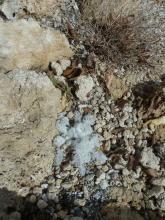
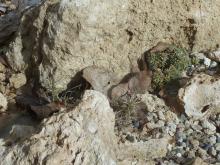
Silene caryophylloides ssp. echinus on the left and Saxifraga sp. on the right; I'm really looking forward to seeing the Silene this year; seeds were started in 2011; collected by Pavelka at 2100m, Darvaz Dag, Turkey (description: "very dense spined cushions, solitary pale to dark pink flws, 5-15cm, screes, stoney places. 2008 seed"). I have not been able to find any photos of it. Correction: If I spell it correctly (as opposed to the spelling in the seed list), I can find a couple of photos, though mainly herbarium specimens.
Toole (not verified)
Re: What do you see on your garden walks? 2013
Sun, 02/24/2013 - 11:09pmSome really nice stuff there Lori ---Hope they have all survived and come away.
Here's a bit of colour here at the moment---Oenothera ,(fruticosa subsp. glauca ??), 'blood yellow' .Not a particulary large sized bloom however i love the colour combination when you get up close.
Thankfully i planted it in a double wash tub where i can keep a check on it's numerous seedlings :-\ ....
Cheers Dave
Margaret Young
Re: What do you see on your garden walks? 2013
Mon, 02/25/2013 - 4:43amGreat colour combination on that Oenethera,T00lie - might it be O. falklandica?
Trond Hoy
Re: What do you see on your garden walks? 2013
Mon, 02/25/2013 - 10:22amLori, I am more optimistic for your plants than for mine :-\
Dave, a special Oenothera, nice colours!
Tim Ingram (not verified)
Re: What do you see on your garden walks? 2013
Mon, 02/25/2013 - 10:26amI would put money on the Eritrichium still being fine Lori - it somehow looks OK even though nary a sign of green. I would love to grow this again, the only Eritrichium I ever grew to flower and such great foliage. I had no idea how variable it is until seeing pictures on this Forum. The Salvia pachyphylla looks exactly the same as one I have on a raised bed, viz: not successful over winter! But I am surprised to see Pyrethrum leontopodium looking so good. It is very interesting to watch plants like this over the winter and see what tolerance they do have in the garden. Will be exciting to see everything growing away in the spring.
cohan (not verified)
Re: What do you see on your garden walks? 2013
Mon, 02/25/2013 - 10:53amExciting to see stuff exposed, Lori- I'm a way from that yet- my dryland beds might be out sooner, but they aren't densely planted yet, so wont be much to see..
That Pyrethrum is amazing- I forget, have you seen flowers yet? I have seed for one of the droopy (ray) flowered species that I really like, but I don't think it has exciting foliage..
Just looked at the weather forecast for the week-- 5-10cm snow tonight then later in the week daytime highs of 3-9C, though still below freezing overnight, of course, from -4 to -14C So some of those beds might be bare sooner, not the ones in front of the house or in the wetter end of the yard, yet- still deeply buried...
Mark McDonough
Re: What do you see on your garden walks? 2013
Mon, 02/25/2013 - 4:47pmLori, I grew Silene caryophylloides ssp. echinus back in late 1970s and early 1980s, grown from MacPhail and Watson seed collecting expedition to Turkey. It was a very good plant, quite distinctive and flowered well. All the plants I grew from that expedition are long since memories, although a few plant species made it into general horticulture, like Veronica liwanensis.
Dave, I don't think your colorful Oenothera is O. fruticosa or a variety of it. Was intrigued to see Maggi's suggestion of E. falklandica; never heard of it, and could only find one photo of it (use the link below, scroll down to find it), showing similarly colored blooms. Searching on The Plant List, IPNI.ORG, and Tropicos, indicate that Oenothera "falklandica" is not a validly published name, possibly a horticultural invention, there are a good number of such non-existant species out in horticulture-land. Now I'm interested in finding out what this plant really is!
http://www.buytech.biz/acatalog/Online_Catalogue_OENOTHERA_1219.html
...and the same photo in another link, but you can compare with a few photos of O. fruticosa and vars.
http://www.cgf.net/plants.aspx?genus=OENOTHERA
Lori S. (not verified)
Re: What do you see on your garden walks? 2013
Mon, 02/25/2013 - 6:43pmNot yet - this is its first winter. I'm not overly concerned about the Salvia pachyphylla just yet despite its bedraggled appearance - I had one out front in regular soil that looked about the same coming out of winter. Unfortunately, it never amounted to anything and got broken off (from being raked over, I think).
Toole (not verified)
Re: What do you see on your garden walks? 2013
Mon, 02/25/2013 - 10:38pmThanks Trond /Maggi
I had queried the name i gave earlier as when Googling Oenothera i came across pictures of my plant labelled as O.fruticosa ssp glauca which under 'The Plant List' is an unresolved named.
And just to add to the confusion the name should be blood orange not as i have called it ,blood yellow--duh !!!....... :-[
Sorry i can't help you further Mark.
Cheers Dave.
Margaret Young
Re: What do you see on your garden walks? 2013
Tue, 02/26/2013 - 4:47amRight, I hadn't cottoned on to the fact that the Blood Orange was a name and not just a description.... a search for OENOTHERA 'BLOOD ORANGE' doesn't get us much further though....
http://hobbykafe.com/forum/viewtopic.php?f=15&t=1388&start=15 =Bulgarian site
http://www.amazon.co.uk/Imberhorne-Lane-Nursery-OENOTHERA-ORANGE/dp/B006... =seeds for sale
http://members.gardenweb.com/members/exch/audrey = seed swap
I've written to Bob Brown of Cotswold Garden Flowers to see what else he can tell us of is "falklandica"
Mark McDonough
Re: What do you see on your garden walks? 2013
Tue, 02/26/2013 - 5:57amFrom a brief search, I find there are a number of orange Oenothera species/cultivars going around, the one that comes up the most is Oenothera versicolor, with cultivar names like 'Sunset Boulevard' and 'Endless Orange'. Just google images for Oenothera versicolor and you will see lots of these.
Now, O. versicolor is considered a synonym for the accepted name of O. campylocalyx.
The synonym list for O. campylocalyx include:
O. coccinea
O. curvifolia
O. fusca
O. scabra
O. versicolor
O. weberbaueri
Onagra fusca
This is a species from South America (Ecuador, Peru, Bolivia). Some "garden web sites" report Oenothera versicolor as a Californian annual, which it is not, just more unsubstantiated garden lore. Google Oenothera campylocalyx, and you'll see many of the same orange cultivars.
I think Dave's "blood orange" evening primrose or O. "falklandica", is probably some other South America species of Oenothera, it has rather different leaves than the long narrow leaves of O. campylocalyx (syn. versicolor). The trouble is, its so hard to find botanical information for Central and South America.
Regarding O. fruticosa and ssp. glauca recognized by USDA Plant Profiles, they're good entities in my book, The Plant List has a surprising high percentage of "unresolved" plant names.
http://plants.usda.gov/java/profile?symbol=OEFR
Margaret Young
Re: What do you see on your garden walks? 2013
Tue, 02/26/2013 - 12:58pmGot a reply from Bob Brown about Oenethera falklandica :
He tells me the seed was " bought from North Green Seeds. It must be somebodies made-up name maybe for something collected on the Falklands" - he knows nothing more.
Michael Peden
Re: What do you see on your garden walks? 2013
Thu, 02/28/2013 - 6:43amUgh!!!
Yes, of course, I should be more respectful of March :-\
Richard T. Rodich
Re: What do you see on your garden walks? 2013
Thu, 02/28/2013 - 3:46pmMakes you wonder how the Dwarf Alberta Spruce does in Alberta....?
Actually, I didn't think you had that problem out east. You have much more humid winters and springs than us in Minnesota.
Is it normal that one has to protect from winter sun there, too?
Michael Peden
Re: What do you see on your garden walks? 2013
Fri, 03/01/2013 - 7:26amYes, I do wonder about Alberta.... Cohan; are you out there? I'm not sure covering plants for winter could ever be considered "normal" behavior :o but in some cases it might forestall burning. A burlap wrap might have prevented the burn but this plant will likely recover anyway. I just have to look at it for a few more weeks :( This common landscape plant is sometimes put right next to south wall in full sun where the burn really can do some serious damage. They're fine with any shading though.
Lori S. (not verified)
Re: What do you see on your garden walks? 2013
Fri, 03/01/2013 - 8:01amDwarf Alberta spruce are a pretty poor bet around here in this dry chinook belt - most of those cute little green cones in the one-gallon pots are doomed from the moment they leave the store - but like everything, there is an exception here and there. DH says there's a house in our neighbourhood with 2 of them in a sheltered front entrance that have been there at least 15 years and are head-high. The backsides are dead (whether due to climate conditions or whether it's needle drop due to be being up against a wall or other trees is unclear) but the fronts look good, apparently.
cohan (not verified)
Re: What do you see on your garden walks? 2013
Fri, 03/01/2013 - 10:40amI don't have any personal experience with dwarf conifers, so can't add much. I'll try to keep my eyes open for them when I am in town...As Lori suggests, I'd tend to think most people don't care for their planted conifers that well in the first place- neither do a lot of big box garden centres, for that matter- they may be on the way out before they even leave the store..
I don't see many wrapped shrubs here- I think it is done sometimes for some cedars (? not really sure what they are- but little pyramids very popularly sold here, with a very very low survival rate!)..
Where in Alberta must make a big difference to woodies as well- more freeze/thaw farther south, colder farther north etc, besides vagaries of exposure in a particular property- eg my place is quite sheltered by trees, greatly reducing winter winds- my aunt up the road with a more exposed site feels we can grow many things she couldn't..
Lori S. (not verified)
Re: What do you see on your garden walks? 2013
Fri, 03/01/2013 - 4:02pmI didn't really mean to suggest that it is due to poor care that dwarf Alberta spruce tend not to do well, but more that it seems to be poorly suited to surviving in our conditions generally (usually becoming fatally dessicated over the winter, if they last that long)... a bit of a mystery as Picea glauca var. albertiana is said to have been collected from nature in Alberta. This site claims that all plants of it are derived from "a natural dwarf specimen that was collected at Lake Laggan, Alberta, in 1904. That specimen was brought to the Arnold Arboretum in Boston and has been the source of all subsequent specimens and cultivars".
http://www.floridata.com/ref/p/pice_gla.cfm
Stuart was thinking about this a while back too... One wonders about the location of the mysterious "Lake Laggan". Does it refer to Lake Louise in Banff National Park?
http://www.lakelouisestation.com/history.php
The name "Laggan" lives on in the name of this bakery cafe at Lake Louise townsite:
http://laggans.ca/
Given how poorly the modern descendants of the plant do here generally, Stuart figures the original plant (or population if there is or was one) must indeed have been dwarf - maybe dwarf enough to stay completely covered by snow for most of the year? Failing that, it must have been located in some very mild, BC-like micro-oasis... but where?
Anyway, something of a mystery... Can anyone shed any light on this?
Lori S. (not verified)
Re: What do you see on your garden walks? 2013
Fri, 03/01/2013 - 6:27pmA few more things melting out of the snow... visible now but that may be short-lived if the predicted storm due to start tomorrow night comes to pass.
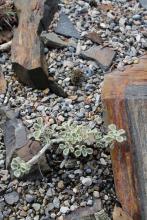
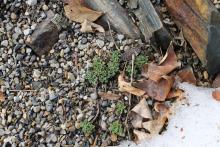
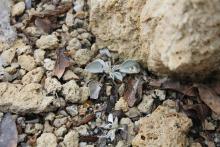
All looking pretty much as they did last fall, here's Marrubium globosum (bottom) and a little Acantholimon kotschyi ssp. laxispicatum (top); Anthemis creticum ssp. leucanthemoides; Lupinus excubitus var. austromontanus (and of the mysterious gray things that I failed to label on the map!):
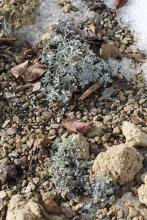
Astragalus loanus still looking OK, and Lupinus breweri appearing lifelike:
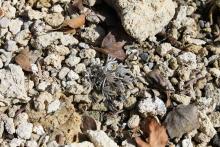
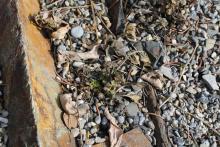
It's amazing how fast some plants get going as it warms up - there appears to be a new leaf on this Centaurea epirota (and some old battered ones from last year):
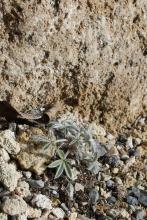
Lupinus wyethii:
Michael Peden
Re: What do you see on your garden walks? 2013
Sat, 03/02/2013 - 6:39amLori, Interesting you note no "Lake Laggan" the reputed home of the Dwarf Alberta Spruce. I think there must be a huge difference in climate where you are versus the windward/seaward side of the Rockies which would be cloudier and moister, conditions the little spruce seems to require. So nice to see things emerging from snow. It's still "March" :( here; cold with flurries or sprinkles but mostly just gray. If you get sun and warmth you will notice Eritrichium howardii beginning growth if you look very closely. Miracle!
Lori S. (not verified)
Re: What do you see on your garden walks? 2013
Sat, 03/02/2013 - 8:28amYes, it seems the only "Lake Laggan" must have been what is now called Lake Louise, and you've defined the mystery exactly... Given the climate difference between the east and west sides of the continental divide, where in the drier, east-side rain shadow would one find a little pocket of conditions where this fussy little thing (or even a population?) could have existed naturally?
I'll keep an eye out for the Eritrichium howardii! Is it actually herbaceous then?
Thanks for the info on Silene caryophylloides ssp. echinus, Mark. It's interesting to hear the history of its introduction.
Michael Peden
Re: What do you see on your garden walks? 2013
Sat, 03/02/2013 - 10:22amI'll add to the emerging from snow theme. Yes, I've taken my winter withered hide out into the cold and clammy to search for signs of life on the garden. Not all is in hideous estate and primary to the inclusion of cheeriness into my rather brief garden walk is the note that the Snowdrops are pushing above ground where the snow has melted. Below is a photographic sampling, with my ramblings, of just a few of the plants that are showing now. There should be later, an account of conditions that some of the more controversial things here find themselves in upon winter's passing:
Lewisia tweedyi appears to have survived at the south drip of a conifer (ground level aspect). It was exposed to winter low of -12F and arid sunshine. It now sits in a cold mire along with everything else in the garden. It could well be a case of "just doesn't LOOK dead yet" but I don't think so.
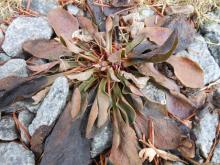
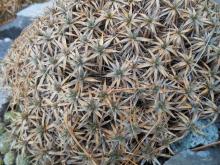
Acantholimon hohenackeri on a well drained version of mire (south face of The Rock)
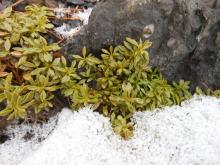
The white form of Penstemon caespitosus as above and like the Lewisia must yet face even hotter(April) sun than befell it in January and iffy precipitation.
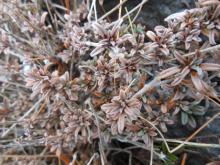
I stuck the camera right down into this old Moltkia petraea. Like Satureja, Lavender... I like to leave all old growth on over winter to help keep sun off of buds lower in the bush. Ideally new growth will overtake the old in summer, but judicious clipping is OK in spring. Looks OK but I can't say if this is alive or not.
Packera from Red Mountain, Montana seems completely unfazed; tough little Rocky Mountain steppe plant. Wonderful; tough is here!
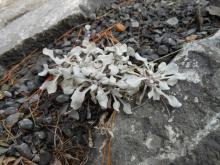
Echinocereus triglochidiatus in hairless form, has winter shrink capacity, is also unfazed. I note that my Agaves (also hairless, glaucus, hardy succulents) do not seem to posses sensible shrinkability but the ones I planted out, now seem to display a good deal of shrinking. Better late than never or just plain dead? Time will tell.
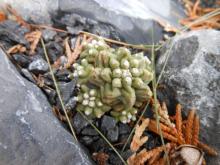
Kabschias grow any time the ground is not frozen and there is moisture: Aetheonema oppositifolia will bloom real early but I think I should have fed this one (?); not many buds showing: and Y'all've seen this Areneria/Eriogonum; not much change.
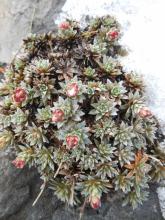
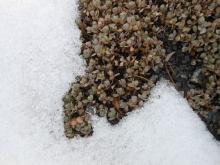
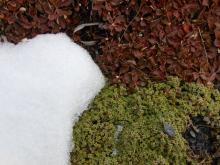
Finally, these Yucca harrimanii/nana really could be the walking dead. It wouldn't be the first time I'd be hoping for any regeneration from the buried roots come summer. The well known preservative effects of refrigeration must yet come to light!
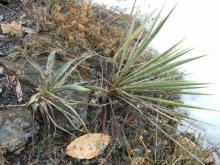
The other plant is Aethionema grandiflora an excellent rock garden get-around hardy enough to reseed it's self and thus be glorious for many years.
Lori S. (not verified)
Re: What do you see on your garden walks? 2013
Sat, 03/02/2013 - 12:14pmThings are looking great there, Michael. The eriogonum is fantastic!
Trond Hoy
Re: What do you see on your garden walks? 2013
Sat, 03/02/2013 - 12:41pmOr February? This didn't happen in one day?
Picea glauca var albertiana 'Conica' is widely grown here but some branches oftens revert back to normal form. That make me assume it can't be from a stable population of dwarfs but from a sport. Or the plants grown here are not the same as you are talking about!
I have had one in my garden for more than 25 years. It is still less than 2m high. I've never experienced any sun burning though, not even this winter that have damaged other plants.
Trond Hoy
Re: What do you see on your garden walks? 2013
Sat, 03/02/2013 - 12:58pmLori and Michael, I wish my plants looked as good as yours after the winter!
cohan (not verified)
Re: What do you see on your garden walks? 2013
Sat, 03/02/2013 - 11:47pmLori- interesting about the missing/uncertain original site for the collection-- I think it's very easy to find habitats in Alberta that a dwarf spruce could be sheltered in over winter- depending how dwarf! Does it seem unlikely that it could have been a dwarf population ? Surely it would have been seen again? More likely one individual sport, and then even more reasonable that it could find a sheltered and/or snowy spot. More of a mystery is why a sport of P glauca would be so fussy?
That makes me think of things like the firs (forgetting which sp just now) which grow in foothills, mountains and some river valleys in Alberta, but are not supposed to be terribly well suited to other areas,I read of them being killed above the fence line in chinook zone yards! and Douglas fir which grows in just a couple of montane zone sites, not sure if anyone is growing those or not...
Important for those outside of Alberta to remember that many woody plants in general have a harder time of it (so I've read!) in the chinook belt- south/western Alberta in particular, where there is unpredictable snow cover, and more freeze/thaw than other parts of the province. Lori is in the heart of that zone, I'm on the edge of it- we get much more of the moderating Pacific air than does, say, Edmonton, but our snow cover is more secure than Calgary's- and no doubt other issues of importance to woody plants. The natural vegetation around Calgary is grassland except for low or sheltered areas, river valleys etc, and in my area the natural vegetation is boreal forest, so there must be some important distinctions!
That said, I have no idea whether anyone is successfully growing dwarf Alberta Spruce around here- I'll be watching for them now :)
Michael Peden
Re: What do you see on your garden walks? 2013
Sun, 03/03/2013 - 6:05amIt's good question. I've planted Douglas Fir here, one of them sourced from Cathey Peak overlooking Alamogordo, New Mexico a stones throw from the Mexican border. I know of one quite large specimen (or knew of; haven't visited it in a while) so they are planted here (Christmas trees too) but I don't know to what degree or from what geographic area they hail or if they are "good" plants. So far the New Mexican plant seems to be taking OK. Another thing I planted and watch closely is Thuja plicata sourced from northern Idaho. this one has burned in the past but in recent years seems to be getting along better almost like it's adapted. I would think our climate quite foreign to both of these specimens so I watch them with interest.
Trond Hoy
Re: What do you see on your garden walks? 2013
Sun, 03/03/2013 - 8:15amThe last couple of days have been more like normal. It's no snow left and the ice on the fjord has disappeared, at least here. The soil is still frozen though and only some snowdrops show colour. But they are very late and so are the winter aconites too. Only one crocus has showed its head. Last year they were in flower now.
Picea glauca 'Conica' shows no winter damage, however competition from shrubs isn't to its liking. Some of the Rhododendrons show damage from the cold though.
Snowdrops and winter aconites are late but welcome harbingers of better times. The Witch Hazel 'Pallida' has flowered for tat least one month although the flowers are easily overlooked when it is cold. Today they brightened the day considerably!
Lori S. (not verified)
Re: What do you see on your garden walks? 2013
Sun, 03/03/2013 - 9:59amFrom the descriptions, I wonder if both of your references might be to Douglas-fir (Pseudotsuga menziesii)?
There are said to be 3 stands of Douglas-fir in Calgary - I believe they are all in NW Calgary along the Bow River (I know of 2 of them and think I know of the third).
http://www.calgary.ca/CSPS/Parks/Pages/Locations/SW-parks/Douglas-Fir-Tr...
http://www.woodshomes.ca/douglas-fir-site.htm
A local native tree/shrub nursery sells them:
http://www.bowpointnursery.com/online-catalog/trees/douglas-fir/
This source refers to a Douglas-fir on a dry ridge in Banff that would be ~700 years old now, assuming it is still alive:
http://cfs.nrcan.gc.ca/pubwarehouse/pdfs/24075.pdf
Subalpine fir appears to have a pretty restricted range - high elevations and the relict population in the Swan Hills. I have a government-published pamphlet called Native Trees of Alberta that shows a population somewhere in the Edmonton area(?) and Native Trees of Canada (Hosie) shows two population dots in that area (as does Trees in Canada (Farrar)), but it looks like this more recent survey checked those areas specifically and didn't record any:
http://www.abmi.ca/abmi/biodiversitybrowser/speciesprofile.jsp;jsessioni...
cohan (not verified)
Re: What do you see on your garden walks? 2013
Sun, 03/03/2013 - 12:11pmSorry, I shouldn't have been so lazy and looked up the tree I was talking about- Actually balsam fir Abies balsamea- looking now, Flora of Alberta only shows it farther north, though someone (on another forum, I haven't visited in some time, so I have doubts I could re-find the reference) had told me they could be found in the Red Deer River Valley; However, now looking at the maps, I wonder if they meant A lasiocarpa, alpine fir, which seems from the map to have a broader distribution coming some distance away from the mountains along the North Saskatchewan River (and more so farther north), and a short way along the Red Deer River. I know driving west from Rocky Mountain House we start to see some unfamiliar conifers quite soon, but I certainly haven't keyed them- something beyond the P glauca, P mariana and Larix common here, and not pines..
I find many plants with that sort of map representation actually make it right into my area, but that is harder for trees, since we have lots of forest here, but none of it is undisturbed longer term.
Lori- I'll have to take a look at those links- I'm curious to know what Douglas Fir in Alberta look like- I've seen them in coastal B.C., but that must be quite different! There is supposed to be a stand on the far side (vs the highway) side of Abraham Lake, but I have no idea how accessible that is...
I have a small sapling growing from something given to me by an aunt- it was a seedling from a tree grown by a friend of hers east of here- some sort of Cedar from B.C., she's been growing it near Alberta for decades, I think; no idea what it really is, and its still very small after planting several years ago in a sheltered spot.. I'd love to grow a Douglas Fir here..
Michael, hope yours do well- interesting to find out what tolerances plants might really have...
Trond, good to hear you are getting some almost spring! Nice to see those early flowers, even the non-flashy ones..
We had lots of melting going on here, byt now we have 15cm at least fresh snow, and still snowing...
cohan (not verified)
Re: What do you see on your garden walks? 2013
Sun, 03/03/2013 - 12:48pmGoing through those links- if the figures are correct for the largest Douglas Fir in Alberta (now dead and felled) they said it would have been about 6inches /15cm tall at 50 years old! Maybe I wont try to grow one...
That park in Calgary looks like a pretty cool place to visit (first link)..
The notable trees of Alberta pdf was quite interesting!
Lori S. (not verified)
Re: What do you see on your garden walks? 2013
Sun, 03/03/2013 - 1:06pmIn the Alberta Trees of Renown booklet, it's interesting that the notably-old black spruce doesn't exactly stand out from its companions - all look equally (characteristically) ratty!
cohan (not verified)
Re: What do you see on your garden walks? 2013
Sun, 03/03/2013 - 4:26pmThat's what I thought about several of those trees- you wouldn't necessarily know they were old unless you were measuring or looking for some key features..
Trond Hoy
Re: What do you see on your garden walks? 2013
Mon, 03/04/2013 - 9:40amDo some of those conifers spread vegetatively by layering? Here the common spruce (Picea abies) makes stands of several trees which all stem from one original tree. Such a clone can be very old. The oldest living spruce in Scandinavia is a Swedish one C-14 dated to be 9550 years old. It is the root that is old, not the stem.
From this site: http://www.aftenposten.no/nyheter/iriks/article3620934.ece
cohan (not verified)
Re: What do you see on your garden walks? 2013
Tue, 03/05/2013 - 12:12amInteresting spot- why is it so bare- is it high? Doesn't seem so because of the flatness...
I've seen spruces root from branches- or at least have branches growing along the ground, haven't checked for roots- but have never seen those branches grow vertically and amount to anything much...
Lori S. (not verified)
Re: What do you see on your garden walks? 2013
Tue, 03/05/2013 - 6:40amI have no proof of it but it wouldn't surprise me if some of the little groups of subalpine firs that one sees around here at timberline are actually colonies of clones from layering. They sometimes have that look about them - lots of prostrate growth with leaders rising up here and there... ?
Trond Hoy
Re: What do you see on your garden walks? 2013
Tue, 03/05/2013 - 9:13amThe flatness is a typical Norwegian (or Swedish) mountain plateau (we call such a geological form "vidde"). It's no alpine formation at all but the bareness is due to harsh climate and no soil, just moss covered rocks. The tree is located at about 1000m.
Firs are foreign in Norway but commonly planted and I've often seen low branches rooting where they touch the ground. It is very common among spruces but I've never seen it on pines.
Richard T. Rodich
Re: What do you see on your garden walks? 2013
Tue, 03/05/2013 - 2:05pmThere are certain bog areas in Minnesota where Picea mariana proliferate from root sprouts. There is a small industry that has built up because of them. Workers go out and cut the little 2-4ft trees in the late fall to sell. The harvest is heavily regulated by our state's Department of Natural Resources. City folk buy them as winter decoration for their outside pots and window boxes that they grow flowers in during the growing season. Non-Minnesotans always say they have never heard of such a thing until they come here. Apparently, it's just a Minnesota thing (?). I'd be interested to know if this natural phenomenon or its economic use happens elsewhere.
Lori S. (not verified)
Re: What do you see on your garden walks? 2013
Tue, 03/05/2013 - 5:49pmI've never heard of this use for black spruce!
cohan (not verified)
Re: What do you see on your garden walks? 2013
Tue, 03/05/2013 - 10:39pmInteresting, Rick! I don't know if times have changed, but certainly when I lived in Edmonton, I didn't see anything like the amount of container gardening- and especially those containers that are re'planted' seasonally, that I saw living in Toronto, so I wonder if there would be the same sort of market for those mini-trees here?
Also, as I mentioned, I have not seen rooted branches growing up into trees- only forming skirts around the parents, but I certainly don't claim to have seen any vast amount of territory! Picea mariana is common here, however, I think there are some even right on my acreage, and many of them in the slough just beyond our fence...
Trond Hoy
Re: What do you see on your garden walks? 2013
Wed, 03/06/2013 - 9:56amPicea mariana is planted around here but it is not common. Neither this nor other spruces are used like you describe, Rick.
Here we usually buy seedlings of some pine with juvenile foliage for winter decoration indoors!
Tim Ingram (not verified)
Re: What do you see on your garden walks? 2013
Wed, 03/06/2013 - 3:17pmI don't think I've ever heard of pines rooting from cuttings, whereas most other conifers do slowly, so that probably explains why natural pines don't layer. I don't know enough about the taxonomy of conifers but pines do seem a race apart, and a lovely one.
Tim Ingram (not verified)
Re: What do you see on your garden walks? 2013
Sat, 03/09/2013 - 2:34pmI visited a friend's garden a day or two ago, just south of Maidstone on the escarpment of the North Downs overlooking the Weald of Kent. She has a great collection of hellebores and snowdrops, some of the latter given to her as wild collections by the botanist Martyn Rix many years ago. Some of them are pretty amazing foliage plants (forms of G. elwesii) with very broad blue-grey leaves. The garden dries out significantly in the summer and grows these plants as well as I've seen them anywhere.
Lori S. (not verified)
Re: What do you see on your garden walks? 2013
Sat, 03/09/2013 - 6:36pmLovely, Tim. What is the yellow tree in the first photo? Are those leaves or flowers?
Tim Ingram (not verified)
Re: What do you see on your garden walks? 2013
Sun, 03/10/2013 - 1:17amIt's actually a form of Pittosporum tenuifolium, which must be borderline hardy in many gardens - especially this yellow leaved form. I think the position of the garden on a high ridge must mean frost is moderated by continuous breezes. It is not an alpine garden in any way, except for a nice variety of woodlanders, but still has that feel of a garden where the individual plants come first.
cohan (not verified)
Re: What do you see on your garden walks? 2013
Sun, 03/10/2013 - 12:30pmInteresting place, Tim. Those are some great leaves on the G elwesii for sure!
Trond Hoy
Re: What do you see on your garden walks? 2013
Mon, 03/11/2013 - 9:17amNice to see a real spring, Tim. Here everything is still frozen solid. Even at midday in full sun the temperature only barely reaches +1C :(
Pages