
Moderator note:
With a new year comes a new thread! Here is the first post in "Image of the Day - 2012", which continues on from:
http://nargs.org/smf/index.php?topic=24.1560
Edit by Lori
Nothing in flower here either but with each day a second or two longer now, here are some mountain scenes and some local alpines to make us yearn for spring! Happy New Year, all!
Lovely pics Lori
Lori, your pictures always make me feel guilty - guilty of sitting lazy in the sofa instead of getting out there where the diamonds are to be found ;)
I know how you feel Hoy ...well sort of :) Here i'm stuck finishing off a job for a client spraying with a knapsack around 5000 newly planted natives ,all the while i'm itching to get back up into the hills --anyway regardless of the work situation i've decided i'm away botanizing next weekend.
Here's a wee beauty-- Brodiaea terrestris with thick looking almost succulent like petals .Enjoying the dry warm conditions of the last 3 weeks .
Cheers Dave.
Comments
Lori S. (not verified)
Re: Image of the day - 2012
Sun, 12/30/2012 - 10:50amTerrific photos, Brian! You got big pollinators around there! ;D
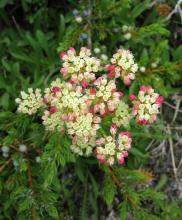
Eriogonum umbellatum var. subalpinum:
cohan (not verified)
Re: Image of the day - 2012
Sun, 12/30/2012 - 4:36pmAwesome Kelseya!
Looks like the bulldog 'fly' knows just where to be to get into the photos ;)
Cliff Booker
Re: Image of the day - 2012
Mon, 12/31/2012 - 3:59amA VERY HAPPY, HEALTHY AND FLORIFEROUS 2013 TO ALL.
Brian_W (not verified)
Re: Image of the day - 2012
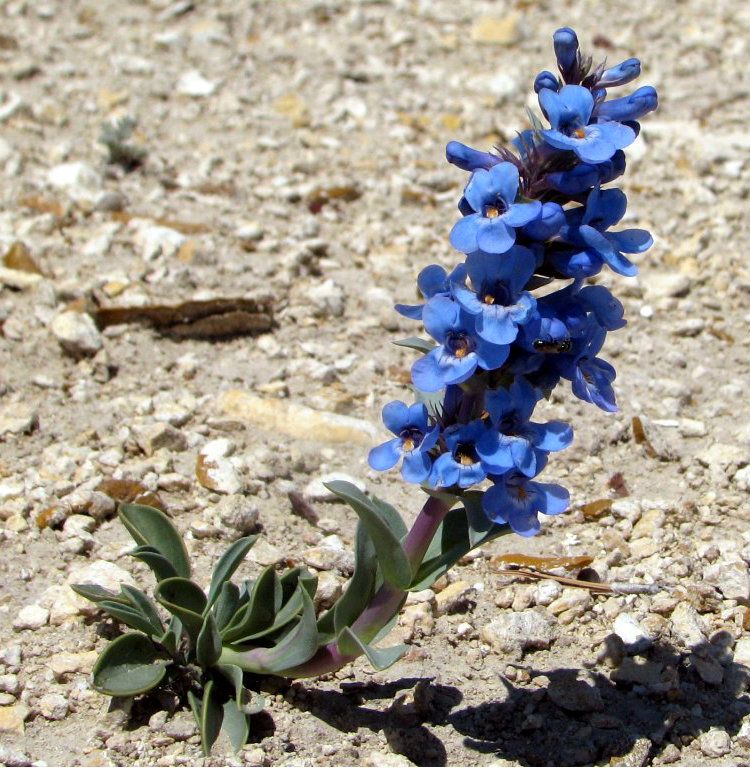
Mon, 12/31/2012 - 6:18amPenstemon nitidus
http://i1072.photobucket.com/albums/w362/townsendia/Penstemonnitidus-1_z...
Trond Hoy
Re: Image of the day - 2012
Mon, 12/31/2012 - 7:44amA beautiful greeting, Cliff! And an awesome Penstemon Michael!
Happy new and fruitful year to forumists!
Picea abies
Lori S. (not verified)
Re: Image of the day - 2012
Mon, 12/31/2012 - 10:35amHappy New Year to all!
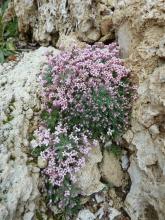
Asperula boissieri:
Steve Newall (not verified)
Re: Image of the day - 2012
Mon, 12/31/2012 - 1:14pmAll the best for the new year everyone .
Ours has started a little damp as we get some spillover from the storm in the mountains
Anisotome latifolia
Margaret Young
Re: Image of the day - 2012
Tue, 01/01/2013 - 7:46amSuberb Ansotome, Steve 8)
Happy New Year , Folks ;D
cohan (not verified)
Re: Image of the day - 2012
Tue, 01/01/2013 - 5:38pmThanks for the greetings all, and a New Year of personal and garden growth to all!
I don't generally care much about New Year's celebrations, but for once we actually have better weather after Christmas and into January than before!
Here's a view of Castilleja sp and Dryas drummondii in seed, in the mountains in August...
(and a closer view added)
Cliff Booker
Re: Image of the day - 2012
Sun, 01/06/2013 - 4:03amIt never ceases to amaze me how alpine species exist in the most inhospitable of habitats. This image was captured in the mountains near Grindlewald, Switzerland of a sheer and barren cliff face that supports this thriving plant in such a small indentation in the rock. The odds against a seed settling and growing in such a perpendicular location must be phenomenal. I suspected that the plant was a Silene acaulis, but a VERY poor close-up reveals a Salix sp. or similar.
Brian_W (not verified)
Re: Image of the day - 2012
Sun, 01/06/2013 - 6:09amBooker,
Nice image. Here is one of a vertical cliff in the Big Belt mountains of Montana:
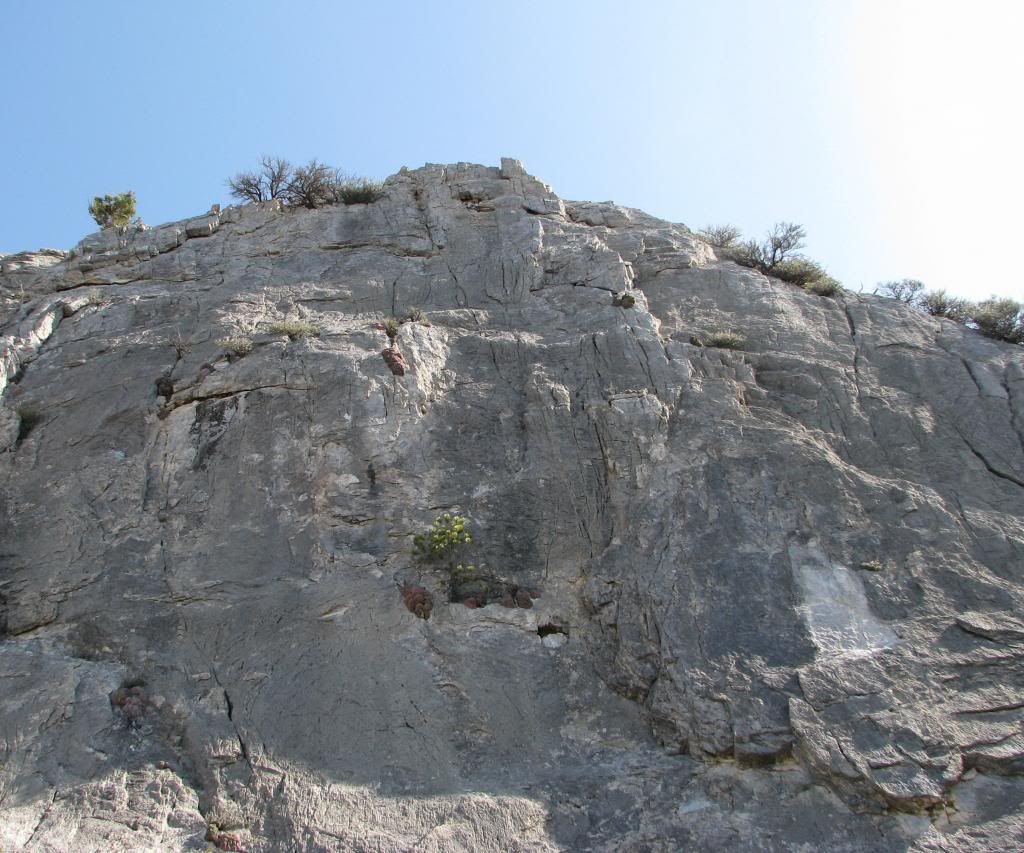
http://i1072.photobucket.com/albums/w362/townsendia/cliff_zps8f455be7.jpg
A close up shows a group of flowering Kelseya uniflora and a Ponderosa pine:

http://i1072.photobucket.com/albums/w362/townsendia/cliffcloseup_zps908f...
Lori S. (not verified)
Re: Image of the day - 2012
Sun, 01/06/2013 - 11:57amWonderful pix, everyone. These photos show that wherever life can exist, it will.
There is more evidence of the same in these photos of lichens from my files, which seem worth reposting...
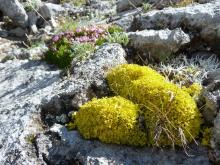
Cetraria cucullata(? or maybe nivalis?) is the yellow one, which occurs mainly in arctic and alpine tundra on soil. The weird white tentacles are Thamnolia subuliformis(?), also common on soil, humus and decaying vegetation in arctic-alpine areas. Silene acaulis and Smelowskia calycina are in the background. Here, they are shown on karsted limestone.
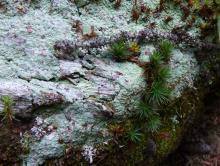
A common and widespread crustose lichen, Icmadophila ericetorum (I think), occurring on rotting vegetation and trail banks, is shown here growing on a well-decomposed log in the subalpine forest with Polytrichum moss:
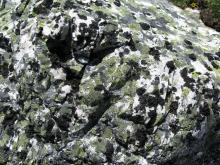
Quartzite boulder with rich patterns of encrusting lichens:
Mark McDonough
Re: Image of the day - 2012
Sun, 01/06/2013 - 6:41pmI agree Lori, great pics all around in this topic. The yellow (lichen?) mounds look like Dionysia mounds gone bad ;). One thing that I love about our native gray granite rock, is the lichen encrustation, similar to what is shown in your last photo.
Tim Ingram (not verified)
Re: Image of the day - 2012
Mon, 01/07/2013 - 2:33amLichens are fascinating aren't they? Lori's last picture reminds me of some trees lining the river at Bethgellert in Snowdonia - their trunks are completely covered in a patchwork of various lichens, almost like an Impressionist painting. But why do they grow on some plants and not others? Lichens are less obvious in our dry climate in Kent but for some reason they do very well on azaleas in a local garden in Canterbury.
Brian_W (not verified)
Re: Image of the day - 2012
Mon, 01/07/2013 - 6:13amGreetings,
Lichens have fascinated me since I was very young. In our semi-arid climate, they are often the dominant life form. Here is a photo I took of a lichen covered limestone rock:
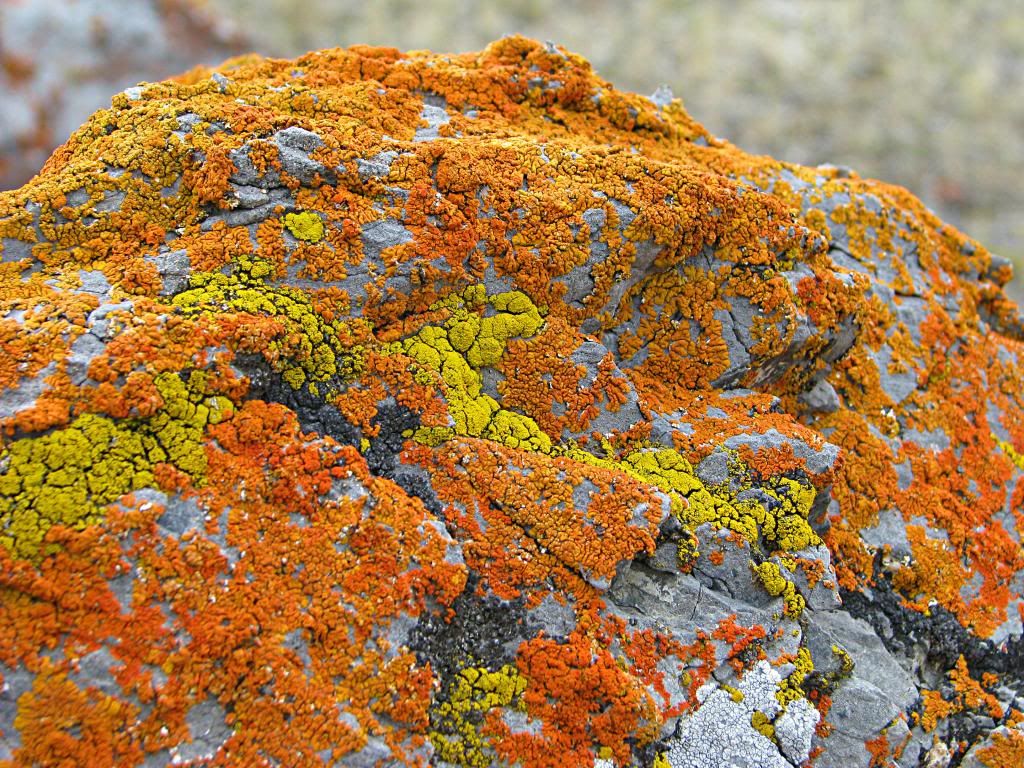
http://i1072.photobucket.com/albums/w362/townsendia/Dragonrock_zps6e7684...
Kelseya and lichens:
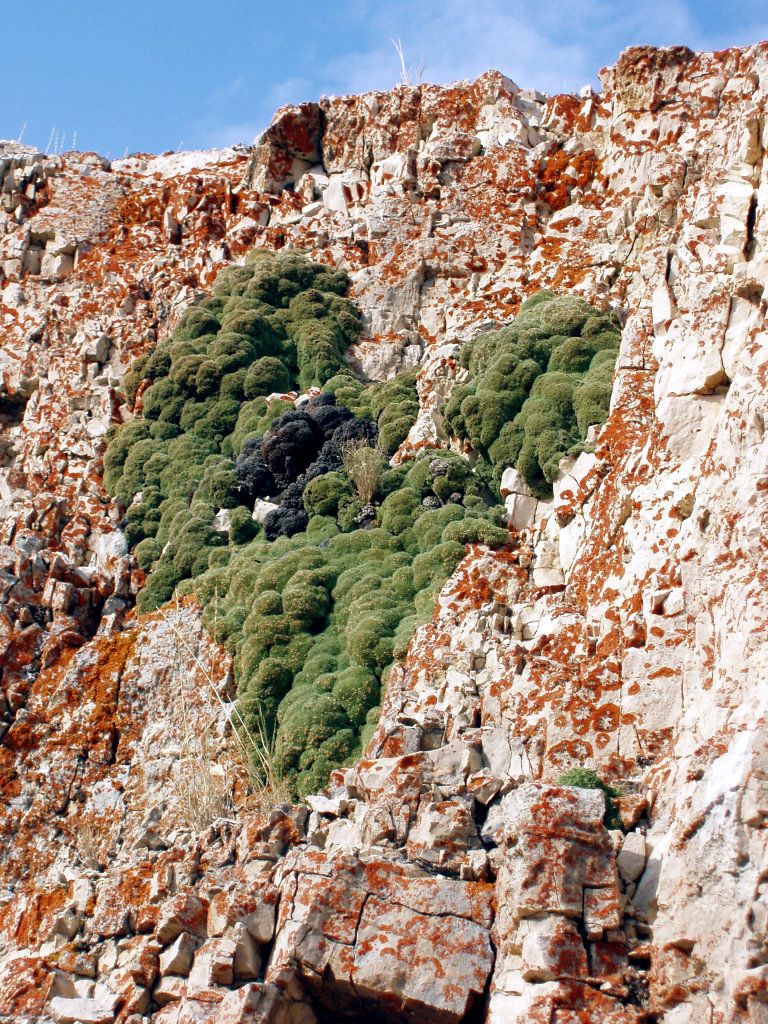
http://i1072.photobucket.com/albums/w362/townsendia/Kelseyapryor1-1_zps9...
Brian
cohan (not verified)
Re: Image of the day - 2012
Mon, 01/07/2013 - 11:06amCool stuff!
Cliff-The Salix on the cliff is interesting- must get water sittng at times..
Brian-Those Kelseya clumps are always amazing!
Lori- great lichens- lots here too on live trees and dead wood as well-- not always easy to find great undisturbed patches on the ground on properties where there are cattle trampling around, but sometimes good sized stumps get nice growth..
Digging for pics, but I'm running out of time...lol- so just a few pics, mostly moss and a tiny patch of lichen at the foot of a spruce tree.. nothing dramatic, but these are in fairly tough dry shade under trees and/or spots that are overgrown with other vegetation in season..
cohan (not verified)
Re: Image of the day - 2012
Mon, 01/07/2013 - 11:20amA few more- these 'lower' plant forms are always especially welcome at seasons when there is not much else looking alive!
Plus, growing nearby, a bonus- Calypso bulbosa
Trond Hoy
Re: Image of the day - 2012
Sat, 01/12/2013 - 12:20amLichens are very interesting things! Unfortunately I'm not good at their names but that doesn't hinder me to look for them when out.
Calypso bulbosa is a native of Norway too but very rare and I have never seen it :( But others have: http://www.pbase.com/alb123/image/31814271
Cohan, does it grow on your property?
Anne Spiegel
Re: Image of the day - 2012
Sat, 01/12/2013 - 8:06amWarm weather has melted some of the snow and the deer are back. Chased two out of the garden in the middle of the night. They really don't like disembodied voices yelling at them and they take off. Motion detector lights are great, but not for a sound sleep!
cohan (not verified)
Re: Image of the day - 2012
Sat, 01/12/2013 - 10:53amSame for me with lichens- and mosses!
Calypso is not exactly common- in a place where so many of our species are found everywhere!- but not all that rare either- hard to spot is another issue though: out of flower, you really need to know exactly where it is or be very lucky to see it, at least in my area where it grows in areas with a lot of other vegetation on the forest floor ( I saw it in the mountains in quite bare woods), and even in flower, although it is bright pink, the forest floor is carpeted with old poplar birch and willow leaves which can have pinkish tones, as well as a lot of other vegetation, some of which is taller than the flower stems even so early in the season.
This plant is not on my acreage, but maybe 50 metres past my fence, on the farm. I think it may be starting another crown, but only one flower so far, and it has not set seed. I used to know of colonies of at least several plants in two different places on the farm, but since I moved back I have not found any plants in those places- again, it's hard to be sure whether you miss them, but they are growing in unstable woods with birch that fall down/apart often and spruce can grow in blocking light, other vegetation grows etc etc and there are also cattle at times...
Anne- hope the deer don't do too much damage! The moose visited very early this year, to prune all our woodies, before I could take any repellent measures I meant to, and we also had early snow that has never left, so ditto for vole repellent- hope they are not doing too much damage under the snow!!
Anne Spiegel
Re: Image of the day - 2012
Sat, 01/12/2013 - 4:00pmThe deer do a lot of damage, but it could be worse ... they could be moose.
A friend told me she had heard a talk by some woman who told her that deer won't touch daphnes. The deer here think they are caviar and decimate them.
There isn't one they haven't browsed, even tiny ones. I think they are permanently dwarfing some of the survivors.
cohan (not verified)
Re: Image of the day - 2012
Sun, 01/13/2013 - 12:03amIf you pick the right woodies- tasty to deer yet fast enough growing to survive- you could get some great 'deersai'!
The moose aren't too bad here- they just pass through a few times over the winter- there is some overpruning of apples and the (shrub type ) cherries which can reduce yield-- and they kept our Mountain Ash as a multistemmed shrub for a long time, as well as shaping all the native dogwoods and saskatoons etc- but they don't kill anything. there is definitely a tendency to keep those things low which can't grow really fast (Cornus), and those that can put up really long shoots in one year may eventually end up with one or more trunks that get out of reach and can then grow unmolested- so you may end up with a very skinny shrub/tree (as with Amelanchier) or a tree with a wide skirt of lower stems (Sorbus), or tightly pruned lower parts and shoots in the middle racing for the sky- this is what our apples are trying to do, but I don't want them tall. Luckily they have not so far done to any planted woodies what they do to native poplars in the bush-break young trees at about 6 or 8 feet above ground so that the tops bend over and they can eat the tender tips....
Luckily neither the moose nor deer have paid that much attention to any garden plants so far, apart from woodies...
Trond Hoy
Re: Image of the day - 2012
Sun, 01/13/2013 - 1:30pmThe European elk is a nuisance for the forest industry as they browse the buds on young pine trees, especially in winter. My father in law however had more trouble with roe deer in his garden. They could damage an orchard in one night.
cohan (not verified)
Re: Image of the day - 2012
Sun, 01/13/2013 - 7:03pmSome of my relatives have a tree farm on part of the family farm- they have deer fence around some areas where small trees are grown- I think there is no option here if you have a lot of valuable trees or fruit/berry trees.
Mark McDonough
Re: Image of the day - 2012
Mon, 01/21/2013 - 2:52pmImage of the Day 2012 is now a closed topic. Please use the Image of the Day 2013:
http://nargs.org/smf/index.php?topic=1235.0
Pages