
NARGS member Tim Ingram mentioned his interest in Lomatium, a North American genus of umbellifers.
See: http://nargs.org/smf/index.php?topic=662.0;topicseen
The plant family Apiaceae is huge, with 347 plant genera, with many species of interest for rock gardens, so let me start up this topic with links to another North American genus, Cymopterus.
I share an enthusiasm for rock-garden-sized Apiaceae, and have long admired both Lomatium and Cymopteris when I've seen them both in photos and during my Western American travels years ago... some are truly superb. Here are some selected links to photos of Western American species of Cymopterus.
fruiting heads on Cymopterus cinerarius
http://calphotos.berkeley.edu/cgi/img_query?enlarge=0000+0000+0908+0697
flowering Cymopterus cinerarius, fantastic foliage
http://calphotos.berkeley.edu/cgi/img_query?enlarge=0000+0000+0908+0696
Cymopterus gilmanii
http://calphotos.berkeley.edu/cgi/img_query?enlarge=0000+0000+1210+1537
Cymopteris globosus
http://calphotos.berkeley.edu/cgi/img_query?enlarge=0000+0000+0306+0913
Cymopterus multinervatus
http://calphotos.berkeley.edu/cgi/img_query?enlarge=0000+0000+1004+0875
Some Apiaceae that I've seen photos of, in places such as Kazakhstan, and in New Zealand and Australia, show these are fantastic foliage plants, with strangely beautiful flowers.
Comments
John P. Weiser
Re: amazing Apiaceae (the umbellifers)
Sat, 12/03/2011 - 12:54pmLori
I just scattered the seed and let nature take care of the rest. I think stratification will not hurt them. We are so hot and dry in the summer that the seedlings can't sprout so have to wait for spring. It takes a couple of years for them to reach flowering size.
Lori S. (not verified)
Re: amazing Apiaceae (the umbellifers)
Sat, 12/03/2011 - 12:57pmOkay then, by scattering them outside, they are being stratified (exposed to varying temperatures)... good to know. Thank you!
Tim Ingram (not verified)
Re: amazing Apiaceae (the umbellifers)
Sun, 12/04/2011 - 9:03amReally like that Oreoxis and the further details from Mark - these small umbels have the same appeal that the larger herbaceous species have, even if a lot more tricky to grow. I have always sown umbellifer seed in the cooling days of autumn (if I get the seed early enough), so it gets a spell of warm and moist weather, with cooler nights, and then a winter stratification. Usually then germination is pretty good in spring. However, I have had seed sown late and stratified in the fridge germinate still at 4°C in the dark (similarly with eriogonums). This year plants of Lomatium columbianum in our garden set lots of seed so I hope for good germination next year. I find the foliage of these plants irresistable.
Lori S. (not verified)
Re: amazing Apiaceae (the umbellifers)
Sun, 12/04/2011 - 10:27amVery helpful to read your germination experiences too, Tim. Thanks.
Stephen Barstow
Re: amazing Apiaceae (the umbellifers)
Sun, 12/04/2011 - 11:10amNARGS seed of Lomatium columbianum from 2007 germinated mid-June here (I just sowed the seed in a pot and stratified in a cold frame outside). However, I lost it the following winter. I have succeeded with 3 or 4 Lomatium species of about 14 species that I've tried here!
Stephen Barstow
Re: amazing Apiaceae (the umbellifers)
Sun, 12/04/2011 - 11:12amUnfortunately, there were no babies, perhaps next spring?
Stephen Barstow
Re: amazing Apiaceae (the umbellifers)
Sun, 12/04/2011 - 11:15amYes, very nice, but it might also be a bit thuglike too - I've noticed it spread quite far in one season, worth keeping an eye on!
Lori S. (not verified)
Re: amazing Apiaceae (the umbellifers)
Sun, 12/04/2011 - 12:15pmThe dry (on top of cold, I suppose) conditions here have seemed to keep it in check so far, but I will certainly watch it.
Panayoti Kelaidis
Re: amazing Apiaceae (the umbellifers)
Mon, 12/05/2011 - 8:49amTim: your picture of Lomatium columbianum is stunning: but white! I have seen this in full bloom in the Columbia River gorge where it is incredibly beautiful (deep rose purple red flowers): your foliage is the same silvery blue, but you must have an albino! I never saw white flowered ones in nature...you may or not be aware this is quite a rare plant in nature. So having an albino (even rarer) is something special. But you need the purple phase too! Most lomatiums are yellow, so white and purple are very cool!
Lori S. (not verified)
Re: amazing Apiaceae (the umbellifers)
Mon, 12/05/2011 - 11:54amI thought the white flowers were the Athamantha turbith... ? ???
Tim Ingram (not verified)
Re: amazing Apiaceae (the umbellifers)
Mon, 12/05/2011 - 12:03pmYes - sorry, I have the two plants growing next to each other and the picture was taken after the Lomatium had flowered.
Richard T. Rodich
Re: amazing Apiaceae (the umbellifers)
Mon, 12/05/2011 - 1:32pmI thought the white was the Athamanta turbith (?)
Edited to say:
You both posted as I was doing mine, I guess. Isn't it interesting that you and I, Lori, chose the same wording...
Lori S. (not verified)
Re: amazing Apiaceae (the umbellifers)
Mon, 12/05/2011 - 9:24pmWell, guess we've cleared that up... :D
cohan (not verified)
Re: amazing Apiaceae (the umbellifers)
Sun, 12/18/2011 - 4:27pmLots more beauties- love them all-- the Oreoxis is very cute! I think I have a few Cymopterus seedlings-- some I think came up second spring..
Alplains has a lot of these, have to check there for Oreoxis...
Stephen Barstow
Re: amazing Apiaceae (the umbellifers)
Mon, 05/21/2012 - 1:37amCohan: I now have lots of babies of depauperata, just a long gestation period!
cohan (not verified)
Re: amazing Apiaceae (the umbellifers)
Fri, 05/25/2012 - 10:56amGreat to know :) these have been emerging in the woods here the last few weeks, always great to see those pretty leaves :)
Tim Ingram (not verified)
Re: amazing Apiaceae (the umbellifers)
Tue, 06/19/2012 - 7:52amThis is Athamanta turbith flowering again this summer on a raised bed, and it still holds pride of place in my affection for umbels; such a delicate and beautiful plant. The aquilegia is triternata, but unfortunately this has crossed with other more vigorous species close by in the garden and a lot of very different specimens have appeared on the bed as well.
Trond Hoy
Re: amazing Apiaceae (the umbellifers)
Wed, 06/20/2012 - 3:36pmA handsome and elegant Apiaceae, Tim!
Here's another kind of flowers: Bupleurum longifolium from seed a couple of years ago.
Stephen Barstow
Re: amazing Apiaceae (the umbellifers)
Thu, 06/21/2012 - 5:36amThe Athamanta looks good! I have a small plant and am yet to see what the fuss is about...
Lomatium urticulatum (I think it's this species, but please correct me if wrong) flowered for the first time this year, in the first picture with L. nudicaule:
Tim Ingram (not verified)
Re: amazing Apiaceae (the umbellifers)
Thu, 06/21/2012 - 9:22amGreat contrast between those two Stephen - nudicaule is so distinct but urticulatum resembles so many other species! I'm aiming to gather more information on umbels over this coming autumn/winter so will have to quiz you on what you grow! The number of people who grow these American species must be pretty much counted on one hand.
Trond - that longifolium is very striking. I have grown it but it never seems long lived. Wonderful flower arrangers plant!
Stephen Barstow
Re: amazing Apiaceae (the umbellifers)
Thu, 06/21/2012 - 9:41amPlease do, Tim - I'll collect what seed I can...
Lori S. (not verified)
Re: amazing Apiaceae (the umbellifers)
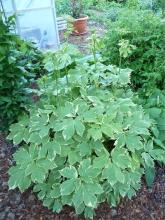
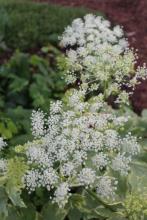
Sat, 07/07/2012 - 3:06pmNo new ones - I remain totally unable to grow umbellifers from seed! >:( - just some of the old ones in bloom:
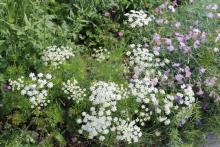
Athamanta turbith ssp. haynaldii:
Pimpinella major 'Rosea':
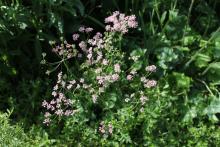
Peucedanum ostruthium 'Daphnis':
cohan (not verified)
Re: amazing Apiaceae (the umbellifers)
Sun, 07/08/2012 - 1:43pmI have exactly two seedlings of Cymopterus (planosus, I think) from Alplains seed two years ago...lol.. several Angelicas from StephenB did nothing for me, but Anthriscus Ravenswing from Kristl did germinate well, and I have a couple doing well in ground- tried a drier spot which died over winter and a wetter spot which is doing well, no sign of flowers yet, though!
Trond Hoy
Re: amazing Apiaceae (the umbellifers)
Mon, 07/09/2012 - 2:30pmThis umbellifer, Angelica sylvestris, was very busy starting flowering before the umbel had cleared from the sheath. The first picture is from yesterday, the other from today.
Tim Ingram (not verified)
Re: amazing Apiaceae (the umbellifers)
Tue, 07/10/2012 - 12:33amTrond - Angelica sylvestris isn't seen too much in gardens, much less than the culinary A. archangelica, but has sported to produce deep purple leaved forms like Anthriscus sylvestris 'Ravenswing'. Rather stunning specimens, but because they are biennial they come and go and don't self-seed with the freedom of cow parsley.
Cohan - will be interested to know how you get on with the Cymopterus - so far I have germinated quite a number but not managed to grow them on well. I think they need the same treatment as many bulbs - so really summer dry as they aestivate naturally. The smaller species are the most striking but the larger probably the ones easiest to grow. Are they grown at Denver at all I wonder?
Lori - if I have my own seed I sow it in the autumn and usually get good germination the following spring. I think the oily nature of the seed tends to make it more hydrophobic as it dries out and older seed can be really slow and difficult to come up, if at all. Late sown seed I often put in the fridge for 4 to 6 weeks and this has been quite good for Lomatium and Cymopterus, in fact they sometimes begin to germinate in the fridge as I have also found with Eriogonum. I am aiming to write something on the family so really want to learn a lot more about the American species.
Trond Hoy
Re: amazing Apiaceae (the umbellifers)
Tue, 07/10/2012 - 11:09amTim, I haven't planted A sylvestris but I haven't removed it either ;)
Both A sylvestris and archangelica are native here and archangelica is a weed. I remove hundreds every year but let some grow as they are important for some butterfly caterpillars and the plant belongs to the shore.
Purple leaved forms had been interesting though!
cohan (not verified)
Re: amazing Apiaceae (the umbellifers)
Tue, 07/10/2012 - 10:16pmIs Angelica sylvestris then the same as Anthriscus sylvestris?
Anthriscus sylvestris Ravenswing is not that large here yet, but assuming I get flowers and seeds, I'll have to make sure to replant some on purpose!
The Cymopterus I have was, I think, sown in 2010, though I think I was too late in spring to get adequate cold stratification, and they germinated last year.. still in the pot and still very tiny.. if I get the bed intended for dryland North Americans finished soon enough (working in that general area- building the alpine stretch now, then a sort of steppe area in front of it) I will plant them out this year..
Can't say I have any great insight to special treatment for them, other than that they will get a highly drained area, and the overall design will hopefully create a bit of a heat sink... Our greatest precip is usually from late May or early June until early to mid July, so time will tell how dry summer plants will do here! I'm hoping our generally cool spring/early summer will be the growing period for that sort of plant and they wont mind the moisture then.... a long hot dry summer is not going to happen here, at least not in recent years' patterns!
Trond Hoy
Re: amazing Apiaceae (the umbellifers)
Tue, 07/10/2012 - 11:50pmNo, Angelica sylvestris and Anthriscus sylvestris are two different plants. They all (including Angelica archangelica) grow here and are a bit weedy.
Another umbellifer here, and much more refined and elegant, is the annual Torilis japonica (it is native despite the epithet).
Stephen Barstow
Re: amazing Apiaceae (the umbellifers)
Wed, 07/11/2012 - 12:24amThere's also the variegated Angelica archangelica 'Corinne Tremaine'. Anyone had successs with that one? I've sown seed twice, but the resultant plants have been very weak and haven't survived.
We also have an heirloom Angelica archangelica ssp archangelica v. Majorum, Voss Angelica, a traditional cultivated selection with filled (solid) leaf stalks. You can read about it here: http://www.skogoglandskap.no/filearchive/angelica_fossaa.pdf
Re-Cymopterus - I bought several species from Alplains this year but I was probably also a bit late like Cohan and only one seedling has appeared so far...
Tim Ingram (not verified)
Re: amazing Apiaceae (the umbellifers)
Wed, 07/11/2012 - 1:16amTruth be known quite a number of umbels are weedy!! But they can be very beautiful, like Selinum wallichianum from the Himalayas, which flowers later into the summer and has the most fine foliage of all, or very different, like Thapsia maxima (below) from the south-west Mediterranean. The most extraordinary must be the eryngiums - this one, bourgatii, is widely grown but also very free seeding. The larger colouring flowers with long spiky bracts are actually on a single plant that grew earlier than the rest and could be an interesting variant. I have this planted in a bulb bed which it effectively takes over after the bulbs have flowered and are dying down - I am trying to weed it out of more alpine areas!
Lori S. (not verified)
Re: amazing Apiaceae (the umbellifers)
Wed, 07/11/2012 - 5:22amNice, Tim.
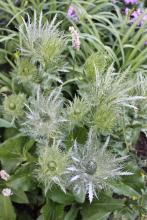
Here's Eryngium alpinum in bud:
Tim Ingram (not verified)
Re: amazing Apiaceae (the umbellifers)
Wed, 07/11/2012 - 11:59amI'm very envious Lori because I've never been able to grow alpinum very well and you really don't see it in gardens so much. Those bracts are wonderfully dissected and quite soft compared to most eryngos.
Richard T. Rodich
Re: amazing Apiaceae (the umbellifers)
Wed, 07/11/2012 - 4:11pmI liked the foliage of Eryngium bourgatii better than the flowers when I grew it. Doesn't seem to be very zone 4 winter hardy. They only lasted two or three seasons from seed.
Eryngium amethystinum has flowers nearing full size, but haven't turned color yet.
Lori S. (not verified)
Re: amazing Apiaceae (the umbellifers)
Wed, 07/11/2012 - 9:13pmI've had something I've been referring to as Eryngium x zabellii for many years now... I'm sort of wondering if it may not be E. bourgatii - I'll have to pay closer attention to it this year.
Love that Bupleurum longifolium, Trond!
It's disappointing that a couple of Angelica sp. used to generally be available as potted plants around here but not so for the last few years. I was hoping to find one at a nursery to fill some of the big gaps left by shrub removal.
Tim, your mention of Selinum reminds me that I did grow Selinum tenuifolium for a few years; it never did bloom, oddly enough, but I did enjoy the foliage. I must try these again.
Interesting thread... I'm realizing that many plants that I would not have suspected to be, are actually umbellifers!
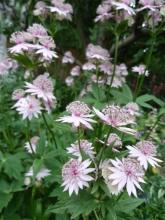
Astrantia major:
Astrantia carniolica 'Rubra'... or so it is supposed to be - I was just reading recently that this is supposed to be a dwarf astrantia, and my plants certainly are not!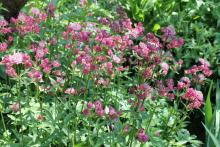
Stephen Barstow
amazing Apiaceae (the umbellifers)
Thu, 07/12/2012 - 12:43amTim: I remember being struck by Selinum wallichianum the first time I saw it in the botanical garden in Århus, Denmark, but it hasn't found a permanent place in my garden as it isn't edible enough. ;)
Heracleums are so common that we tend to ignore them, but they are attractive plants if we care to look! I've also grown Heracleum sphondylium "Hoggin' the Limelight", a yellow leaved form, but it died on me. I'd also like to get hold of Heracleum maximum "Washington Limes".
Stephen Barstow
Re: amazing Apiaceae (the umbellifers)
Thu, 07/12/2012 - 1:05amAngelica sylvestris "Vicar's Mead" and Angelica atropurpurea.
Trond Hoy
Re: amazing Apiaceae (the umbellifers)
Thu, 07/12/2012 - 10:41pmStephen,
does Vicar's Mead come true from seed and stay pink? I have often noticed pink coloration on newly emerged umbels but they always fade to white.
cohan (not verified)
Re: amazing Apiaceae (the umbellifers)
Thu, 07/12/2012 - 11:09pmI didnt realise Astrantias and Eryngiums were umbellifers- interesting! Still love the purple Angelicas- and quite lovely foliage on the Selinums as well...
One of my favourite of the natives is the very delicate Cicuta bulbifera -bulbous water hemlock.. I thought perhaps it was inappropriate to cultivate it, but then as long as I'm not mixing it with water parsnips, I don't see an issue ;D - I don't think twice about growing other poisonous plants such as Zigadenus.. Maybe I will collect some bulbils this year..
Stephen Barstow
Re: amazing Apiaceae (the umbellifers)
Fri, 07/13/2012 - 12:32amI've only gown it once (from NARGS seed). As far as I remember it remained pink throughout and also seemed to be a lower more compact plant than the wild plant, one of which is seen below. I think the reason I didn't grow it again is that the seed didn't mature - I had the plant on the north side of my house - it might have benefitted from a sunnier location.
Stephen Barstow
Re: amazing Apiaceae (the umbellifers)
Fri, 07/13/2012 - 12:43amAngelica gigas is another garden worthy Angelica, but I've lost this one too as it didn't produce seed last summer...
Stephen Barstow
Re: amazing Apiaceae (the umbellifers)
Fri, 07/13/2012 - 12:55amNo sign of losing Angelica grayi (Gray's Angelica) though as it's turned out to be perennial and is now 10 years old. However, I've never checked it's identity. Anyone have a key to North American Angelica?
Tim Ingram (not verified)
Re: amazing Apiaceae (the umbellifers)
Fri, 07/13/2012 - 5:21amLike the Angelica gigas with monarda and lily - all these plants struggle in our summer dry garden, though might have done better this year (which was actually spring 'very dry' and summer 'quite cool and moist'). The pictures of Selinum show what a very lovely plant it is with those dark stems. And I am interested in Angelica grayi - I've not grown this, but until now I have tended to assume all angelicas are monocarpic. Do you get many wasps pollinating A. gigas? Umbels are great for all sorts of insects but some seem to especially attract different types.
Pages